hemi culture
TRAVEL ESSAY
she ended up. I looked at amap later, andmy best guess
isBury St.Edmunds.
This would have been a pretty funny practical joke,
except it wasn’t.The simple truth is, I got my compass
points ina twist,as I almost alwaysdowhen trying to find
my way around London. Is East Barnet in the north or
the southof the city?Or theeast?Andwhat aboutHerne
Hill? Is that even a place? Is it a song?
This navigational ineptitudemight seem odd, given the
fact that I grewup inLondon,but Ihave an excuse.Until a
fewyearsagoI lived inSpain,andbeforethatI lived inDubai,
andbeforethatI lived inBoston.Infact,Ihadspentmyentire
adult life—almost30years—asanexpat.ThenIcamehome
anddiscovered that Ididn’t knowwhereHornchurch is.
I’ll probably never have to go toHornchurch,but I do
have togo tootherplaces.Theotherday,Ihad togo to the
Holborn tube station, in the seethingmiddayheat,witha
coupleofAmerican friends in tow.About45minutes into
our five-block trek,my friends were openly questioning
our route,which had twice led us around the perimeter
of theBritishMuseum. In the end, I had to stop and ask
an elderlySikhgentleman,whopointed atHolborn tube
station and said,“There.”
There is, however, an upside to my situation, which
is that I get to experience my hometown as if I were a
foreigner—or, at the very least, someone who’s been
hit on the head with an anvil. Either way,my journeys
tend to feelmore likeexcursions thanchores,which ismore
than I can say for themajorityofmy fellowLondoners.
There are times when, looking at the people around
me on theNumber 11bus—which goes past theHouses
of Parliament,Trafalgar Square,CharingCross and St.
Paul’sCathedral—Iwonder if there isn’t a stigmaattached
to lookingout thewindow.There’s a kindof formality in
the way these passengers study their devices, as if to do
otherwisewouldmark them as a bunchof naïfs.
Me, I celebratemy naïf-ness. I have no shame.Every
time the 11 passes Big Ben, I cranemy neck to see the
top. I take pictures of the doorways on Fleet Street,
gaze dreamily at theRoyalCourts of Justice.Or I’ll just
“THERE ISANUPSIDETOMY
SITUATION,WHICH ISTHAT IGETTO
EXPERIENCEMYHOMETOWNAS IF
IWEREAFOREIGNER—OR,ATTHE
VERYLEAST, SOMEONEWHO’SBEEN
HITONTHEHEADWITHANANVIL.”
Located at 1001N.E. 125th Street, Miami, Florida,
TheCenter For
RegenerativeMedicine
includes a team of professionals that are
dedicated to improve your quality of life, paving theway toenhance
the scienceof non-surgical orthopedicmedicine.World champions,
sports legends, professional and amateur athletes, dancers, and
people with just plain pain and arthritis go to
The Center For
RegenerativeMedicine
for non-surgical orthopediccare. Using the
facility to improve their condition, thousands of successful cases
havebeen treatedover thepast nine years.
A
NON-SURGICAL
TECHNIQUETO FIGHT
AGAINSTARTHRITISANDSPORTS INJURIES
Formore information please visit:
or call (305) 866-8384
International: (305) 891-4686
THECENTERFORREGENERATIVEMEDICINE
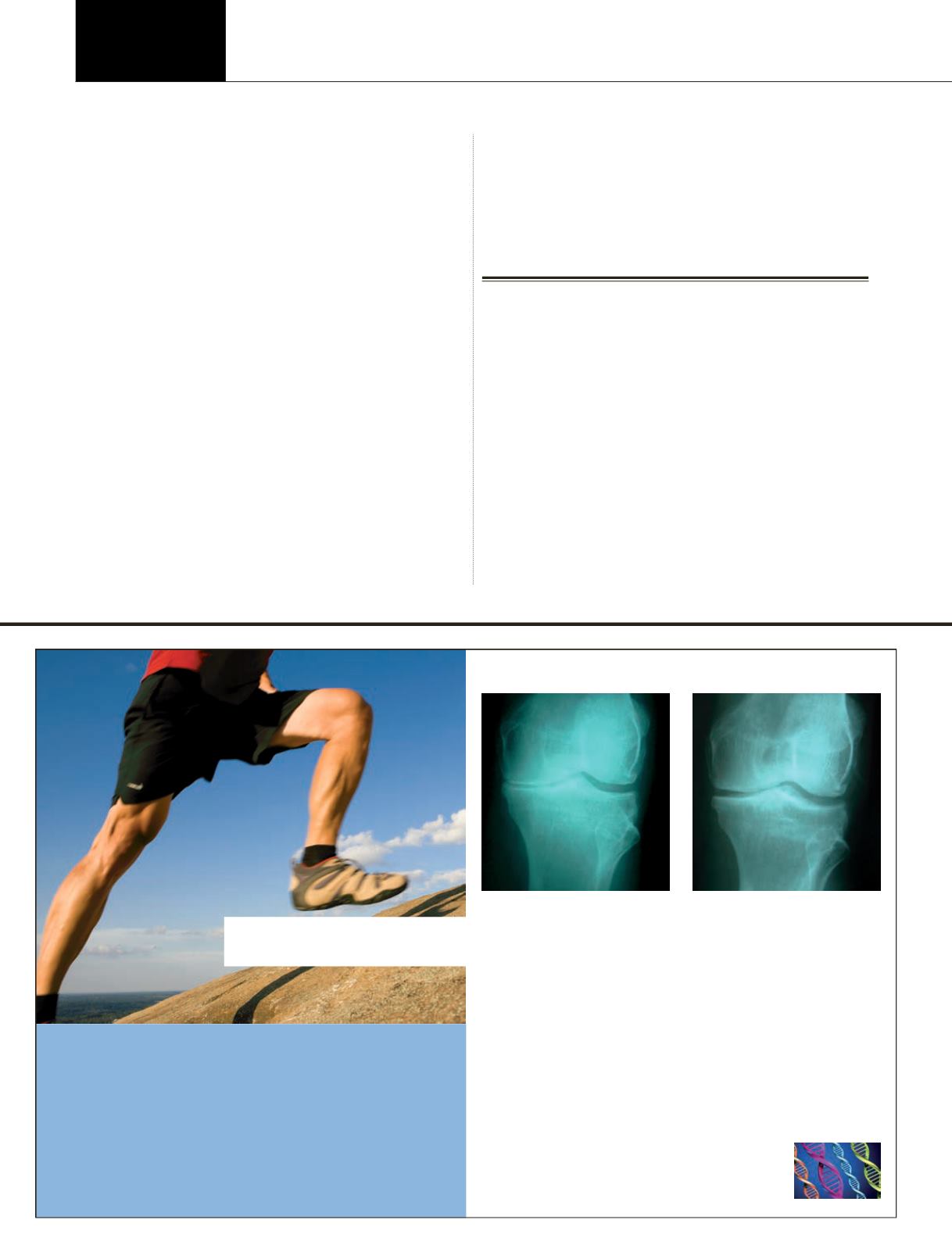
TheKneeDiaries:
SJ is a60-year-oldmalewithboneonboneosteoarthritis of the left
knee. AnX-ray showedarthritis of theknee (X-ray on the left). Patient started receiving
treatments at The Center For RegenerativeMedicine. Today he is feeling better (X-ray
on the right).
This is how it works:
The physician introduces
Cell Therapy
into damaged, arthritic
cells bymeans of a precise injection. This process is followed by infrared laser aswell
as several other modalities including Collateral Artery Flow Exercises (C.A.F.E.), in
order toaccelerate theprocess. Dependingon tissuedamage, severity of the condition
and the size of the joint that needs to be injected, people usually need a series of 1 to
6 treatments to improve. There is usually no down time, and people can go back to
their usual activities orwork immediately. The treatments canhelpmostmusculoskel-
etal problems such as low back pain, neck pain, knee pain, shoulder pain, whiplash,
sciatica, tendinitis, sprain, strains, torn ligaments and cartilage damage.


