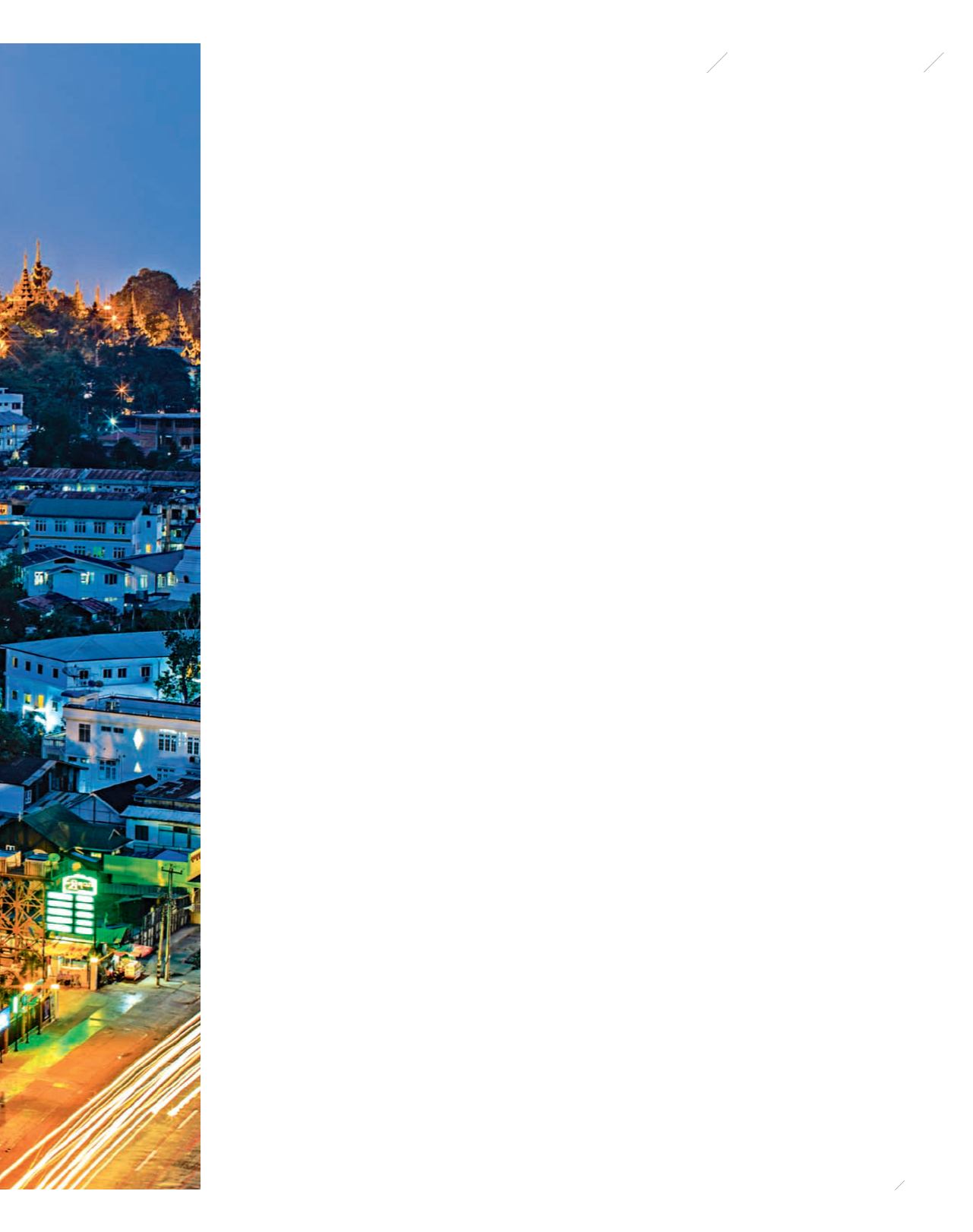
CLOSEUP
burmese lens
FAHTHAI
41
U
nder the dark years of military rule
in Myanmar, foreign tourists were
granted a seven-day-maximum visa
to visit the country. As is the case
in North Korea today, they were
tightly controlled and closely monitored as they
were ushered on and off tour buses and herded
into government-sanctioned hotels. Furthermore,
a big chunk of the country was strictly off-limits
to foreigners. Journalists, of course, were given
no visas at all (even travel journalists were refused
entry), and bona fide tourists with long lenses
on their cameras, or those with notepads jotting
down their travel diaries in local teashops, were
looked upon with deep mistrust and suspicion.
Despite a dramatic shift towards civilian rule
in 2010, it still came as something of a surprise to
book publisher and “old Asia hand” Didier Millet
when Burmese government officials allowed
him to send 30 expert photographers from 11
nations into every corner of the country last year,
and furthermore, gave them free rein to shoot
whatever they liked. It sounds like fiction, but this
is what actually happened.
“In the past, photojournalists led frightened
lives,” says Kaung Htet, one of the Burmese
photographers in the group. “We feared that
someone might come and knock on the door in
the middle of the night, that they would take us
away and that we would never be seen again.’’
Some of his foreign colleagues had worked in
Myanmar before, but usually undercover, posing
as tourists.
Now, however, the team was free to create
a truly mesmerising kaleidoscope of some 325
images for the recently published photobook
7
Days in Myanmar
, which beautifully captures the
country’s abiding aspects while documenting a
crucial period of momentous change here. Yet let
us not forget that, although Myanmar now seems
open to all types of tourism, it still faces enormous
challenges, ranging from handling a nationwide
economic overhaul to battling racial and religious
violence between Buddhists and Muslims. Forty-
five historical photos selected by the curator of
the British Library in London are also included in
the book.
“We were not looking for typical postcard
photos for this project,” project director Melisa
Teo says. “We wanted to capture fresh new angles
on the country as seen through the eyes of great
photographers who are well known for their
original visions.”
Following their marching orders, the
photographers headed out in April last year to
explore every one of Myanmar’s 14 provinces.
They took in not only the usual hotspots such as
Bagan and Mandalay, but also the remoter border
regions and the water worlds of the Salon people
(or “sea gypsies”) of the Mergui Archipelago.
They visited shipyards, natural gas rigs, jade
mines and, in Yangon, the haunts of punk rockers
and the houses of high society.
The project followed a concept conceived in
1976 when the legendary (but now defunct)
Life
magazine dispatched 50 photographers around


