COOKING
Bread Making Boot Camp
inattendance (myselfamong the former).But
breadbakinghereseemsverymuchaboutguys
—bigburlyguys,BlackBerry-scrollingguys, old
guyspassionate forOldWorldbread, youngguys
with the forearms toknead forhours.There’sdef-
initelyaslightskew to theYchromosome inBake
Shop6 today.
0900: Switchingonacomputerprojection,
chefEricoutlines the rigorsof theday, listing
eightbreadswewillmake in theensuingsix
hours.Weswapciviliancoats forapronsand
toqueswhilegettingequippedwithscrapers
andscales.
Inplaceofendlessruns, calisthenicdrills, and
bunkhouse inspections, thekitchenversionof
bootcampoverwhelmscadetsmentallywith in-
formation.ChefEricrips through the12stepsof
breadproduction: scaling ingredients,mixing,
fermenting, folding-over, dividing, pre-shaping,
benchresting, shaping, final fermentation, scor-
ing, baking, andcooling.Westart, onapractical
level,with thestarter, amixtureof flour,water,
andyeast, set aside to ferment. These “pre-
ferments,”whichadd flavorandaroma tobreads,
includepate (pronounced“pat”) ferment, biga,
poolish, sponge, andsour (thekey tosourdough),
allofwhichcontain thesamebasic ingredients
butvary inquantity, temperature, and fermenta-
tion time.Chefgivesuseachasourstarter toadd
tomore flour, salt, andwater, creatingsourdough
whichwewillkneadandallow tore-raiseevery
30minutes for thenextseveralhours.
“Americanbread is tighty-whitey,”saysChef.
“All tightandallwhite.”Meaningno textureor
airypockets,nocheworyeastynose.Lessknead-
ingandmore foldingallowsyou tohavebetter
structureandyieldsa loafwithmorevolumeand
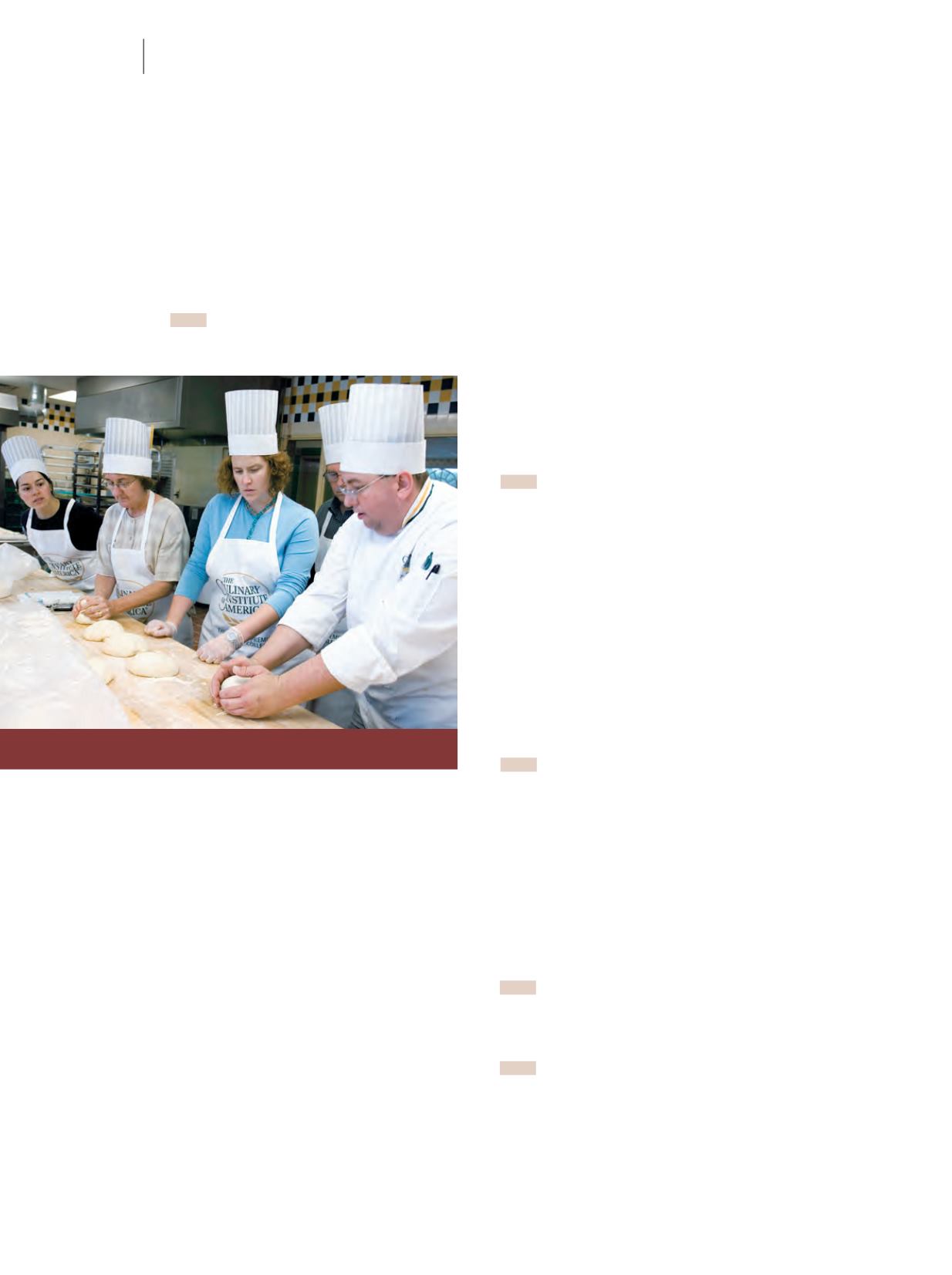
more interioropen-crumbstructure.Kneading
isn’tamatterofmight,but technique,pushing
with theheelof thehandacross thedough, folding
itoverandmakingone-quarter turnsuntilyou’ve
beenaroundonce. It’s thebull’s-eye of baking,
directandpurposeful.
1005:Baguettesarea lesson instyleoversub-
stance.We each flattenaball of dough intoa
circle, then foldone-thirdon topof itself, and
another thirdon topof that, pattingout theair.
Pressing theseam togethercreatesaseal.Roll-
ing itgentlyelongates thedough.Then, inastep
that convincesme this isbestdoneataFrench
bakery,weplaceourbaguettesona linen
“couche,”orcloth, after they rise, beforewe
scoreandbake them. Panicwellsas I feel chef
Ericobservingme. “Whatam Idoingwrong?” I
ask. “You’reonlybringing theendsover, not the
middle,”he replies, givingmybaguettea fin-
ishedseamandmyegoadent.
1040: Post-baguettes,momentum—andcon-
fidence—surgeasoursquadof recruitsbonds.
Chef summonsus to four20-gallonplastic
containers in the frontof thebakeshopwherewe
simultaneously takeon focaccia; leandough
(translation:no fat, sugar, oreggs)withpate fer-
ment; leandoughwithbiga; andciabatta, anooz-
ing,wet, Italiandough thatChef calls“Jabba the
Hut” for its texture.Wework insmall teams,hand
mixingonan industrial scale, then take turns
shaping thedough toChef’sgrowingapproval.
1125:Chefpatrols theshop, reciting therulesof
doughengagement: “Punchingdoughmakes tight-
erbread.Wewantgases in,don’tpunch themout.
This isnoMikeTysonhere.We fold,notpunch.”
1145:Thecompanyadvancespastwhite flour
tomultigrain rye, acomparatively feral, earthy,
wetdoughcrusted ingem-likedarkseeds.We
needscrapers tocut it, thensharpknives to
score it inslashingdiagonals.We’redeep in the
trenchesnow.
➤
Chef Eric Kastel teaches the art of kneading the dough.
FALL 2009
celebratedliving.com
60


