ITINERARY
TOPROW, FROMLEFT:ANDREWPUTLER/REDFERNS; JOHNSHEARER/WIREIMAGE; BENROSE/GETTY IMAGES.
SECONDROW, FROMLEFT: RICHARDEN, JOHNATASHIAN, JOHNATASHIAN/ALLESPN IMAGES; COURTESYNANCYBEAHEFLEY
20
APRIL 01, 2013
AA.COM/AMERICANWAY
{ MUS IC }
StruttingSongs
N
,
-
ball player aboutwalk-upmusic
wouldhaveprompted a spell of
confusedsilence.Whileseven-secondsong
snippets now serve as the soundtrack to
every batter’s solitary jaunt from the on-
deckcircle to thebatter’sbox—we’re talk-
ingadistanceof up to37 feethere, people
— they’re a relativelymodern contrivance.
Somemajor league clubs downplayed the
practiceuntil theearly2000s; now,more
orlesseveryleagueinthebaseballuniverse,
including youth teams, allows players to
pickatrackorthree.
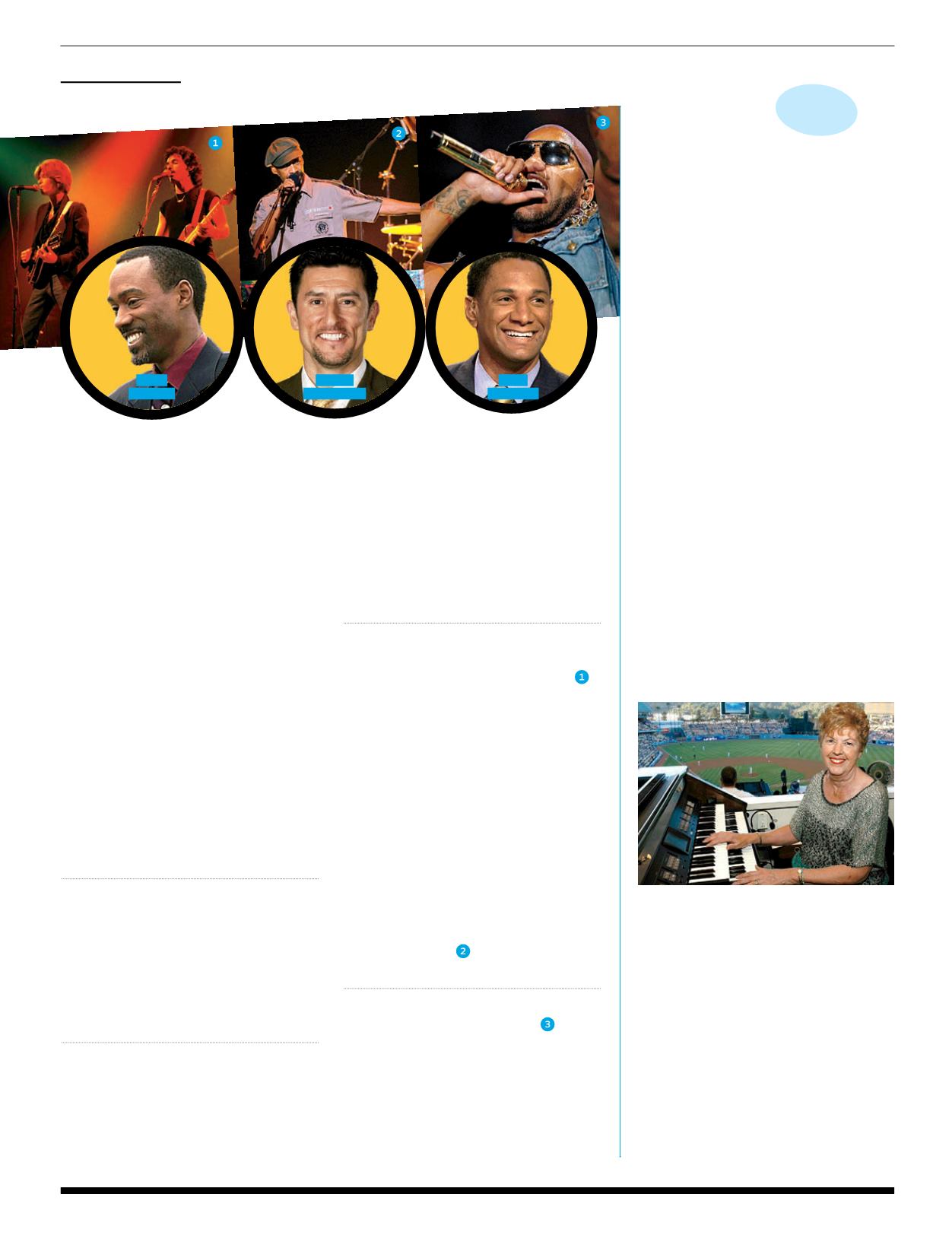
To hear ESPN’s
Baseball Tonight
per-
sonalities tell it, that’s a good thing.Here,
former starsChris Singleton, DougGlan-
ville andNomarGarciaparraweigh inon
thewondersandwhimsyofwalk-upmusic.
ONTHEAPPEALOFCHOOSINGTHEIR
OWNSONGS:
ChrisSingleton:
“Ifthere’sasongthat’sreally
working for you, you’re gonna runwith it.
But if you’re in a slump, you’ll change the
song, thebattinggloves, the shoes—you’ll
doanything to trigger somethingdierent
inyourbrainandgetbackontrack.”
ONTHEPREVALENCEANDPOPULARITYOF
WALK-UPMUSIC:
Doug Glanville:
“Baseball andmusic are
very similar: Theybothmark time,mark
moments.Whenyou connect the two, it’s
prettyspecial.”
Singleton:
“When Iwasplaying, youhad to
find time to runyourCDup to the sound
guy.Now,Iwouldn’tbesurprised ifaplayer
toldaclubbie[clubhouseattendant]tohave
theguychangehismusicbetweenat-bats.”
ONTHEARTISTS/SONGSTHEYUSED
WHILEPLAYING:
Glanville:
“Daryl Hall & JohnOates’
‘I
Can’tGoForThat(NoCanDo)’;PeterWhite,
whodoescontemporary jazzguitar;Naugh-
tyByNature; that duet that TinaTurner
didwiththeItaliansingerErosRamazzotti,
‘CoseDellaVita.’ Ihadeclectictaste.”
Singleton:
“RufusTroutman—itwaskindof
apsychedelicfunksong.Sometimesitwould
getme thinking about the groove, rather
thanaboutthepitcher.That’snotgood.”
Nomar Garciaparra:
“There was only one
teamwithwhich I had awalk-up song. It
was with theDodgers, and the songwas
‘LowRider’byWar
.Iwouldstillpickthat
song. Itremindsmeofhome.”
ONTHEARTISTS/SONGSTHEY’DUSETODAY:
Singleton:
“Maybe thatFloRida
song, ‘I
Cry,’that’saremixofthatsongfromthe ’80s
[BrendaRussell’s ‘PianointheDark’].”
Glanville:
“The throwback stuff with the
modern beats: Fitz and The Tantrums,
MayerHawthorneandNikkiJean.”
—¬ ®®¯° ® ±
TheMusic
(Wo)man
WHILETHEBALLPARKorganist has largely
gone thewayof themanual scoreboard, a
shrinkingnumber of baseball stadiums still
uphold the time-honored traditionof having
livemusical accompaniment duringgames,
despite the introductionof piped-inpopular
recordedmusicmeant to lureyounger patrons.
NANCYBEAHEFLEY
isoneof the last remain-
ingballparkorganists in the sport, having
missedonly sevengames since takingover the
jobatDodger Stadium in 1988. TheSouthern
Californianative tookher handsoff thekeys
longenough to chatwith
AmericanWay
about
the job she says she loves almost asmuchas
Billy, her husbandof 55years.
AMERICANWAY
:
What songhaveyouplayed
somany timesyoucouldplay it inyour sleep?
NANCYBEAHEFLEY:
“TakeMeOut to theBall
Game.” I couldprobablyplay it backward.
AW
:
What’soneofyourmostmemorable
careermoments?
NBH:
In 1988, thegeneralmanager of the
Shubert Theater cameup tomeafter thegame
and invitedme to see
LesMisérables
. I heard
“Master of theHouse” and thought itwas catchy,
so I learned that. The first night I played it, it
waswhen they introduced theumpires. Vin
Scullyheard it, stuckhisheadout of thepress-
boxwindowandwent crazyover it. He started
making itOrel Hershiser’s song. I still play it
whenhe comesbackwithESPN.
AW
:
Doyoueverplay“ThreeBlindMice” in
tribute toumpires?
NBH:
Minor leagueorganistsget kickedout
for doing that. I did that once for ahorse show,
and that’sbecause the judges suggested it to
me. I knowmyboundaries.
—MICHAEL VENTRE
Doug
Glanville
Nomar
Garciaparra
Chris
Singleton
LOS
ANGELES


