No hot water in Middlefield can turn a normal morning into a scramble. A shower goes cold, dishes pile up, and the household schedule starts slipping. In Middlesex County, that problem often traces back to a few common causes, and several of them are safe to check before a technician arrives.
Direct Home Services provides water heater services for Middlefield and Durham, CT, including water heater repair, water heater installation, and hot water heater replacement. With local experience in homes near Lyman Orchards, Lake Beseck, and Rockfall Village, the team sees the same failure patterns repeat, especially in properties on private wells or water with higher mineral content.
If there is a gas smell, signs of scorching, or active leaking near electrical parts, the safest move is to stop and call for emergency plumbing help. Water and electricity do not mix, and gas issues should never be tested without training.
If there is no smell and no active flooding, a quick visual review can help narrow down what is happening.
Those two complaints point to different failures. “No hot water at all” often involves power, ignition, or a failed heating component. “Hot water runs out too fast” often points to sediment buildup, a fractured dip tube, or a thermostat that is not reading correctly.
In Middlefield and Durham, mineral content can speed up sediment buildup. That is why rumbling noises and short hot water supply are common service calls near the Coginchaug River area and around Lake Beseck.
Many electric water heaters lose heat because a breaker trips or a reset button opens the circuit. The breaker may trip during a storm, after a power surge, or when a heating element starts failing and pulls abnormal amperage.
If the breaker is tripped, it can be reset one time. If it trips again, the heater should be left off until a licensed technician checks the heating element, thermostat, and wiring. Repeated resets can overheat damaged wiring or a failing element.
Gas water heaters often fail quietly when the pilot light goes out or the gas valve is not opening. Some models show a blinking status code. Others show no light at all. If the pilot is out, the cause can be a dirty burner, a failing thermocouple, or venting problems that prevent stable flame.
A homeowner can look, but relighting should follow the manufacturer label exactly. If the pilot will not stay lit, the heater should be shut down and serviced. A technician will typically test the thermocouple, check the gas valve, and inspect venting on atmospheric vent, power vent, or direct vent heaters.

A small leak can still cause “no hot water” because water damage triggers shutdowns, corrodes parts, or floods the burner area. The location matters.
Water at the top of a tank often points to fittings, the cold inlet, the hot outlet, or a loose connection. Water near the T&P relief valve can indicate excessive pressure or overheating. Water around the base of the tank often points to internal tank failure, and that usually means replacement is near.
Direct Home Services commonly replaces failed drain valves, worn supply fittings, and faulty T&P relief valves, but a cracked tank itself is not a repair that holds long-term.
Rusty water from the hot side often indicates internal corrosion and a depleted anode rod. Anode rod replacement can extend tank life when the tank is still sound. Rotten egg odor is often tied to a reaction inside the tank, especially with certain water conditions. It can be improved through inspection, flushing, and targeted part replacement, but it should be evaluated to confirm the cause.
In well-fed homes, odor complaints can show up more often. A local hot water heater repair service visit can confirm whether the fix is a flush, anode rod replacement, or a larger issue inside the heater.
Rumbling noises usually mean sediment buildup. Sediment acts like an insulating blanket between the burner or heating element and the water. The heater works harder, energy use rises, and hot water output drops. In severe cases, the heater can overheat or damage parts.
Professional flushing helps, but the timing matters. A heater that has gone years without service can release large chunks of scale during a flush. A technician will judge whether flushing is safe, whether a new drain valve is needed, and whether the unit is already too compromised.
Confirm the issue is only on the hot side by testing multiple fixtures.
For electric models, check the water heater breaker once and watch if it trips again.
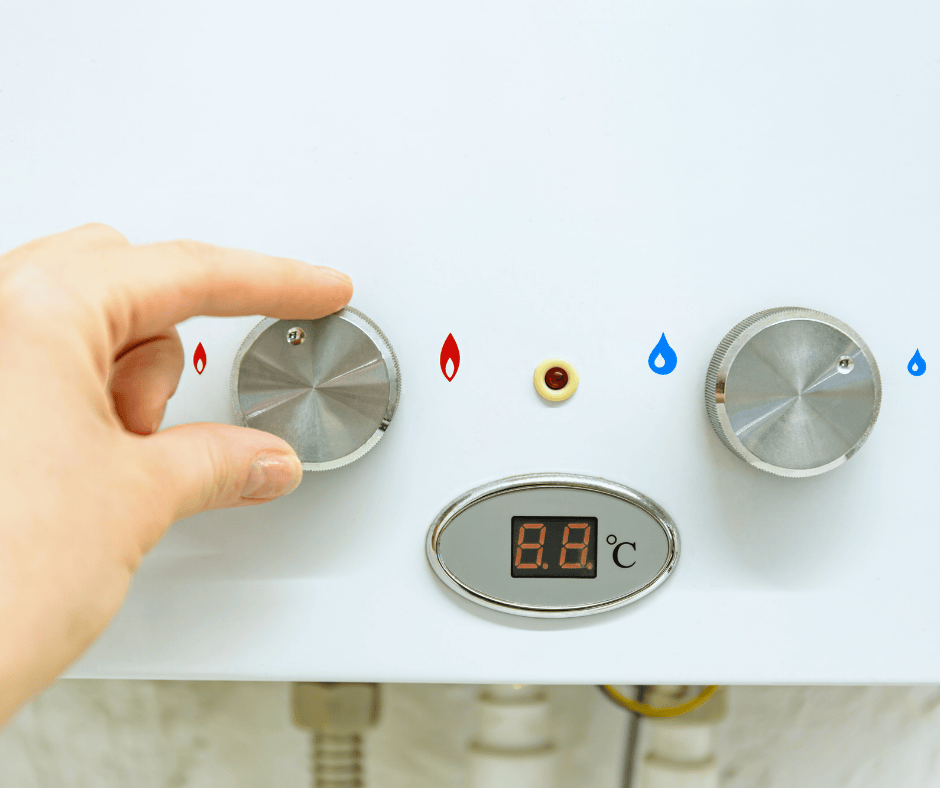
For gas models, look for a pilot light and note any status light pattern.
Look for leaking at the top fittings, the T&P relief valve, and the base of the tank.
Listen for rumbling that suggests sediment buildup, especially if hot water runs out fast.
Anything beyond these checks should be handled by a licensed professional. Heating elements, thermostats, gas valves, and venting systems need proper testing tools and safety steps.

Some repairs are smart, and some only delay the same breakdown. A replacement is often the better call when a tank is leaking from the base, when corrosion is advanced, or when repairs start stacking up while comfort stays unstable.
A technician will usually weigh the heater age, the repair cost, and the condition of key parts such as the thermostat, heating element, gas valve, and anode rod. In many homes, a failing unit also drives higher energy bills because it runs longer to do less work.
Not every home needs the same type of system. Some households do best with a proven storage tank. Others benefit from tankless water heaters or hybrid heat pump water heaters, especially when space and efficiency matter.
Direct Home Services installs and services major brands such as Rheem, Bradford White, A.O. Smith, and State Water Heaters. For households that want higher-efficiency systems, the team also supports Navien, Rinnai, Noritz, Bosch, and Lochinvar, with recommendations based on the home layout, venting options, and real hot water demand.
Middlefield and Durham properties often have water characteristics that affect water heater performance. Mineral content can speed up scale buildup on heating elements. Sediment can collect faster in the tank. That can reduce recovery speed and cause noise, odor, or shorter hot water runs.
Routine water heater maintenance helps reduce these problems. A service visit can include sediment evaluation, checks on the anode rod, inspection of the expansion tank, and confirmation that the T&P relief valve is operating correctly.
When a professional arrives for water heater repair, the goal is to identify the failure with measurements, not guesses. On electric models, that typically includes testing the thermostat and heating element. On gas models, that often includes burner inspection, thermocouple testing, gas valve checks, and venting evaluation.
Direct Home Services also checks for thermal expansion issues that can stress a tank, especially when an expansion tank is missing or undersized. Inconsistent temperature can be tied to a failing dip tube, thermostat drift, or sediment that blocks heat transfer.
Direct Home Services supports homeowners in Middlefield and Durham, CT, including areas near Durham Center, Powder Hill, Rockfall Village, and the Lake Beseck community. Service is also available in nearby towns such as Middletown, Meriden, Cromwell, Wallingford, Berlin, Rocky Hill, and Wethersfield.
When hot water fails, the most helpful next step is a fast diagnosis and a clear plan, whether that means a simple repair or a full hot water heater replacement. Direct Home Services helps local households get hot water back with practical options and reliable workmanship, while also providing dependable gas furnace services for homes that need safe, steady heat when temperatures drop.

Redirect to: