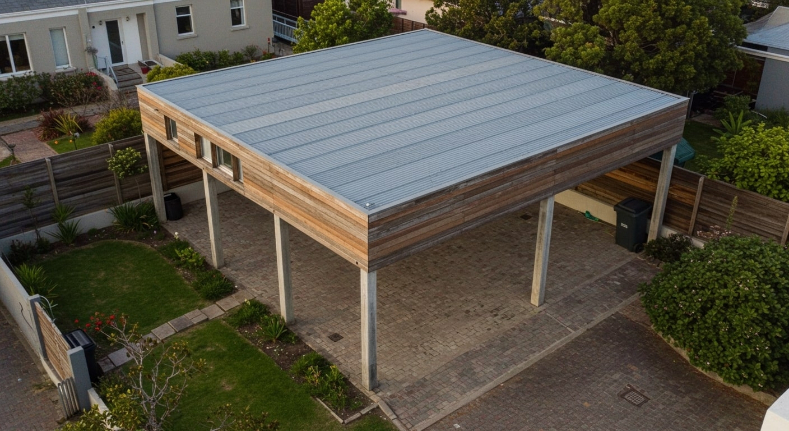
Buying a shadeport in Cape Town isn’t just about getting a cover—it’s about choosing the right materials, designs, and structure to match the city’s unique coastal climate and your property’s specific needs. With so many options on the market, this guide will help you make an informed decision, whether you're covering a driveway, patio, school zone, or business lot.
Cape Town’s weather conditions demand robust, UV-resistant, and corrosion-proof materials. From salt-laden winds along the Atlantic seaboard to intense sunlight in the Northern Suburbs, your shadeport needs to do more than just look good—it needs to last.
Top considerations:
UV protection (critical for car paint, interior and outdoor furniture)
Wind resistance
Waterproofing (especially for all-weather use)
Corrosion resistance (important near coastal areas)
Shade Cloth:
Made from knitted polyethylene
Blocks 80–95% of UV rays
Breathable and available in many colors
Optional waterproof versions available
Galvanized Steel Frames:
Rust-resistant and long-lasting
Ideal for coastal Cape Town areas
Requires minimal maintenance
Anchor Fixings & Footings:
Reinforced concrete bases are recommended in high-wind zones
Ensure structural integrity over time
For those exploring high-performance materials with enhanced light diffusion and durability, polycarbonate roofing may also be worth considering, especially for hybrid installations.
Cape Town homeowners and businesses can choose from several common styles:
Four-Post Structures: Most common; freestanding with open airflow
Cantilevered Shadeports: Ideal for narrow spaces or areas requiring more access on one side
Branded Shadeports: For commercial spaces that need company logos or consistent color branding
Each type can be adapted for size, height, and shape based on your layout and vehicle clearance needs.
Modern shadeports aren’t just functional—they’re customizable. Choose from neutral tones (grey, beige, charcoal) or bold branding colors (red, blue, green). Fabric and frame color combinations can complement:
Residential architecture
Business signage
School identity colors
These visual customizations add long-term value and curb appeal.
Installing a shadeport in Cape Town usually takes 1–3 days, depending on the complexity. Here’s how it works:
Site Survey – Measurements, surface checks, and identifying anchoring points
Foundation Prep – Concrete footings for posts (especially important in high-wind suburbs like Milnerton)
Frame Assembly – Galvanized steel frame erected and aligned
Shade Cloth Tensioning – Fabric fixed under high tension to avoid sagging
No heavy machinery or major construction is needed, making it a quick and relatively low-disruption process.
Clean fabric every 3–6 months with mild soap and a hose
Check tension, bolts, and anchors annually
Galvanized frames last 10+ years; shade cloth typically lasts 5–8 years (more with waterproof fabrics)
By following a basic care routine, you’ll maximize your investment and avoid early repairs.
Always work with a trusted local installer who:
Offers on-site evaluations
Uses SABS-approved materials
Provides warranty on workmanship
Can show past projects in Cape Town suburbs similar to yours
Choosing a shadeport doesn’t have to be overwhelming. Focus on function, durability, and fit for Cape Town’s climate zones. With the right installer and materials, you can enhance both property protection and aesthetics.
Visit https://kbcarports.co.za/shadeports-cape-town/ to explore options tailored for Cape Town homes, schools, and businesses.