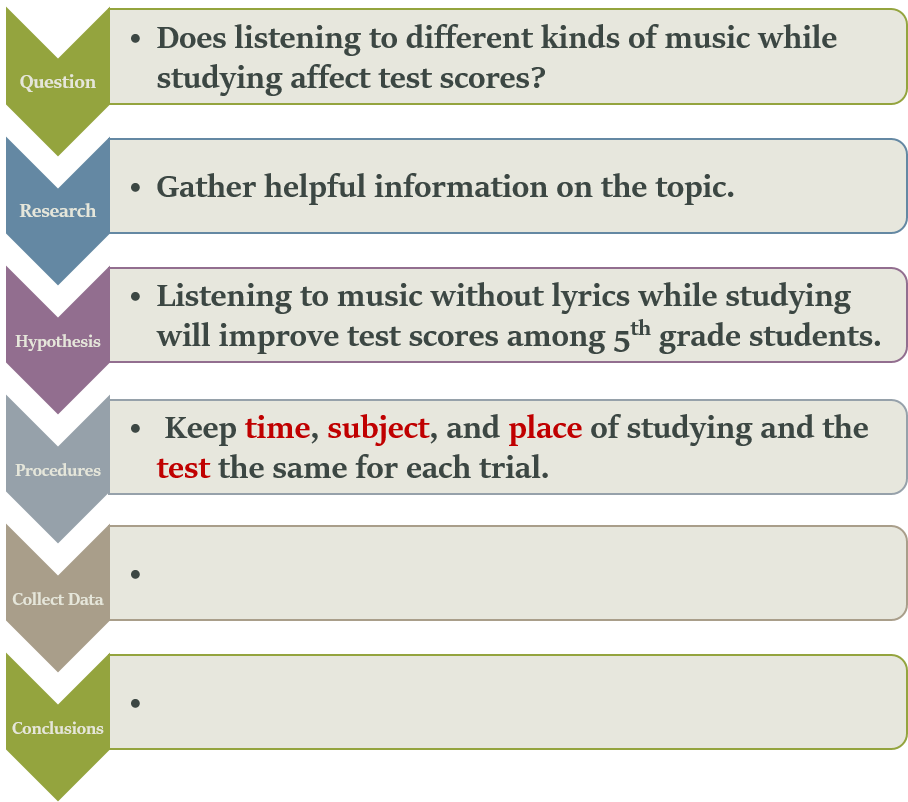
Control variables are the factors that the scientist holds constant or controls during an experiment.
The scientist will set this up as part of the procedures.
Holding these variables constant mean they don’t change from trial to trial. They have to be kept the same.
Stop and Think...
What does it mean to hold constant?
What does in mean to control something?
If everything changes, what caused the change?
In the example to the right, if both time and type of music were changed, the scientist would not know which one affected the test scores.
More time studying might have an effect on test scores and music might have an effect on test scores.
The scientist would not know which one.
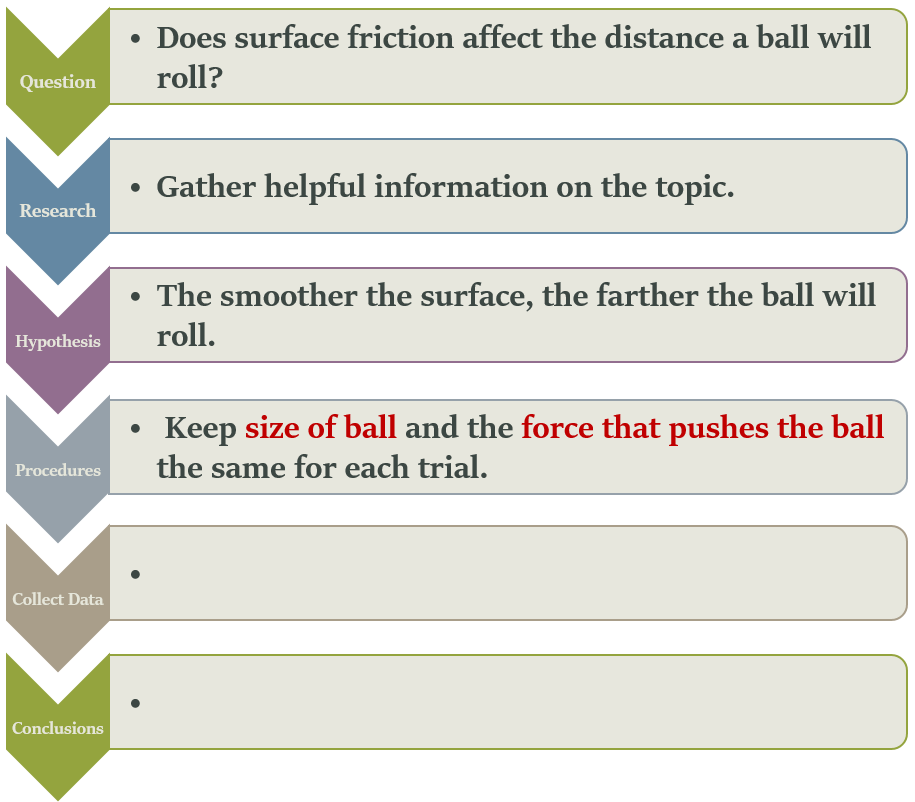
How Does Surface Friction Affect Speed of a Rolling Ball?
A group of 5th grade students wants to know how surface friction affects the speed of a rolling ball. To be sure that surface is the only variable that changes, they need to keep size of the ball and force on the ball the same. Can you think of anything else that should be controlled?
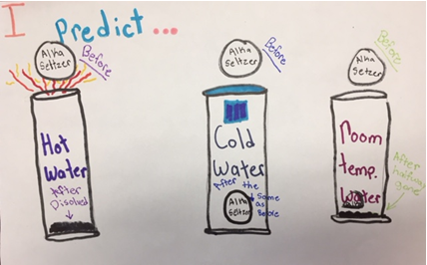
Does Heat Affect the Dissolve Rate of Alka-Seltzer?
A group of students are curious know how heat affects the dissolve rate of Alka-Seltzer.
To be sure that heat is the only variable that changes, they needs to keep the following the same for each trial.
- the amount of water
- size of Alka-Seltzer
tablet
and - action (stirring or no stirring)
Try this one.
A group of students wants to know how the amount of sunlight affects plant growth. To be sure that sunlight is the only variable that changes, they needs to keep the type of plant, type of soil, size of container, and amount of water the same.
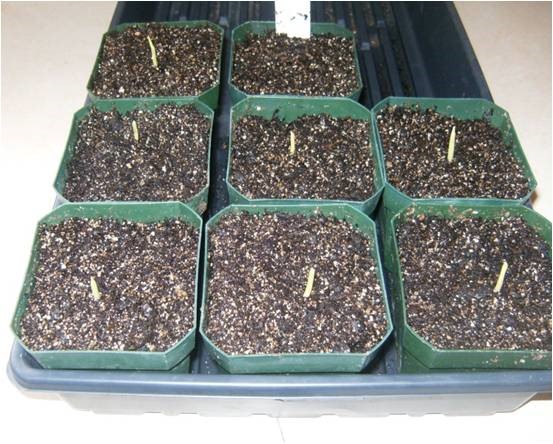 Notice that there is more than one control variable.
- Type of plant
- Type of soil
- Size of Container
- Amount of water
Dissolving Alka-Seltzer

PREVIOUS
Click the arrow to go back to Variables: Manipulated-Independent

HOME
This wil take you to the beginning of this Variables Website.

BACK TO EDET 703
This will take you back to my EDET 703 page in my Portfolio Project.

NEXT
This will take you to the Variables: Responding-Dependent page 4 of 4.