


Page 192 - TransportationPlanUsetsGuide
P. 192
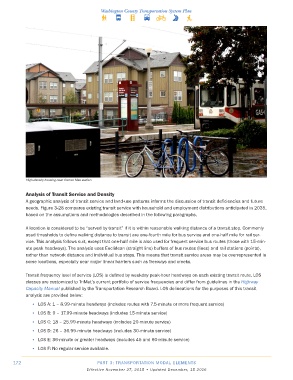
High-density housing near Orenco Max station


            Analysis of Transit Service and Density
            A geographic analysis of transit service and land-use patterns informs the discussion of transit deficiencies and future
            needs. Figure 3-28 compares existing transit service with household and employment distributions anticipated in 2035,
            based on the assumptions and methodologies described in the following paragraphs.


            A location is considered to be “served by transit” if it is within reasonable walking distance of a transit stop. Commonly
            used thresholds to define walking distance to transit are one-fourth mile for bus service and one-half mile for rail ser-
            vice. This analysis follows suit, except that one-half mile is also used for frequent service bus routes (those with 15-min-
            ute peak headways). The analysis uses Euclidean (straight line) buffers of bus routes (lines) and rail stations (points),
            rather than network distance and individual bus stops. This means that transit service areas may be overrepresented in
            some locations, especially near major linear barriers such as freeways and creeks.


            Transit frequency level of service (LOS) is defined by weekday peak-hour headways on each existing transit route. LOS
            classes are customized to TriMet’s current portfolio of service frequencies and differ from guidelines in the Highway
            Capacity Manual published by the Transportation Research Board. LOS delineations for the purposes of this transit
            analysis are provided below:
              •  LOS A: 1 – 8.99-minute headways (includes routes with 7.5-minute or more frequent service)

              •  LOS B: 9 – 17.99-minute headways (includes 15-minute service)
              •  LOS C: 18 – 25.99-minute headways (includes 20-minute service)
              •  LOS D: 26 – 36.99-minute headways (includes 30-minute service)

              •  LOS E: 36-minute or greater headways (includes 45 and 60-minute service)
              •  LOS F: No regular service available.


       172                                PART 3: TRANSPORTATION MODAL ELEMENTS
                                     Effective November 27, 2015 • Updated December, 15 2016

