2015
1. Alfama
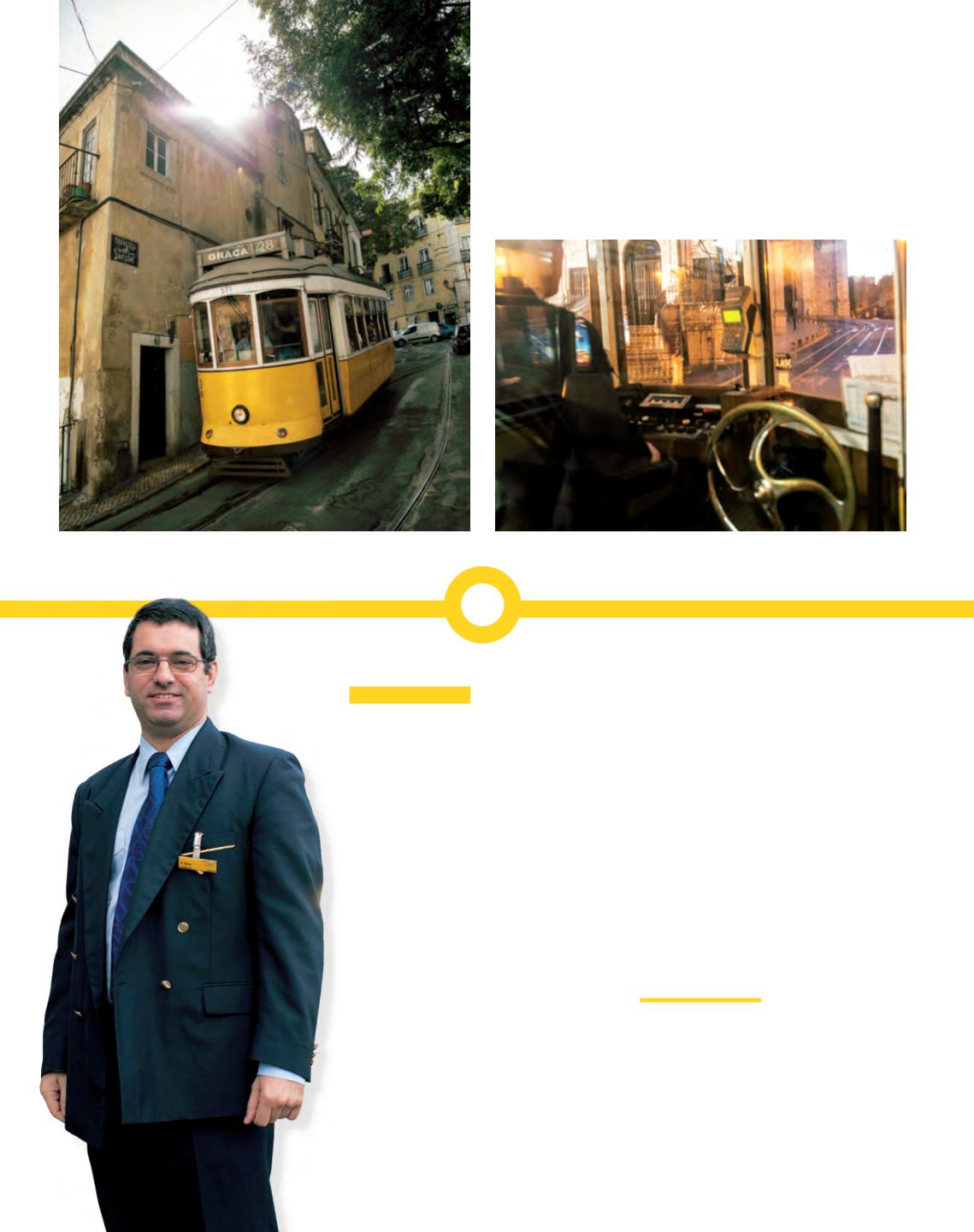
It’s5amand thefirst tramof thedaycrawls
outof thedepot.Theyellow, singlewooden
car ischuggingup thehill,whizzingaround
hairpinbends, and skimming justmillimetres
fromblue-tiledbuildings (the street called
EscolasGerais seemsbarelywider than the
tram).And thenwegrind toahalt. Supervisor
PauloBirraopens thewindow, folds in the
wingmirrorof avan thatwe’reperilously
close to, and thenbangson the side. “There’s
aguy sleeping in there,”he laughs. “Everyday
isanadventure.Weknowhow itwill start,
butwehaveno ideahow it’ll end.”No sooner
hashefinished talking thanwe stopagain.
This time it’sapowercut.The street is litonly
by thedawnsky.
Lisbon’s tramsdateback to the1930s, and
their tracksareamong the steepest in the
world.On theeast-to-west route, theypass
just about everything in thecityworth
seeing.After leavingMartimMoniz, the
heartofmulticultural Lisbonwith its
TanzanianandMozambicancafés,we
headuphill.Thewideavenuesgiveway to
thenarrow, cobbled streetsofAlfama, the
oldestpartof thecity,which ishome to the
white-stonePantheonandLisbonCathedral
(thecity’soldestbuilding). Elderlywomen sit
indoorways, kidschaseeachother through
alleyways, andwashinghangsbetween the
centuries-oldbuildings.
Route28 skirtsaboveAlfama, looking
downon the red-tiledhouses stretching
to theRiverTagus.Butnoneof the
cameraspointingoutof the tram’s
windowsare snappingAlfama.They’re
all looking in theotherdirection: at the
CastelodeSao Jorge.
“Everyday isanadventure.
Weknowhow itwillstart,
butwehaveno ideahow
it’llend”
PauloBirra, tramdriver


