northLondon that includedRegent’s
Parkand thestunningmansions
overlooking thecanal to thisday.
Thewaterwaywas finished in
1820andbecameamajorchannel
for transportingcoal andbuilding
materialsaroundLondon, before it
narrowlyavoidedbeing turned intoa
railwayand fell intodisrepairby the
early20thcentury.
In 1929, thenewly formed
GrandUnionCanalCompanycame
together for thecanal’s last stand
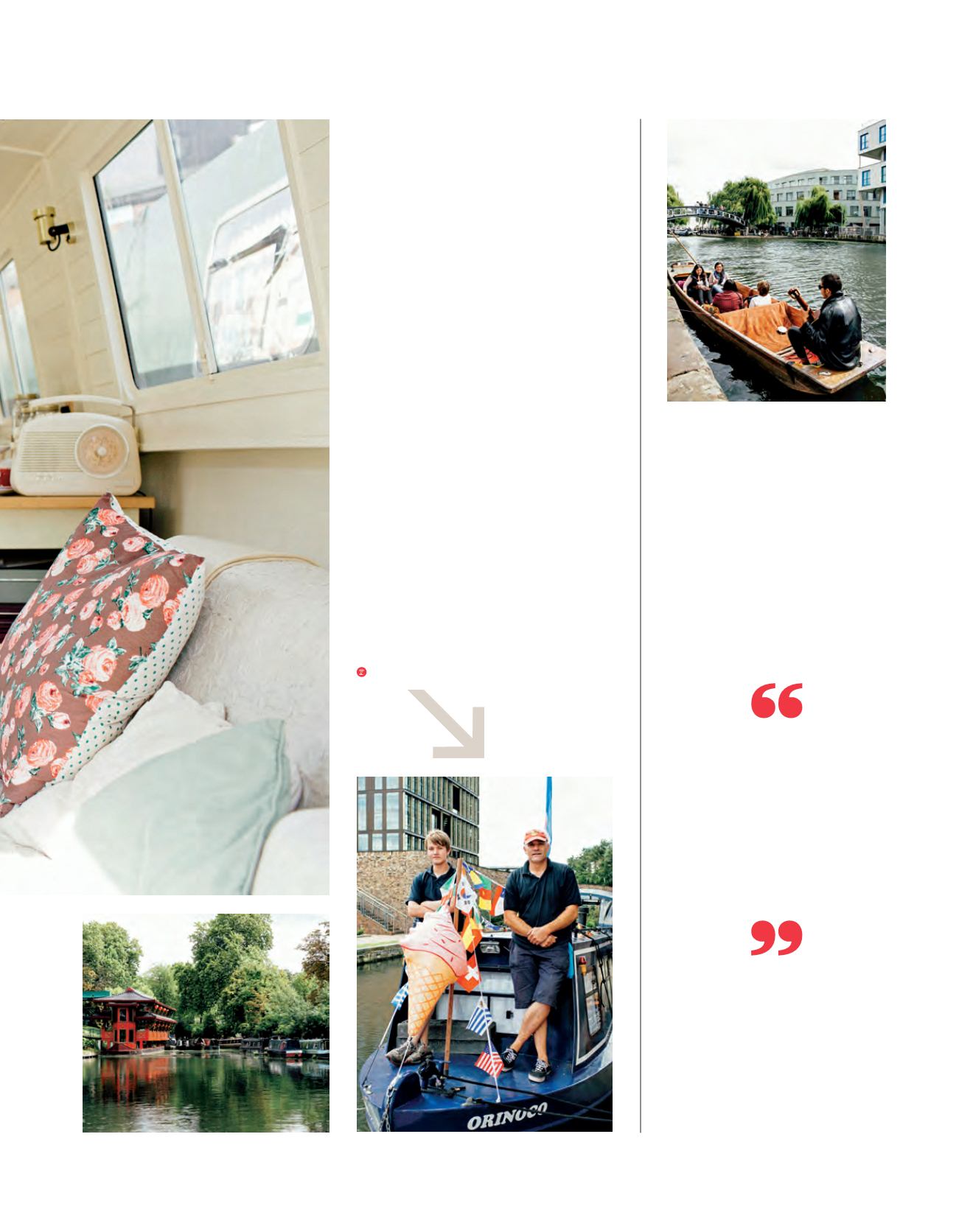
The icecreamsellers
SimonMannused tobe in the army (he’s
not tobeconfusedwith the coup-
planningmercenary), andmostly lives on
a largehouseboat inUxbridgewhilehis
twin sons attendboarding school. In July
this year he saw another boat, Orinoco,
“for aprice I couldn’t turndown” – and
within threeweeks had rebuilt the interior
and turned it into an icecreamboat,
recruitinghis sonswhen they’re around to
sell cups or cones of icecream. “Business
is up anddowndependingon theweather
andwherewecanmoor theboat,” he
sayswhenwemeet himnear theFloating
Cinema, northof King’sCross station.
“We’ll close for thewinter and seehow it
goes next year. It’s crazy howmany boats
there arenow, so it canbehardfinding
the right spots. But it’s nice just tohave
that freedom.”
facebook.com/OrinocoBoat
Todaythe
canal isseeing
arenaisssance
– cafésandbars
havepoppedup,
butpropertyprices
havealsogoneup
asan industrial thoroughfare,
usinga fleetof 186narrowboats
to transport everything from iron
andsteel tocresylicacid, cheese
and the ingredients forHPsauce.
Between 1931and 1941, thevolume
ofproducts transportedon thecanal
rose from8,999 tonnes to 168,638
tonnes–but itwouldn’t last.
»
n
/053


