newspaperarticleconcludes: “Withother
firms takingacue fromher successand
turningout theirown trolls,MrsDykins
alsohashired legal counsel.”
This legal counsel, as it turnedout,
was tonoavail. By 1964 themarketwas
floodedwithvariationsonDam’s troll.
UneedaDollCo soldwhat theycalled
Wish-niks,HelenandMarttiKuuskoski
of FinlandcreatedFauniTrolls, and
AcecreatedLuckySnooks–all ofwhich
shared the samedistinctivebodies, faces
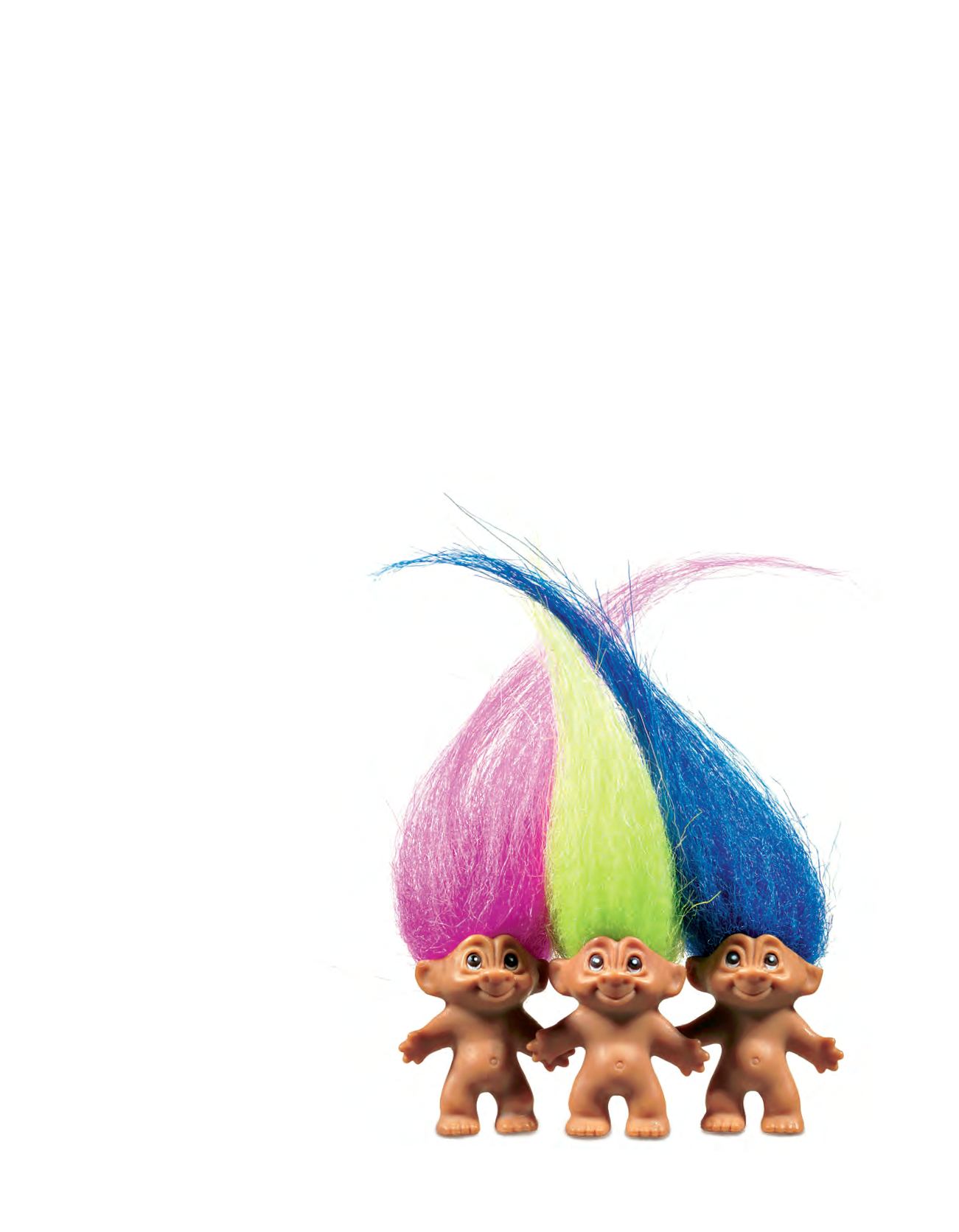
andcolourful shockofhair asDam’s trolls.
And– to the surpriseofDam–anerror
in thecopyrightnoticeof theoriginal
productmeant that a 1965court case
ruled that thedesignof the trollwas in the
publicdomain in theUS.
“Losing thecopyrighthadacrippling
impacton thebusiness,”saysØstergaard.
“Thomasbecameverydisillusionedand
losta lotof faith inhisability tomanagea
globalbrand, sohewentback toDenmark
toprotectwhatwas there.Hewasanartist,
notabusinessman.”
By theendof the ’60s, trollsand troll
merchandisewereeverywhere–and,
especially in theUSandUK, almostall
of it came fromcompaniesother than
DamThings.Therewere trollbedsheets,
beanbags,hairaccessoriesand jewellery,
troll stationery,T-shirts, pencil-toppers,
key ringsand, of course, trolldolls– in
everysize, ageandoccupation imaginable.
Then, asall fadsdo, justassuddenly
as theyappeared, trollsdisappeared–
relegated to thebackof closetsandminds
alike.Asa journalist recalled inanarticle
forFlorida’s
Evening Independent
: “Wish-
nikswerestill available insomeplaces in
smallquantities, but they just servedasa
depressing reminderofwhat trollsused to
be.Theymightaswellhavebroadcaston
nationalTV that childhoodwasover.”
For thenext 14years, trollsall but
vanished in theUSandUK, resurfacing
at garage salesandcharity storesasa
nostalgic reminderof abygoneera. In
Denmark, however,Damcontinued
tocrafthisdolls for sale throughout
ScandinaviaandEurope,where stricter
copyright lawspreventedcopies from
entering themarket.
“Popularityandsalesvariedduring these
years,but the trollnever leftScandinavia,”
saysØstergaard.During this time,Dam
developed20differentexpressions for the
dolls–allof themhappyormischievous,
with the familiarsparklingglasseyes–
and, asDamgrewolder,he introduceda
grandmaandgrandpa troll.Hewascontent,
itseemed, to let thebusinesscontinue
todevelopwithout thehassles (orwild
success)hehadencountered in theUS.
Thatwasuntil 1983,whenaNewYork
businessmannamedStevenStarkbrought
aDam trollnamedGeorgeback froma
work trip toGermany forhisdaughter.
ItwasStark’swife,Eva, presidentofEFS
Marketing Associates,however,who
wasmost excitedbyGeorge. “TheStarks
cameknockingonThomas’sdoor, keen
to rebuild the trollbrand in theUSafter
ithadbeengone formanyyears,” says
Østergaard.That sameyear,Evabegan
importing the trolls to theUS fromDam
Things, and reintroduced themat theToy
Fair inNewYorkunder thenewname
Norfin (amash-upof thewordselfin,
orphan, FinlandandNorway).
»
“Thomaswasdisillusionedand lost faith inhis
ability tomanageaglobal brand”
n
/043


