HowCERN,better
known forparticle
acceleratorsand the
Higgsboson,has
becomeacreative
artscentre
Is
this
really
an
arts
hub?
T
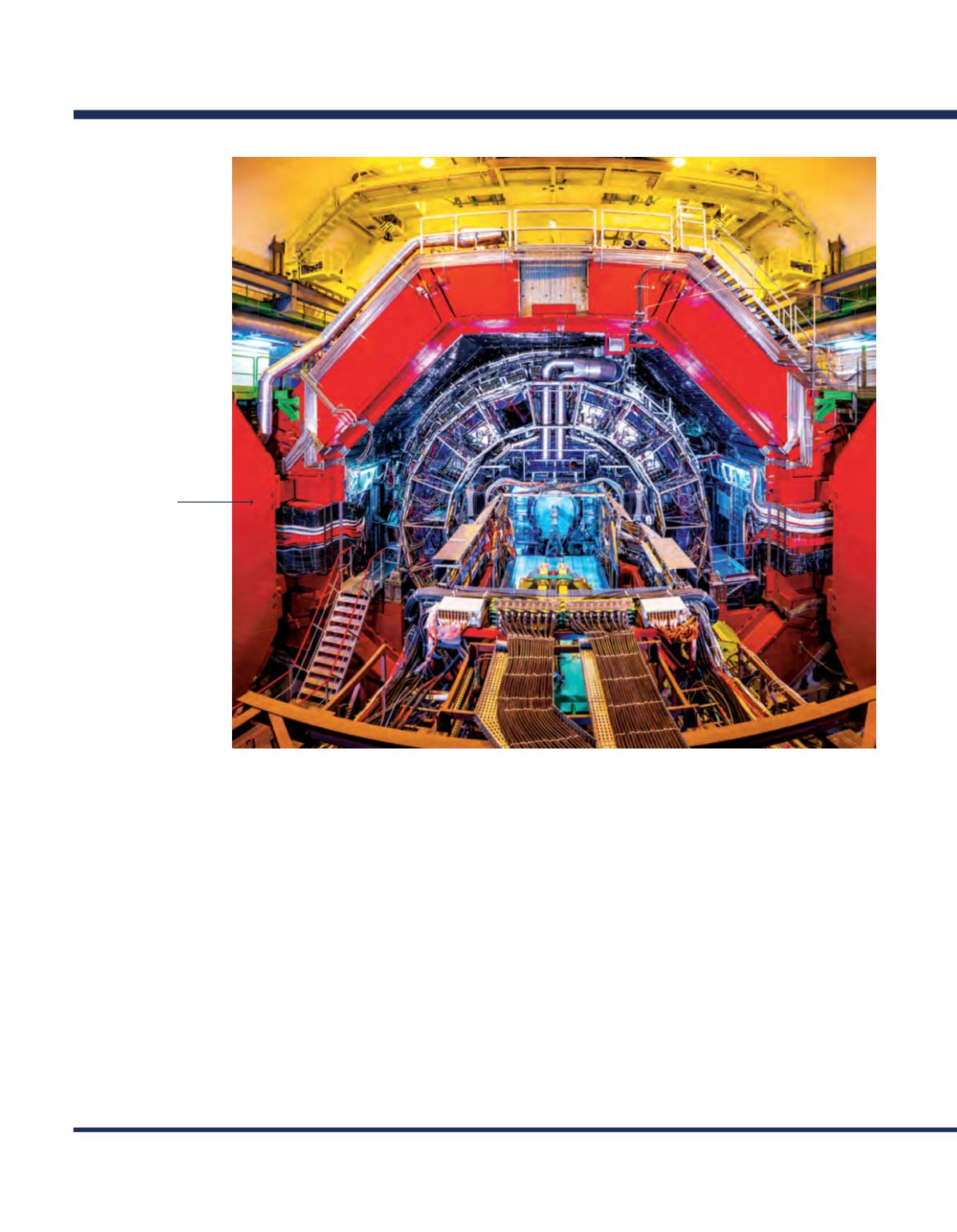
here arecomputer screens.
Lots of computer screens.
Tangles ofwire like
multi-colouredpasta. And
in themiddleof thecavern
ahugemetalmachinemadeof amillion
parts as high as twoor threehouses. The
CompactMuon Solenoid (CMS) – a
monster particlephysicsdetector – is like
a giant sculpture. If youput it in the
TurbineHall at TateModern itwould
garner positivenotices. Soperhaps it’s
littlewonder thatCERN– theEuropean
Organization forNuclearResearch, just
outsideGeneva–hasproved a fertile
hunting ground for all sortsof creative
types, fromwriters tochoreographers,
painters andcomposers.
In its 60th year, CERNhas been inviting
journalists in to look round. They have a
boxer’s one-two: first they lead you to
the terrifying underground tunnelswhere
scientists smash atoms togetherwith
such force that they could (theoretically)
create a black hole, then, awed, you
are shown art thatmega-science has
inspired. The two aren’t indivisible. In
the hall where the lifts descenddeep
underground, 100metres to theCMS
cavernbelow, Tai Sakuma andAchintya
Rao’s 3D cutaway images of themachine
– createdusing themodelling program
SketchUp – are slices of geometrical
genius that lead the eye to appreciate
thebeauty in the objects thatmake the
science happen.
Words
⁄
Chris Beanland
028\
n


