n
/019
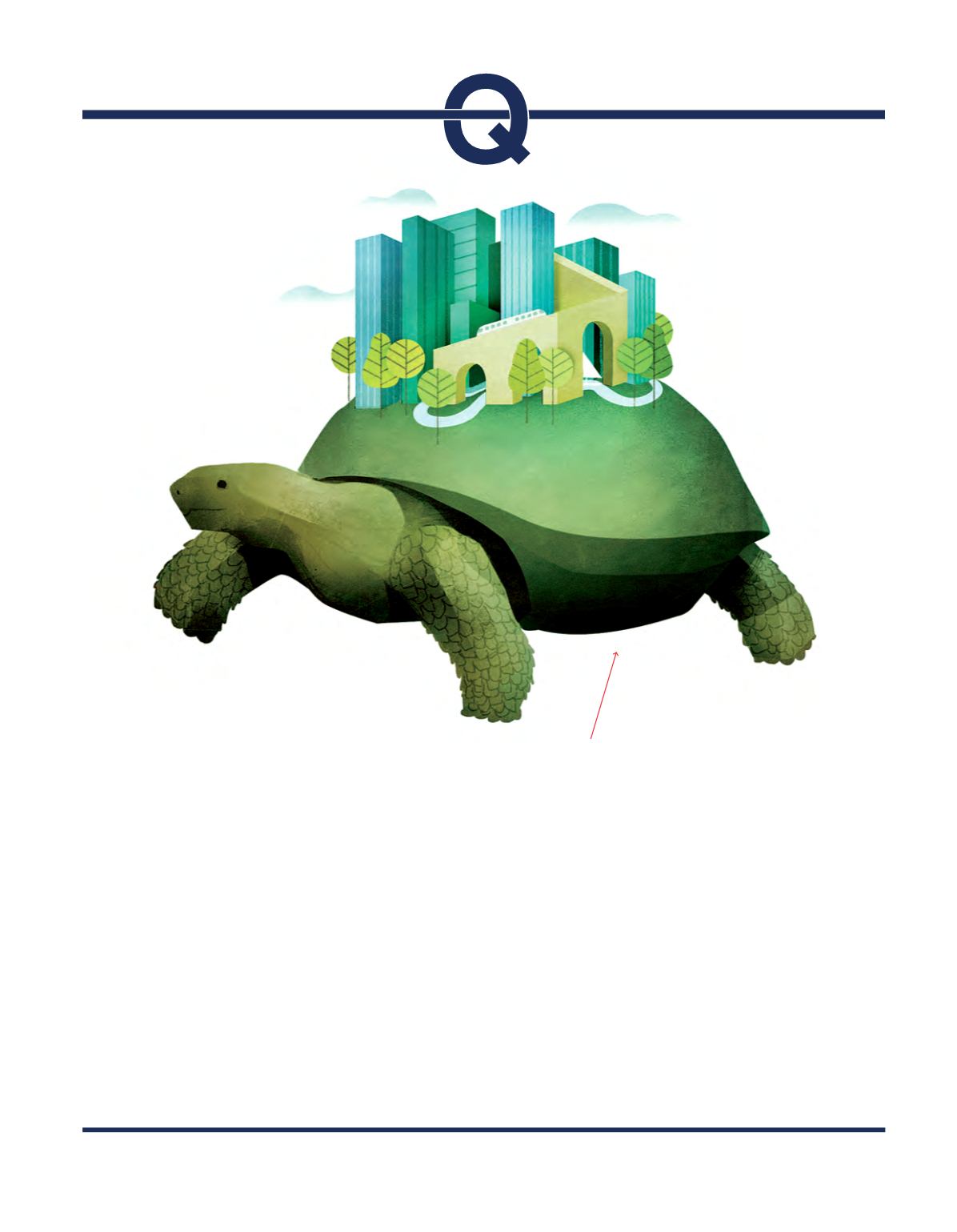
What’s a SlowCity?
Why theCittaslow (SlowCity)movement is
taking theworldbyvery leisurelystorm
“I
f youwalk around a
Cittaslow, you feel it
immediately,” says Pier
GiorgioOliveti, the
secretary general of
Cittaslow International. “They are
distinctive – you’re likely to find less
asphalt andmore likely to see local
shops, a farmer’smarket or a school
canteen linked to its own garden. It’s
about local identity and avoiding the
vulgarmistakes andbanalisation that
come from turbo-capitalism.”
TheCittaslowmovementwas born in
Italy in 1999, inspiredbyCarloPetrini’s
SlowFoodmovement – andhas since
spread tomore than200 towns in
30countries as theworldwide Slow
Movement has gatheredpace (see
Slow Travel, SlowDesign, SlowArt, Slow
Journalism, Slow Living and lotsmore).
There are threeCittaslows inNorway
(
see sidebaroverleaf
), two inDenmark
andone inboth Sweden andFinland. To
beeligible for fullmembership, a townhas
tohave apopulationof less than50,000
and score at least 50per cent in a self-
assessment against Cittaslow’s 71 stated
goals, which includeeverything from
well-maintained green spaces toplentiful
community activities andpolicies to
promoteorganic farming andeco-friendly
architecture. Once towns aremembers,
they strive todoevenbetter.
“Themistakepeoplemake, though,
is toconfusebeing Slowwithnot
doingmuch,” saysOliveti. “InEnglish
inparticular therecanbe anegative
connotation–when really a lot of it is
»
Illustration
⁄
Andrew Lyons
n
A


