20
MARCH2015
•
HEMISPHERESMAGAZINE.COM
dispatches
I
t’s a cold, damp day in Portland,
Oregon,perfectweather forahug—
even if thepersondoing thehugging is
someoneyouonly justmet.Andyou’re
payingher. By theminute.
SamanthaHess,apetiteandpeppy
31-year-old, describes herself as a
“professional cuddler.”Last fall, she
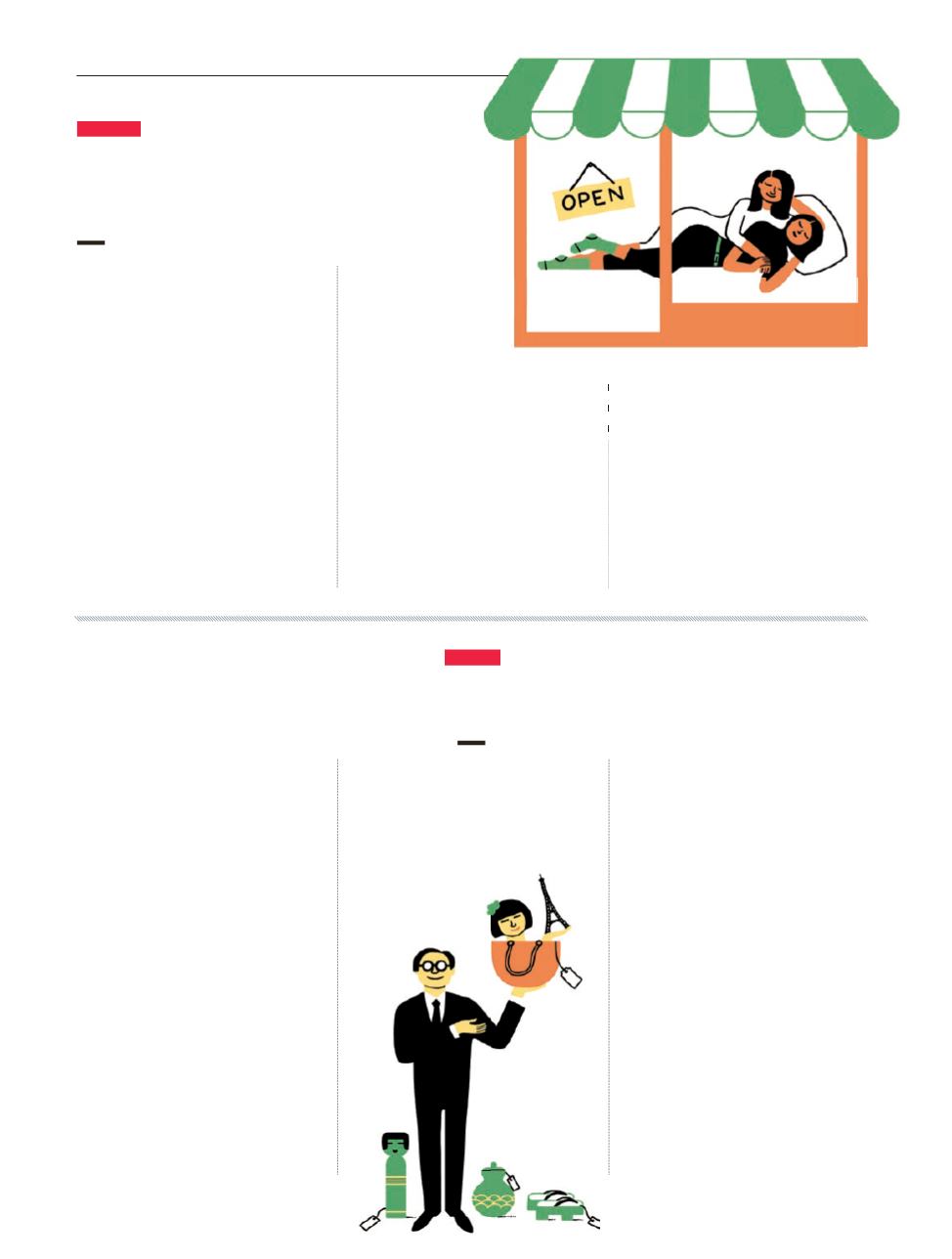
opened a drop-in shop in Portland’s
hip East Burnside area unambigu-
ously titledCuddleUpToMe.For a
buck aminute, you can get anything
from hand-holding to “TheTaran-
tino,”named after the film director’s
rumored foot fetish.
Hess’ shop has four rooms fitted
withanassortmentofplumpbedsand
couches.Today,she leads a first-time
client into a room
with a deep red color
scheme and “Love”
written on the door.
As the man removes
his shoes, Hess puts
on a James Taylor tune and joins
himon thebed.Amoment later,they
are spooning.
“It’s awkward the firstminute,”she
says.Themannods awkwardly.
Hess’ service has nothing to
dowith sex, but it is about intimacy.
At one point, she tugs gently on
her co-cuddler’s ear lobe, eliciting a
blissful smile.
The real idea,according toHess, is
that the absence of physical human
contact harms a person’s psyche,
and that even the facsimile of an
affectionate touch can have a heal-
ing effect.
“Shemakesme feel loved and that
I amworthy of love,” says a weekly
client namedKimberly. “If Iwon the
lottery, Iwould seeher everyday.”
When asked if society reallyneeds
pay-as-you-go hugging, the young
woman replies,“Doessocietyhaveany
lonelypeople?”
—BENJAMINPARZYBOK
WrapSessions
A “professional cuddler”promises to
snuggleyourworldlycaresaway
“H
ow’smyphoto?”chirps ayoung
woman holding up a Polaroid
selfie to her friend.They are huddled
in an aisle at a basement consignment
shop on Tokyo’s tree-lined avenue
Omotesando, surrounded by clothes,
furniture and sundry knick-knacks,
preparingavintagehandbag fordisplay.
“Cute!” the friend replies. “I think
you can sell the bag for muchmore
with that smilepinnedon it.”
Pass the Baton—the second outlet
from “retail visionary”Masamichi
Toyama—providesanodd spinon the
trade of second-hand goods.Each of
the items on sale comes with a snap-
shot of its former owner,alongwith a
personal note relating the item’s his-
tory.Buyers, in turn, are able towrite
back to the seller, thereby completing
the loop.
Many of the items here come from
notable figures in art or design, and
Tales forSale
A consignment storewhereevery itemhasa story
oregon
tokyo
some repeat sellers have attracted
followings. In one cabinet, alongside
bejeweled handbags and threadbare
teddy bears, there’s a men’s Versace
shirt, once the property of Chie
Yamamoto, an editor at the popular
women’smagazine
Anan
.“I had some
showpiecesuedepantsandamatching
scarf,”she has written on the item. “I
needed tocoordinate the look,and this
was a trulygreat fit.”Such items don’t
stayon the shelves for long.
Often,though,customers seem less
interested in the objects being sold
than their stories—orwhat the shop’s
ownerdescribesas“theuniquehistory
behind things.”One man shopping
here today calls it “amuseum.”That
description would please Toyama,
who views Pass the Baton less as a
commercial enterprise than as a cul-
tural institution, a kind of shifting,
collectivememoir.
“Shall I tell the story of my Paris
trip?” asks the young woman selling
thebag.
“Yes!”saysher friend,laughing.“And
of the boy who bought it for you!”
—
ROBERTMICHAELPOOLE


