Basic HTML Version


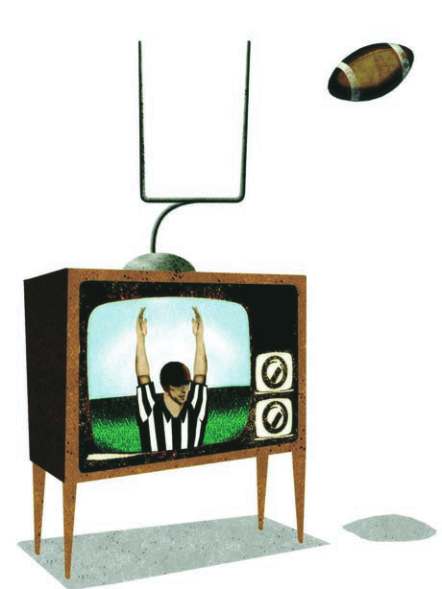
The time when families
across America sat down
together to watch the same
shows is forever gone ...
except in televised sports.
72
AUGUST 2012
•
HEMISPHERESMAGAZINE.COM
but I can’t. I’ve done the math on
howmuch I’d save if I eighty-sixedmy sat-
ellite subscription and cobbled together
my favorite shows using digital platforms.
It’s a lot. If I want to watch the Oakland
A’s, however, I have to go, cap in hand, to
my local cable provider. And there are
vast amounts of money changing hands
to keep it this way.
Last year, CBS, Fox and NBC signed
deals to carry NFL games for nine years,
paying the league almost $28 billion
for the privilege, a 63 percent hike over
the previous contract. Those paying for
NFL rights, including ESPN, will spend
about a quarter of their total program-
ming budgets on football. They’re not
doing this because they’re making a
profit on football—they’re investing in
their survival.
Not surprisingly, then, the networks
jealously guard their turf. MLB offers a TV
subscription service but with your local
team’s games blacked out, which kind
of defeats the purpose. Same with the
NBA. The NFL has a service called Game
Pass that lets you watch every game live
on your tablet or smartphone … provided
you live outside the U.S. and Mexico. If
you’re willing to look into more esoteric
options, there are many unofficial sites
streaming live sports—until the leagues’
technical teams find themand shut down
the stream.
If there’s ever to be a way out of this,
it’ll probably come from the leagues. If
the NFL, for example, were willing to
introduce something like Game Pass in the U.S., I’d gladly part
with the $200 the service costs elsewhere (I currently pay $1,500 a
year to my provider). In order to match the $3.1 billion the league
receives from the networks each year, it would need to find 15 mil-
lion people like me.
Wait, 15 million? Put that way, the idea starts to seem feasible.
NFL games a racted an average of 17.5 million viewers in 2011, with
more than 200millionwatching at least one game. Surely 10 percent
of these fans would pay a few hundred bucks a year to see games
wherever and whenever they want, on any device.
The leagues already have their own cable networks. The logical
next step would be to take complete control of their programming.
I’d bet that the first league that delivers its content directly to fans
will do just fine, andmaybe even thrive. Then again, I’ma Cleveland
Browns fan, so I’m irrationally hopeful.
Wired
special projects editor
MARK MCCLUSKY
(no armchair fan he) has
spent plenty of freezing Sunday afternoons in the old Cleveland Stadium.
AUGUST CROSSWORD ANSWERS
BRIGHT IDEAS
||
TECH