Basic HTML Version


TECH
HEMISPHERESMAGAZINE.COM
•
AUGUST 2012
•
ILLUSTRATIONS BY BRIAN STAUFFER
71
In a distant, shadowy, bygone
era (the 1990s), the Four Pillars
of TV—ABC, NBC, CBS and
Fox—towered over the media
landscape. The awesome
power of these networks
seemed destined to endure
for a thousand years. But
then came the Barbarian
Hordes—otherwise known
as Alternative Distribution
Platforms—and with them
the Great Disruption.
This story has been repeated so o en in
recent years, it bears the patina of myth.
The agents of fragmentation—Netflix,
TiVo, Hulu, iTunes—have changed the
game. The time when families across
America sat down together to watch the
same shows is forever gone.
Except in sports, which abides by a dif-
ferent set of rules.
“There’s no be er place to be in enter-
tainment than sports,” ESPN president
John Skipper told an industry audience
recently. “They cannot be knocked off,
they cannot be replicated and they must
be watched live, which makes them
uniquely valuable among entertainment
programming.”
No kidding. More than 99 percent of
ESPN programs are viewed live (watching
a game later is an open invitation to the
spoilers of the world, as I can tell you from
bi er experience). And here’s the kicker:
In order to watch a game live, you
must
watch it on TV. It’s pre y much the only
aspect of television that the network guys
have successfully locked down.
The networks aren’t alone in being
buffeted by the onslaught of disruptive
technologies. Pay TV too is on the wane,
with subscribers jumping ship at an alarm-
ing rate. Between 2008 and 2011, according
to Convergence Consulting Group, an
estimated 2.65 million viewers abandoned
cable TV for Internet video providers.
I’d like to join these people,
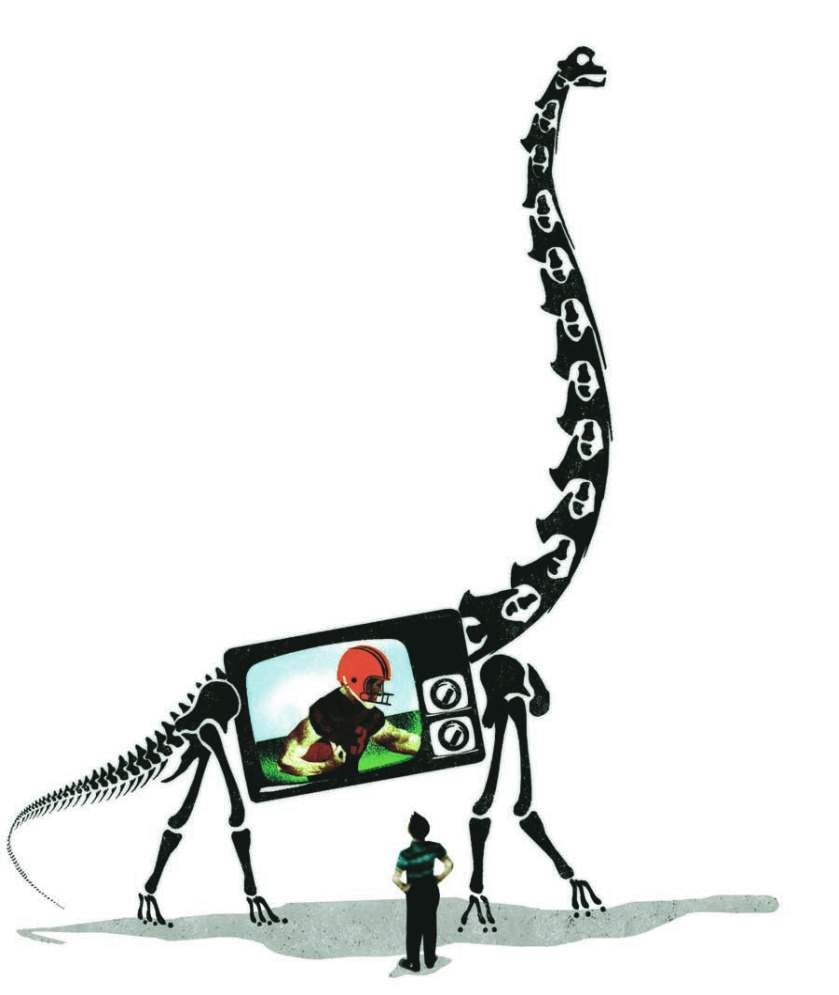
THEGAMEPLAN
HOWTV NETWORKS ARE USING SPORTS PROGRAMMING
TO STAVE OFF EXTINCTION
BYMARKMCCLUSKY