OCTOBER 1 2008
AMERICANWAY 65
asonesalready in theprogram)give
150 free performances every week
atoneof25belowground locations.
Scheduling is determined by the
musicians themselves, who call in
and select three-hour blocks at the
timesand locations theyprefer.The
mix of music reflects the diversity
of the city itself: There’s everything
from blues, jazz, pop, and classi-
cal to the sounds and melodies of
panpipes, steel drums, didgeridoos,
and exotic drums and stringed in-
struments. Whatever they play, all
subway buskers are unpaid; their
reward is attention and cash from
the more than five million people
who ride the trains everyday.
“We wanted to promote mass
transit and enhance the environ-
ment,” says Lydia Bradshaw, the
program’s manager, explaining
why theMTA startedMusicUnder
New York. “It’s an exciting venue
for the performers, and it’s exciting
for the riders to come across these
acts in the subway. Theyuplift your
spirits.”
Paul andMarcMueller, the duo
on the dulcimer and the box drum,
havebeenpartofMusicUnderNew
York since 1996. The brothers are
part of Mecca Bodega
cabodega.com), an accomplished
world-music band that has performed at
Lincoln Center, released seven CDs, ap-
pearedonGarrisonKeillor’s
APrairieHome
Companion
, and scored severalmovies (in-
cludingHBO’s
Subway Stories
, directed by
JonathanDemme).Paulalsoownsandruns
a recording studio inGranite Springs, New
York, andMarc is an architect inNewYork
City. But they still playunderground twoor
three times aweek, and they love thegig.
“Because of the spontaneity of it,” says
Marc, 48. “And it’s honest. If people don’t
like themusic, they don’t have to stay. But
you can really connect too. And there’s al-
ways a new batch of people, so it’s always
fresh.”
“I like thediversity, ”agreesPaul, 43. “We
reach people that wewouldn’t in any other
way. And the amount of workwe’ve gotten
from it is amazing — soundtracks, studio
sessions, festivals,weddings.”
Themoney tossed into the case isn’t bad,
either,onmostdays. If theyplay foracouple
of hours, they aren’t happy unless they pull
inmore than $100 each. Sometimes, they
domuchbetter.Theyonce sold200CDs, at
$10 a pop, in less than three hours. “We’ve
sold somanyCDsdownhere, peoplewould
be shocked,” says Paul. “More than most
bands sell on tour,” adds Marc. (They de-
cline to provide an exact number but claim
it’s “close to 100,000.”)
On the other hand, sometimes the split
is depressingly paltry and the hassles are
acutely vexing— the clamor and screech of
trains, the labor of hauling equipment, the
antics of street crazies, and,worst of all, the
indifference of thousands. “My psyche is
used to it now,” says Paul. “You need to be
resilient and flexible and streetwise.” Truly
baddays, though, are rare. Inadozenyears,
theyhavebeen rippedoff only three times.
Some locations — Union Square, Penn
Station, and 34th Street/Herald Square
—work better forMecca Bodega in terms
of both acoustics and demographics. “Up-
town, a classical violinist might do better,”
says Paul. Other variablesmatter too. Peo-
ple are less likely to listen in bad weather
or early in the week; things improve on
Thursday, when commuters start thinking
about theweekend.
Both brothers agree, though, that the
best thing about the subway gig is the un-
filtered, unpredictable interactionswith the
public. People often leave notes, expressing
variations on a common theme: “Thanks.
You helped me forget my rotten day.” Im-
migrants fromall over askaboutPaul’sdul-
cimer, a type of zither, because it reminds
them of their homeland’s santir, citera, or
guqin. And regularswonderwhen they can
get anewCD.
“Butwhat reallygetsme every time,” says
Paul, “and ithappensa lot, iswhenpeopleof
different backgrounds, ethnicities, or ages,
whoprobablywouldn’t spend time together
anywhere else, spontaneously start dancing
together. That’shuman to the roots.”
While the
Muellers
are subway vet-
erans, Dagmar 2 just finished its first year
underground. “Thefirst thingwe learned is
how tough it is to sing for threehours,” says
Jim Bauer, 53, who also plays guitar and
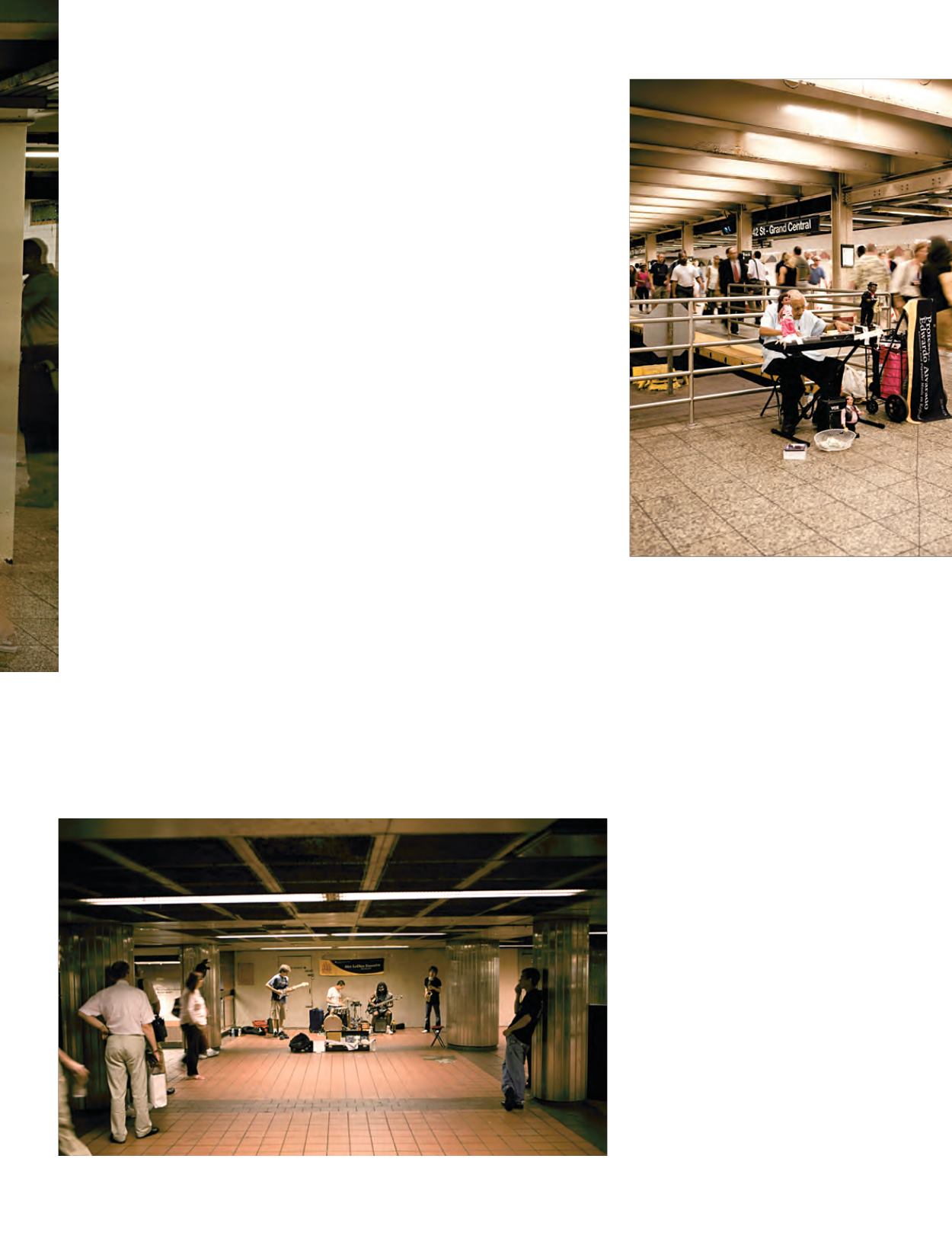
AlexLoDico
Ensemble,
GrandCentral
Terminal
GrandCentral
Terminal


