68 AMERICANWAY
January 1 2008
Music
SingerMatthewCaws explains how rock
bandnadaSurf becamepopular again,
thanks inpart toTV. ByBobMehr
Commercial Rock
Selling out isn’twhat it used
to be. LikeNadaSurf, these
acts have gotten a boost
from smart songplacement.
1
The Shins
TheShins’ “newSlang” scored
aMcDonald’s ad, and theband
evenwrote some originalmusic for
theGap. But that’s nothing. TheShins
alsohaveperformedonandbeen
praisedby characters from
Gilmore
Girls
, andnot onlydid theirmusic
make the soundtrackof themovie
GardenState
butnataliePortman’s
character declared in thefilm that
theShinswere a life-changingband.
2
Cary Brothers
Once a strugglingnashville
folk-pop songsmith, the now
Losangeles–basedBrothers has be-
come a favorite of Hollywoodmusic
supervisors. you’ve heard “BlueEyes”
and “Waiting for you” on
Scrubs
,
“Waiting for your Letter” on
Small-
ville
, and “Something” on
Bones
. and
“ride” has popped up on
ER
,
Scrubs
,
and the big-screen’s
The Last Kiss
.
3
Aqualung
aplacement phenomenon
onboth sides of theatlantic,
aqualung— the pseudonym of Brit-
ishmusicianMatt Hales— shot to
fame after his slow, piano-driven
melody “Strange andBeautiful”was
used in a2002VolkswagenBeetle
ad, later becoming apop hit in his
nativeunitedKingdom. In theunited
States, Hales’s song “Left Behind”
has served as the theme song for
Chrysler commercials. His breathy
tune “Something toBelieve In” has
been on
OneTreeHill
,
CSI:Miami
,
and
GossipGirl
.
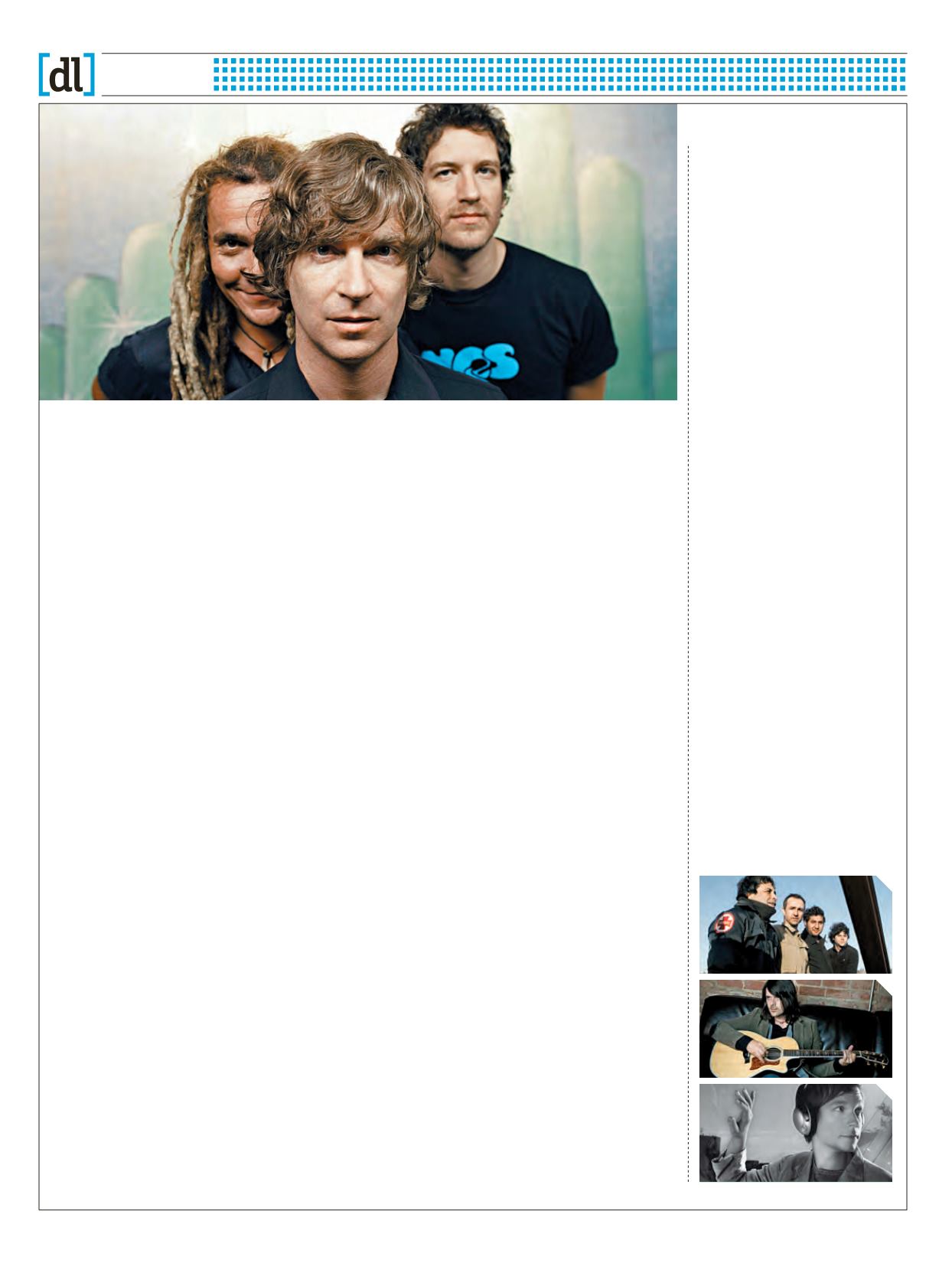
Popularity may be overrated. At least, that’s what the
bandNadaSurf foundoutwhena songoff its 1996debut
album
High/Low
became a surprise hit. Titled “Popular,”
the successful high-school-is-hard anthem helped the
New York City trio — singer/guitarist Matthew Caws,
drummer Ira Elliot, and bassist Daniel Lorca— build a
youthful following in theUnitedStates andEurope.
But in the music business, popularity begets expecta-
tions of profitability. And when Elektra Records execs
didn’t feel they had a “Popular”-style hit on Nada Surf’s
sophomore album,
The Proximity Effect
, the band and la-
bel partedways. Then the follow-up,when itwas released
in 1999, didn’t sell aswell as
High/Low
had.
But nine years later, Nada Surf’s 40-somethingmusi-
cians are again finding themselves popularwith a youth-
ful set, thanks in part to the critically acclaimed 2005
album
TheWeight Is aGift
and also to getting theirmu-
sic heard onTV shows like
TheO.C.
and
One TreeHill
and
in films like
Disturbia
. “Our career arc has been a strange
one,” Caws says as the releasedate forNadaSurf’s latest
album,
Lucky
, nears. “We got it all backward. But in the
end, we’rewherewewant to be.”
Part of your recent career resurgence has come
from getting yourmusic into TV shows, movies, and
even ads. How do those kinds of opportunities come
about?
With us, we’ve been around long enough that
people who kind of grew up with our music now have
the kinds of jobs where they can choose bands for their
TV show or movie or whatever. In the case of
The O.C.
,
the show’s creator [Josh Schwartz] was a fan and called
with an idea for us to cover OMD’s “If You Leave.” That’s
something that really came straight from his vision.
But it’s not always that romantic. We work with a
company called Bank Robber Music. They’re song plac-
ers. That’s their specialty— finding licensing opportuni-
ties for bands. They put these things together, and then
we’re asked to accept them or turn them down based
onwhether we’re cool with the idea for a film, or with a
product, that ourmusicwill be used to advertise.
People used to think of those kinds of opportunities
as selling out. But doesn’t it seem that in the past
few years, the stigma associatedwith bands’ allow-
Surf’sUp
ing their music to be used in ads has faded?
That’s
become kind of a moot point ever since the Shins did a
McDonald’s commercial. The moral concerns just evapo-
rated immediately. No, seriously, there’sagrowingaware-
ness that it’s really hard to make a living playing music,
and if doing the occasional ad allows us to keepmaking
records, then it’sokay. Forus, it reallyhasmeant a lot.
The
Weight Is a Gift
was largely financedwith the proceeds
from a cell-phone commercial inBelgium, of all things.
The thing about being on a small label is that you do
everything yourself. We don’t get any tour support; we
don’t get any money to make our records. We love the
label we’reworkingwith, but we really have to front our
own expenses and pay our ownway, and those licensing
opportunities let you do that.
It seems like there was a different kind of career
motivation behind each of your records. How does
Lucky
compare with the others?
After the first al-
bum, it seemed to somany people that wewere a fluke.
So we were dying to prove ourselves, which I think is a
common second-album concern. By the third album, we
were really liberated, because no one was paying atten-
tionanymoreandwedidn’t havea record company.With
the fourth album, it was likewe had something to prove
all over again, because we’d had a little comeback suc-
cess anddidn’t have the element of surprise anymore. By
now, we’ve come to termswith all of that. There’s never
any clear intentwith our records; we’re all over the shop
every time. There’s rock music and quiet songs, some
sunny melodies, some dark melodies, and everything in
between.
Since you have both a long-term fan base andmore
recent exposure on some youth-oriented TV shows,
do you see thatmix reflected in your audience now?
Absolutely. Our live audience has really grown by a sur-
prising degree. It’s prettywidespread now. It is funny to
look out and see really young girls who were probably
introduced to ourmusic from, like,
One TreeHill
and then
[see] a whole section of older fans — record fanatics,
guyswith beardswho are into anything that has vaguely
’60smelodies. But, hey, I love thoseguys too. I amone of
those guys. Justwithout the beard, of course.
1
2
3


