Music
70 AMERICANWAY
NOVEMBER 1 2007
Youhadnever coveredBuckOwens’smusic
before.Whynow?
After Buck passed away, we
were doing a lot of his songs as a tribute in our live
shows, andwe just couldn’t stopdoing thatmate-
rial. I felt like I owed it toBuck to take him out
withme onemore time— or rather that hewas
graciously coming outwithme onemore time. The
record label saw us and expressed an interest in
havingme do a tribute record. ¶WhileBuckwas
alive, I’d consciously avoided recording his songs.
I never ever considered usurping his right to own
hismusic and those songs. But after his passing, I
thought, Okay, maybe now is the time to do it.
Owens’s songs are iconic tomany country
fans.Was it difficult toput your own spinon
the tunes?
We always startedfirstwithBuck’s
original arrangement as the template; thenwe
listened to see howwe could add or change things.
Ultimately, Iwanted an album thatwould have
some continuity from song to song, and thatwould
give an overview ofwhat I remembered about
Dwight Yoakam’s voice isbreaking.
He’son thephone fromhishome in LosAngeles, talkingabout his
friendandmusicalmentor, the lateBuckOwens,whosebestworkshehas just coveredonhisnewal-
bum,
Dwight SingsBuck
. It’sbeen just over ayear andahalfsinceOwensdied, at age 76, andYoakam
still gets chokedup—moved to tears, even—whenhediscusses themanmost ofusknewasoneof the
pickin’ andgrinnin’ hostsof the comedy show
HeeHaw
.
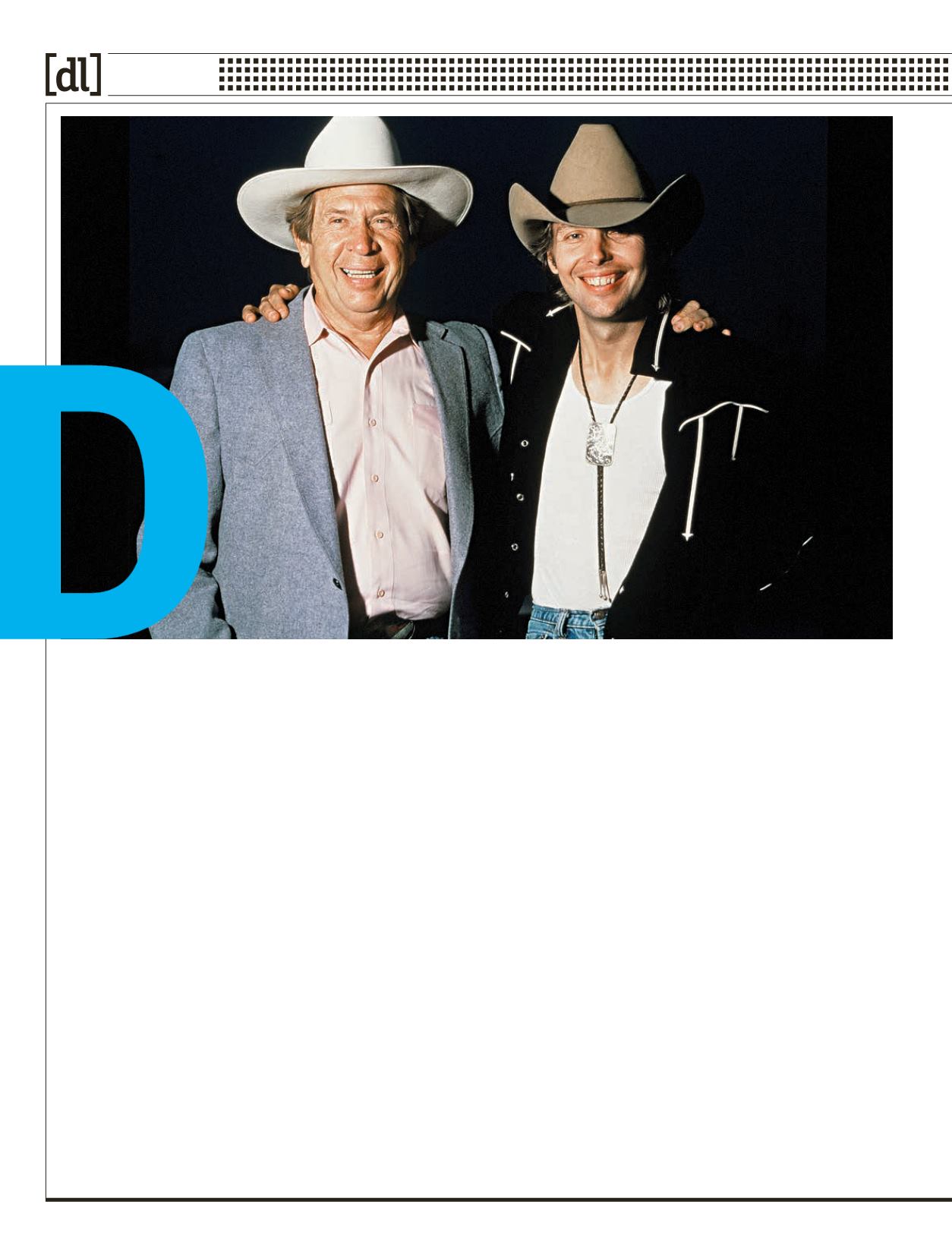
TheOwensYoakam knewwasmore complicated thanhis cornponeTVpersona. “Iwas very
lucky that Igot toknowBuckpersonallyandexpress theenormousdebt of gratitude Iowed
him,” Yoakam says. ¶What Yoakam is indebted toOwens for is his sound, the oneYoakam’s
best known for, a twangy, rootsy styleof country that, during the 1980s,whenYoakamfirst
gainednotice,was a rebellionagainst themorepolishedmusic comingout ofNashville. That
styleof countrywasa return to the soundOwenshadpopularized in the1950sand ’60s, the
so-called Bakersfield sound. Indeed, one of Yoakam’s early hits, “LittleWays,” paid homage
to theBakersfield sound and toOwens. ¶That song sparked a friendship and a professional
collaboration between the twomen that would yield a No. 1 duet, “Streets of Bakersfield,”
and numerous tours. Though Yoakam downplays his role, his encouragement was pivotal in
rousing Owens from the self-imposed recording retirement he’d been in since the death of
his best friend and musical foil, guitarist Don Rich, in 1974. Before that, especially before
HeeHaw
, Owens hadbeenat thevanguardofAmericanmusic. In the ’60s, Owens’s stinging
telecaster sound, distinctive vocals, and hot-wired LPs made him not only a country-chart
topper but also an inspiration to young rockers everywhere. Owens was covered by the
Beatles andwas referenced in aCreedence Clearwater Revival song. In 1968, he played for
both Lyndon Johnson in theWhite House and for a packed house of hippies at the Fillmore
Auditorium in San Francisco. Hisworkwould ultimately have a profound impact on several
generations ofmusicians—andonYoakam.Maybe that’swhy it seemednatural toYoakam
to keep Owens’s music alive with
Dwight Sings Buck
— even though the memories still
sometimesmake him sad.


