JULY 1 2007
AMERICANWAY 71
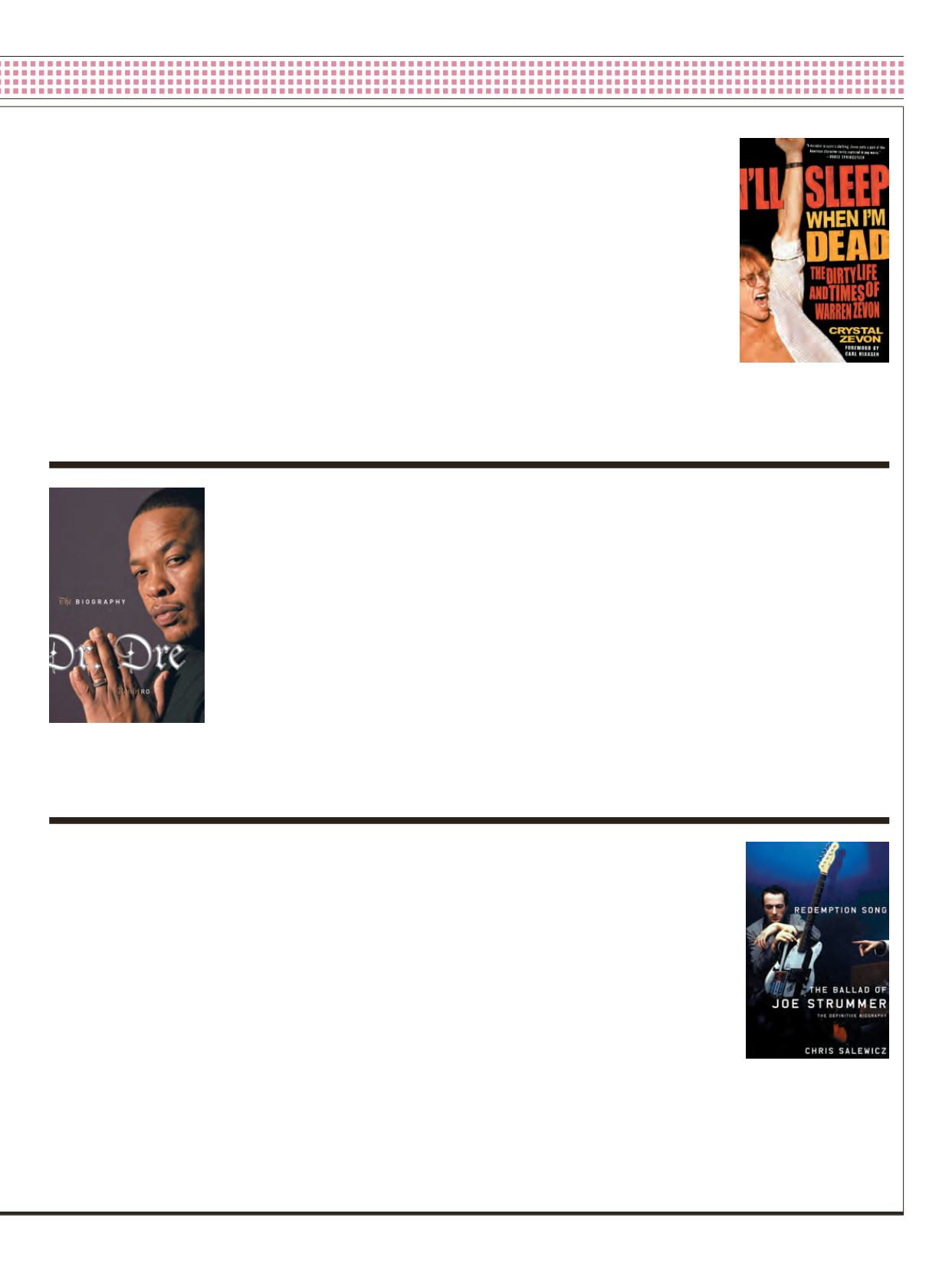
I’ll SleepWhen I’mDead: TheDirty Life andTimes ofWarrenZevon
ByCrystal Zevon (Ecco, $27)
“All good stories,”Warren Zevon once observed, “end in death.” As awriter, Zevon knew the value of a big finish. By the time he passed
away in 2003, at the age of 56, from a form of lung cancer, he’dmanaged to create a finaleworthy of one of his best songs, closing his
life and careerwith the gold-selling album
TheWind
andwith a long, memorable goodbye. One of Zevon’s final wisheswas for his ex-wife,
Crystal, to author his biography. He implored her to not shy away from exposing themost lurid and unflattering aspects of his lifewhen
writing the book, telling her, “You’ve got to tell the whole truth, even the awful, ugly parts, ’cause that’s the excitable boy who wrote
them excitable songs.” Her nearly four-year effort— duringwhich she conducted close to90 interviews and pored over dozens of private
journals— has resulted in this remarkable history. As its title suggests, the book is an unflinching look at an always complex, frequently
unpleasant, ultimately singular figure. Zevon’s peers—BobDylan, BruceSpringsteen, andNeil Young— lauded hiswork, but Zevon joked
that hewas “a folk singer who accidentally had one big hit”; he saw the success of 1978’s “Werewolves of London” as an aberration in a
career that was as commercially frustrating as his work was brilliant.
I’ll SleepWhen I’m Dead
is testament to Zevon’s remarkable life:
His childhood—his fatherwas a Jewishgangster, hismother aMormon— andhis early years knocking about the LosAngelesmusic scene are as entertaining as his later,
more publicized successes and as interesting as his battleswithbooze and self-destruction. Crystal, a journalist and amedia activist, has constructed anutterly riveting tale
that spares nothingandnoone— includingherself—detailingZevon’s addictions, infidelities, andmost intimatemoments inan effort tomake this rare and troubled talent
understood. —BobMehr
TheBiography: Dr. Dre
ByRoninRo (Thunder’sMouthPress, $25)
Before such a title would have been considered an insult, many observers had trumpeted rap producer Dr. Dre as “the Phil Spector of
hip-hop.” It was an apt enough comparison, as bothmen had reshaped the music industry, redefined youth culture, andmade massive
fortunes through their sheer creativity and sonic innovation in the recording studio.With
The Biography
, Ronin Ro— an award-winning
nonfiction reporter andprolific author— attempts to examine the life andwork of a gifted and frequently conflicted visionary. The book
moves quickly through the early years of Compton-bred Andre Young, finding its feet in exploring the fascination that the newly chris-
tened Dr. Dre hadwith the still-fledgling early ’80s rap game. As the creative force behind controversial group NWA, Dre achieved his
first great triumphwhile peddling a hard-core thug image that would haunt him in later years. Hewas amillionaire by the time hewas
24, but his success was blighted by the death of his younger brother in a street fight in 1989. Dre then branched off into a solo career,
and the creation and impact of
The Chronic
, his 1992 zeitgeist-alteringmasterpiece, is explored in vivid detail. The juiciest parts of the
story concernDre’s role in themeteoric rise of DeathRow records, the label he builtwithnotorious gangster figureSugeKnight. Ro, who
explored themore luriddetails of theDre/DeathRow relationship in
HaveGunWill Travel
, his studyof the label, dissects theyears of fear,
feuding, and recrimination that followed their split in 1996. Though the book has a few narrative lulls as Dre quietly coasts through the late ’90s, the story eventually picks
uppace, exploringhismore recentworkwithEminemand50Cent—associations that haveushered inanother, evenmore lucrative eraof success. Impeccably researched,
andwrittenwithan intuitivegraspof insider politics, thebook is awelcome andnecessary addition to thegrowing library of hip-hop scholarship, even if it doesn’t quite feel
like the definitive portrait its title suggests. —B.M.
Redemption Song: TheBalladof Joe Strummer
ByChris Salewicz (Faber andFaber, $30)
Despite the Clash’s status as “theOnlyBandThatMatters,” for years therewas little published on the reveredBritish rock group. Only
Marcus Gray’s 1996 demystifying
The Last Gang in Town
attempted to recount the band’s relatively brief but eventful history in any
detail. However, since front man Joe Strummer’s tragic death from an undiagnosed heart defect in 2002, there’s been an explosion
of books— covering everything from studies devoted to the group’s politics to its recording techniques. Into this suddenly crowded
field comes Chris Salewicz’s Strummer bio,
Redemption Song
. It bills itself as the definitive biography, and it’s a claim the author can
make legitimately, as hewas a longtime intimate of thegroupand regardedbyStrummer as the “only journalist he trusted.” Thebook’s
narrative is unique, too: Part traditional bio, part personal remembrance, and part investigative odyssey, it feels more like the result
of a serious quest than a quick cashing in. Born JohnMellor, Strummerwas raised the privileged son of awell-traveled, and traveling,
foreign diplomat. It was this itinerant childhood that helped him develop his curiosity about different types of music and cultures. An
art-school failure, Strummer first came to fame leadingLondonpub rockers the 101ers, but heditched that band in 1976 in favor of the
burgeoningpunkmovement. Pairingupwith songwriter/partnerMickJones, bassistPaul Simonon, drummerTopperHeadon, andmanager/provocateurBernieRhodes,
he formed the Clash. As other punk groups fell by thewayside, the Clash evolvedmusically and personally, achieving an unprecedented global success before implod-
ing under theweight of Strummer’s leadership in 1985. With the cooperation of family, friends, and bandmates, Salewicz offers plenty of fresh insights, particularly
concerning the suicide of Strummer’s older brother and the singer’s own lifelong battleswith depression.
Redemption Song
, however, is not hagiography: The author
doesn’t hesitate toportray themany sides of Strummer’s complex, contradictory, andoftenhypocritical personality, offeringwhat shouldbe thefinalwordon theClash
and its leader. —B.M.


