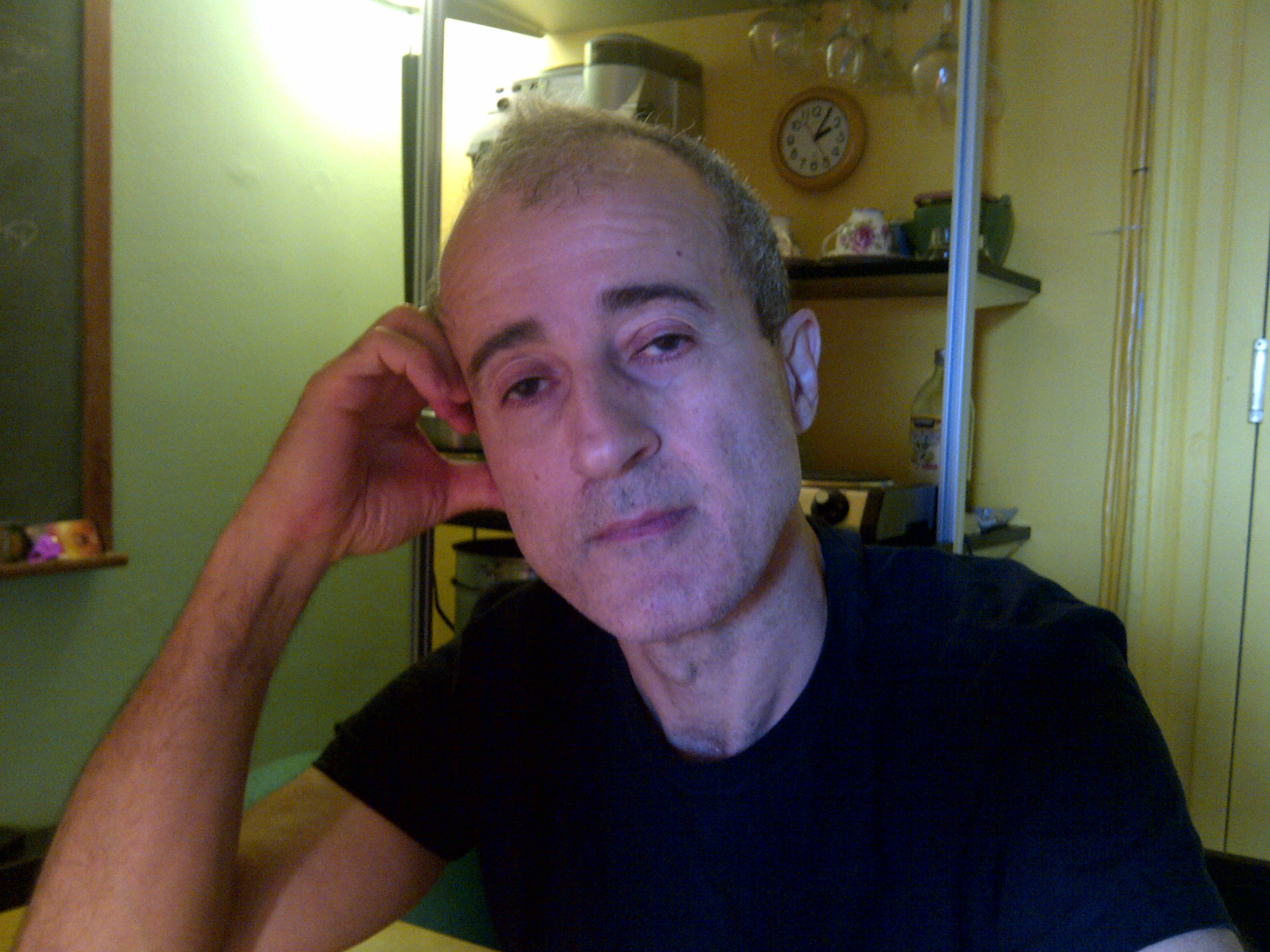
6.28.12
Face to Face meeting with Bobby Previte
At his home on W. 86th St.
Partial transcript
Clarinda Mac Low: I've been thinking about how intimate art-making is, how it's a short-cut to intimacy, and intimacy you can't find anywhere else. I've never done anything else like it, really. Certainly not in the laboratory. I sometimes wonder if I'm drawn to the intimacy and the art is kind of secondary. I'm drawn to being involved with people, and art is just an excuse to get there. Because I'm so shy.
Bobby Previte: I understand completely. Because onstage is sometimes the only place that anything is REAL.
CML: Which is really funny, because oftentimes it's exactly NOT real. But you have to be so present.
BP: There's something about it that immediately relaxes me.
CML: Me too.
BP: I was joking with
Lise after Mt. Tremper, she said she liked what I did, and I said, "I don't do rehearsal. When the red light comes on, that's when I go. It's interesting to me, your idea of everything being the piece, because I'm a little bit binary. I'm very focused on the performance. When I'm in performance, that's when I give totally. it's different in rehearsal for me.
CML: That's how musicians operate.
BP: Maybe. Because we know what's going to happen.
CML: Or, if you're improvising.
BP: Or if you're improvising you don't even rehearse because you don't want to ruin it. So I'm really used to using rehearsal to get the barest sketch of things to do just so that we can go and do the performance.
CML: That's funny, because I'm kind of with you on that. I don't really like rehearsing. I feel like it didn't serve what I wanted to do. so I ended up making all this stuff where it's all about the planning, and you can't do it until you do it. Like James' solo at MTA--he was saying he can't really do it until there's an audience. And that's the kind of art I'm making now. I'm interested in, can this idea of planning be a rehearsal process? How do they intertwine? Do they? You have a meeting about how to order it. But then if you have 40 people performing over the course of 3 nights you have to plan A LOT, and that's where the rehearsing comes in. And then some people are so different, they're so different, so detail-oriented. Like Carolyn _choreographs_.
It is a structured improv, but very detailed. That takes time in a different way that musical composition does. It's taking your body and learning with it, and it's never been my interest--which is funny because I was supposed to be a dancer and I wrote a whole thing about it, how I had a dirty little secret, that I didn't like movement.
So for you and for a couple of other people, who haven't done a lot of work with dancers--you haven't done a lot of work with dance, have you?
BP: No, but I've been in a lot of theater productions.
CML: That's different, but has some key similarities. It's still rehearsal.
BP: So I've been in a lot of things where, you know, you have to rehearse. But there is a kind of thing on the other side--it just depends on what you're trying to do, how you envision the performance. because there's always this thing, and I get this from musicians all the time, if I do have to really--some things, with a certain level of sophistication, you want to know better so that you can be freer with it.