Switch to mobile version
Post image for Be Dignified, as a Rule

Much of what you’ve read on this blog has been written in pajama pants. Writing directly follows meditation in my morning routine, so I’ve often gone right from the cushion to the coffeepot to the desk.

Occasionally life would remind me that there are practical reasons to put on socially acceptable pants before beginning the workday. Someone could knock on the door, for example. But for the most part it seemed like an unnecessary formality that only added friction to the getting-to-work process.

Today I do get properly dressed before going to my desk, because it’s simply more conducive to productivity. Changing into leaving-the-house clothes gives me a “going to work” feeling, which is the kind of feeling you want whenever you’re going to work, even if your office is just across the hall.

Recently I noticed that this effect is stronger the better I dress. Jeans and a pullover are better than PJs and a hoodie. Proper slacks and a button-up shirt are even better. I’m sure an Edwardian waistcoat and tie would generate an even stronger feeling of being a dignified writer getting to work.

Read More

Post image for 6 Unusually Specific Suggestions for Eating More Sensibly

Here’s an idea for a science fiction novel: there’s a planet whose residents have spent millions of years learning to find a scarce and precious stubstance that keeps them alive. Evolution weeded out everyone who wasn’t extremely determined to locate and exploit this resource. This precious substance, in its many forms, is naturally loved and celebrated by all, and has a central role in every culture on the planet.

The sci-fi twist comes when people discover technologies that can produce vast quantities of this once-scarce resource. Over the course of a few generations, people go from contending with its scarcity to contending with its overabundance. Each character in the book has to find their own way to manage the consequences of this traumatic reversal, namely that they are haunted by ceaseless instinctual cravings that no longer serve them.

This is of course a major plotline in our own reality. We’re biologically tuned for a world with scarce eating opportunities, but happen to find ourselves in an artificial environment that contains a deadly overabundance of such opportunities. Most of the food encountered in this environment is of low quality, optimized for scale, and designed to exploit precisely those pleasure-seeking instincts that are so hard to manage. It would be a thrilling story if we weren’t entangled in it ourselves.

Read More
Post image for Don’t Buy the Six-Dollar Cauliflower

A few weeks ago I went to an office supply store to buy some envelopes big enough to fit the construction-paper birthday card I’d made for my friend.

Pardon the language, but the prices were fucking ludicrous:

Thirty-seven dollars for a 50-count box of 9×12 envelopes.

Forty-six dollars for a 100-count box of slightly smaller ones.

Thirteen-something dollars for a 25-count package of the half-size ones.

Read More
Post image for Most Phone Use is a Tragic Loss of Life

I don’t know if people say this anymore, but it was common in the 1990s to say “smoking one cigarette takes ten minutes off your life.”

It obviously doesn’t work like that exactly, but it may not be total nonsense — this study says the loss of life comes to about eleven minutes, by adding up all known increased health risks and their life-expectancy differences, and dividing by the average number of cigarettes smoked by daily smokers. Smoking X cigarettes shortens a life, on average, by XY minutes. Fair enough.

Most of my friends and family don’t know this, but during my early twenties I smoked daily, and I thought about that 10-minute figure a lot. There were five customary cigarettes in my daily routine while I attended school: the waiting for the bus smoke, the arriving at school smoke, the mid-morning smoke, the after lunch smoke, and the waiting for the bus home smoke. There would be at least one other cigarette every day, which adds up to about an hour of life sacrificed per day to this ritual behavior, according to the formula. That’s about three hours lost per pack, and a day and a half per carton.

Read More
Post image for Thoughts Are Made to Be Thrown Out

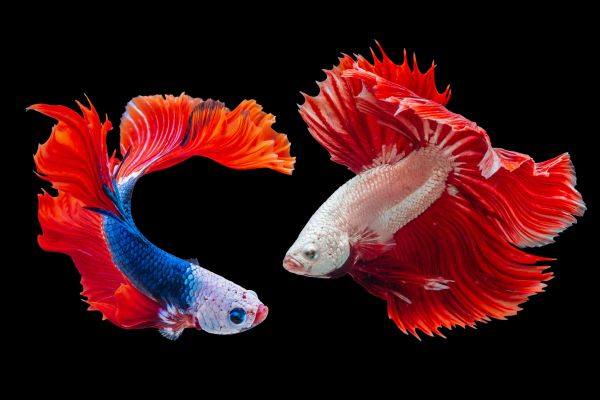
When I was a kid we had an aquarium with a betta in it, also known as a Siamese fighting fish. We were told that male betta fish try to kill each other on sight, so you are definitely not supposed to hold a mirror up to the side of the tank to make it look like it has a competitor.

Of course we had to try it once, and it did indeed try to fight its mirror-bound intruder, so my dad made us stop before it hurt itself. When we took the mirror away, it resumed its normal routine of lazily swimming around, as though its foe had never been there at all. It didn’t seem to remember the other fish or worry about it.

I assume it moved on so quickly because fish do not have the ability, as we do, to entertain imaginary scenarios in their heads. They respond to what they’re experiencing — a hostile fish staring at them, an attractive fish flirting with them — but they don’t swim around reminiscing about past scuffles and rehearsing potential future ones. As a salmon flings itself upstream, it does not suffer recurring mental images of being torn apart by a bear or filleted on a rock. It just swims and eats as instincts dictate, and maybe it will make it and maybe not, but it doesn’t agonize over its range of possible fates.

Read More
Post image for The Right Now List

Some percentage of you are your own boss, or work from home, or otherwise have a dangerous level of flexibility around when you actually get to work.

Some of you also know you’re especially prone to procrastination, even on a good day.

If you’re both of these things, you know how deadly the combination can be. Severe procrastination isn’t just annoying or frustrating, it’s a tragic loss of life. You let days and weeks go by for no good reason and hate yourself for it.

After battling with this for several decades, I have no cures but many tools.

Read More
Post image for Every January, Make Two Lists

I’m always looking for alternatives to standard New Year’s resolutions. They’re just too simple to work unless you get lucky. You gather your resolve around one behavioral aspiration, apply it to that festive but fleeting moment when the calendar changes over, and hope there are no momentum-killing setbacks too early on.

I’m trying something different this year. I started it in December but I could see myself doing this on New Year’s Day every year. It could be done alongside traditional resolutions, or instead of them.

Here’s the basic idea. Instead of trying to change overnight on January 1st, you use the whole year to do less of certain things that you know are a net problem for you, and more of certain other things that you know are a net benefit. You’re not attempting to eliminate, or guarantee, any behaviors on your part. You’re only trying to move in the right direction, consistently, with a small handful of habits.

I know that sounds vague, and it is, until you name these behaviors explicitly by sitting down with a cup of coffee and making two lists.

Read More
Post image for You Need to See Things Differently to Do Things Differently

If you want to get better at something – writing screenplays, gardening, making omelets, playing Tetris, organizing closets — find a way to do that thing with an expert, even if it’s just for an afternoon.

They’ll give you pointers, of course, but the real benefit is in how an expert can help you see the activity from a completely different viewpoint.

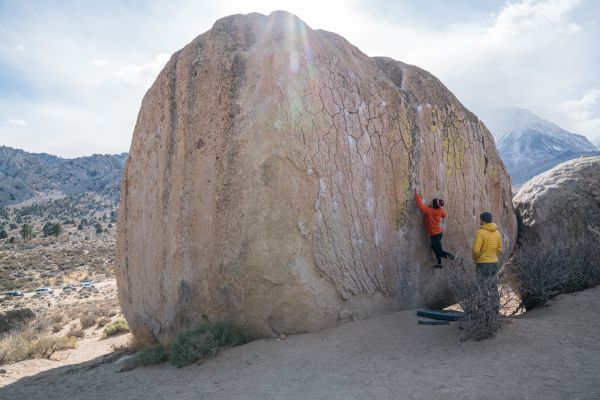
I got a lot better at rock climbing in 2022. That’s mainly because I did a lot of it. If I were to graph my progress, however, it wouldn’t be a straight line. It would rise slowly until the beginning of October, then angle up like a mountain over the last few months.

That’s because on October 2 I attended a climbing festival, and climbed with climbers way beyond my ability. Watching these people  was a revelation. They were slow, calm, and rested a lot. They moved more like sloths than monkeys.

Most importantly, they clearly saw the rock itself differently than I did. Whereas I saw it as a dangerous, prickly thing you’re fighting with and trying to conquer, they seemed to see it as a partner they can work with –- an eccentric but sturdy ladder that gets them to the top.

This was a complete figure-ground reversal for me. The rock helps you climb it! My climbing got better immediately, not because of any explicit advice I received, but because I had caught a glimpse of the activity from outside my normal way of seeing. My insight didn’t increase my existing climbing ability, so much as it changed my view of what climbing even is.

Read More
Post image for How to Eat Your Vegetables

I once knew a man transformed by vegetables. When I first met him, he claimed he could barely stand to eat them, and rarely did so on his own initiative.

Six months later we both ended up at the same party, and I wouldn’t have recognized him if he didn’t recognize me. He looked like a fashion model.

During our conversation I brought up the vegetable question, and he told me that he had conceded to eating them at every meal and that they weren’t that bad. He still didn’t love them but he recognized their superpowers.

I always liked vegetables, or at least I thought I did. I began to question this belief when I started experimenting with the old suggestion of “filling half the plate with vegetables” at each meal. The idea is that it’s easy not to overdo the rich, non-vegetable foods as long as they’re at least matched, if not dwarfed, by a large serving of veggies. The vegetables are so voluminous and calorically sparse that it’s hard to overindulge in anything else, namely the dense and delicious carbs, meats, cheeses, and sauces that sit beside the pile of plants.

It’s an elegant solution, although not for everyone, to the so-called “omnivore’s dilemma” — what to eat, and how much, in order to stay healthy and satiated.

So far I’ve found these half-veg meals to be filling enough that I don’t need to rely on willpower not to overconsume the richer foods. I don’t hit an afternoon wall. My skin looks better. I crave snacks less. My whole system seems grateful. Superpowers, I tell you.

Read More
Post image for One Reason the World Seems So Troubled

The shrewd parts of my brain can’t help but admire Planet Fitness’s business model. It’s a gym made for people who don’t like gyms and don’t want to go to them, which must be a huge slice of the market for gym memberships.

More specifically, they market to people who are afraid of the gym — people who dreaded gym class and dread commercial gyms, but still want to be fitter and healthier.

Helping this segment of the population get fit, if that’s their intent, is a noble and honest goal. I remember how intimidating it was to go at first. I pictured muscle dudes and fitness models rolling their eyes as I huffed and puffed after ninety seconds on the NordicTrack, and struggled to unrack a fifteen-pound dumbbell. I assumed I’d have to bear the pitying gaze of gym regulars for a good six months before I was fit enough to be accepted, or at least ignored.

That’s not what it was like, of course. By the third time you go to a gym, you’ve surely noticed that nobody cares what you do unless you’re about to hurt someone, and that most people there are fellow amateurs. There are a few bodybuilder dudes and career fitness people, and they’re just there to do their routines and go home. Everyone is listening to earbuds and looking at their phones anyway.

Read More
Desktop version

Raptitude is an independent blog by . Some links on this page may be affiliate links, which means I might earn a commission if you buy certain things I link to. In such cases the cost to the visitor remains the same.