
People

Play something: Netflix launches button for indecisive couch potatoes

Unlike some of its industry compatriots, Netflix shied away from curated channels and program guides.

Netflix Play Something button

Can't decide? Netflix now has a button for that.

Image: Netflix

Ever spent way too long browsing Netflix's catalog? You're not alone.

"We've all been there" Netflix Product Innovation Director Cameron Johnson admitted in a conversation with Protocol this week. "People have a really hard time choosing. It's just kind of a human problem."

To help consumers overwhelmed with choice, Netflix is adding a "Play Something" button to its TV interface this week. Pressing it automatically launches a new show or movie based on the service's existing personalized recommendations. And if it's not the right title for the moment, consumers can click to play something else.

The button seemingly represents a small update to Netflix's ever-evolving TV UI. However, the many months of testing that went into it show that the company is well aware of the challenges that come with building brands around original content from scratch, and the way Netflix implemented the feature sets it apart from attempts of others in the industry to bring a more TV-like experience to streaming.

Netflix began testing the "Play Something" button last summer. These trials included both A/B tests with millions of consumers around the globe as well as more traditional focus groups, according to Johnson. The result is a button that is featured prominently in three different places: the profile splash page, the sidebar menu, and on the home screen itself, where it is strategically placed in the 10th row of content, as a kind of hint for people who just keep scrolling down. "That is an indication that you are struggling to choose," Johnson said.

In early tests, Netflix was using the button to launch the last show someone had been binging on. Ultimately, Johnson's team decided to focus on new content instead. "It will always play a title that you've never watched before as the first title," he said. Aside from skipping known shows for the first result, Netflix's new button relies on the same algorithms that are also being used to curate a subscriber's home page.

Johnson painted the new button as a solution to those moments when you don't want to have to choose, but it could also be seen as an answer to a challenge Netflix has been dealing with ever since it began emphasizing its own shows over licensed content: Without access to known franchises from studios like Disney, Netflix is increasingly creating its own cinematic universes, often based on previously unknown stories and characters.

The company arguably has done this reasonably well, but getting people to take a chance on these new franchises is always challenging — even more so if the shows are from around the world, featuring actors unknown anywhere but in their home countries. A "Play Something" button can help introduce these new stories to global audiences by nudging viewers to take a chance.

With a more leanback-friendly discovery mode, Netflix can also appeal to recent cord cutters who are looking to replace more passive cable viewing. Part of the new "Play Something" feature is an option to switch to "something else" by pressing just one button, which Johnson likened to channel surfing.

However, the company decided against a true channel-based leanback experience, which has been adopted by streaming services like Pluto TV and Samsung TV+ to offer cable defectors a familiar interface. "We didn't want to replicate internet TV," Johnson said. "We want to invent the future."

Netflix is now looking at ways to bring "Play Something" to mobile, where the company plans to test the new feature within the first half of this year. For that implementation, Netflix may look to social apps like Instagram and TikTok for inspiration, with Johnson praising their take on video as successful watch-first experiences. "That is something that we should all aspire to," he said.
As creators spread out, platforms are borrowing ideas and features from each other.

Illustration: Getty Images Plus; Protocol

Before the rise of TikTok, you could find Kris Collins on Vine.

Collins posted for a while before the short-form video network was shut down in 2016. Then, four years later, she found a place on TikTok under the handle “Kall Me Kris,” which has amassed over 40 million followers and made her the most popular TikToker in Canada. But given Vine’s fate, Collins knew she couldn’t only create on one platform, so she branched out to YouTube and Twitch. “You never know what’s going to happen,” she said.

Keep Reading Show less
Sarah Roach

Sarah Roach is a news writer at Protocol (@sarahroach_) and contributes to Source Code. She is a recent graduate of George Washington University, where she studied journalism and mass communication and criminal justice. She previously worked for two years as editor in chief of her school's independent newspaper, The GW Hatchet.

When Samsung acquired Whisk, a smart food AI platform, in 2019, the nimble startup realized it had to ramp up its workforce quickly. Seeking to triple its employee base, Whisk, a fully remote team, sought diverse talent from a wide variety of regions through Upwork, a work marketplace that connects businesses with independent professionals and agencies around the globe.

“With Upwork, we got access to a wider talent pool,” says Nick Holzherr, CEO of Whisk, “and we found specialized talent in food data that weren’t restricted by location.”

Keep Reading Show less
David Silverberg
David Silverberg is a Toronto-based freelance journalist, editor and writing coach. He writes for The Washington Post, BBC News, Business Insider, The Toronto Star, New Scientist, Fodor's, and several alumni magazines. He also writes for brands such as 23andme, Shopify and Bold Commerce. He has served as editor of B2B News Network, Canada's only B2B news magazine, and Digital Journal, a leading pioneer in citizen journalism. Find more about him at www.davidsilverberg.ca
Entertainment

If you want to understand Spotify, forget about the music industry

Spotify's Gustav Soderstrom on the future of audio, combining music and podcasts and what's next for your playlists.

If you really want to understand where Spotify is going, forget the music and audio industry altogether.

Image: Spotify

Spotify doesn't want to just build a better way to listen to music. (Though, yes, it does want to do that.) The company has made clear over the last couple of years that its ambitions are much bigger: Spotify has invested deeply in podcasting both for creators and consumers, it has delved into the world of audiobook, it acquired a company to build a live-audio product and in general it wants to be the home of audio online.

If you really want to understand where Spotify is going, though, forget the music and audio industry altogether. Look at what's happening with video online. YouTube is making video searchable, discoverable and wildly lucrative; TikTok is making it social, remixable and viral. Spotify wants to do all of that, but in your headphones instead of on your screen. And that means rethinking the way the entire audio business — and tech stack — works.

Keep Reading Show less
David Pierce

David Pierce ( @pierce) is Protocol's editorial director. Prior to joining Protocol, he was a columnist at The Wall Street Journal, a senior writer with Wired, and deputy editor at The Verge. He owns all the phones.

Enterprise

Turing winner Jack Dongarra: Supercomputing should embrace Big Cloud

The latest winner of computing’s Turing Award thinks that scientific research could use help from the hyperscale cloud providers and computing power is having an outsize impact on the environment.

Dongarra has spent the last fifty years helping advance exascale supercomputing.

Photo courtesy of Jack Dongarra

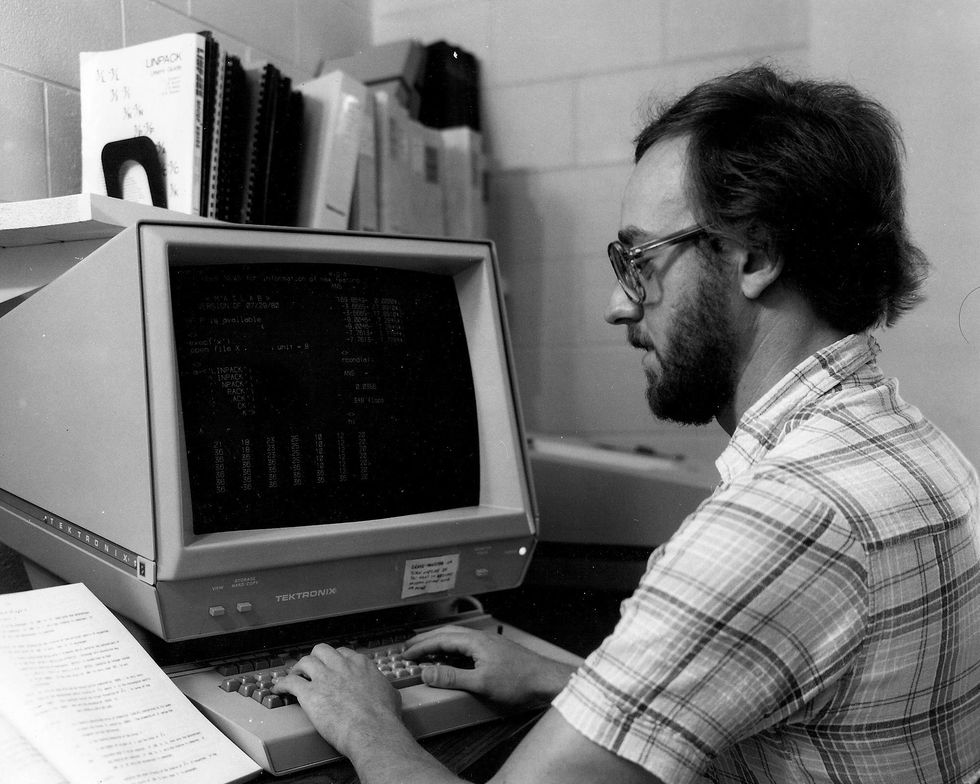
Even Jack Dongarra has a hard time wrapping his head around the number used to represent “exascale” computing: 1018.

But Dongarra, an expert in linear algebra algorithms and distinguished professor of computer science in the Electrical Engineering and Computer Science Department at the University of Tennessee, is sure of one thing. “That's a staggering amount of computing power.”

Keep Reading Show less
Kate Kaye

Kate Kaye is an award-winning multimedia reporter digging deep and telling print, digital and audio stories. She covers AI and data for Protocol. Her reporting on AI and tech ethics issues has been published in OneZero, Fast Company, MIT Technology Review, CityLab, Ad Age and Digiday and heard on NPR. Kate is the creator of RedTailMedia.org and is the author of "Campaign '08: A Turning Point for Digital Media," a book about how the 2008 presidential campaigns used digital media and data.

Entertainment

Sony remains unconvinced of a subscription-first future for gaming

PlayStation’s answer to Xbox Game Pass shows just how wary Sony is of subscription gaming.

Sony announced a refresh of its PlayStation Plus membership, but with two new tiers featuring hundreds of games.

Image: Sony

Sony revealed its much-anticipated answer to Xbox Game Pass on Tuesday, but it wouldn’t be fair to characterize it as such now that we know just how understated the company’s new subscription push is.

Instead of giving the product a big flashy livestream or debuting it at last week’s Game Developers Conference, Sony instead published a blog post from PlayStation chief Jim Ryan. It outlines how it intends to expand its current PlayStation Plus membership program with two new tiers that include more free games and cloud streaming. It’s a far cry from the all-in subscription push some industry watchers were anticipating, and it illustrates just how wary Sony is of following in the footsteps of Microsoft.

Keep Reading Show less
Nick Statt

Nick Statt is Protocol's video game reporter. Prior to joining Protocol, he was news editor at The Verge covering the gaming industry, mobile apps and antitrust out of San Francisco, in addition to managing coverage of Silicon Valley tech giants and startups. He now resides in Rochester, New York, home of the garbage plate and, completely coincidentally, the World Video Game Hall of Fame. He can be reached at nstatt@protocol.com.

Latest Stories
Bulletins