Basic HTML Version


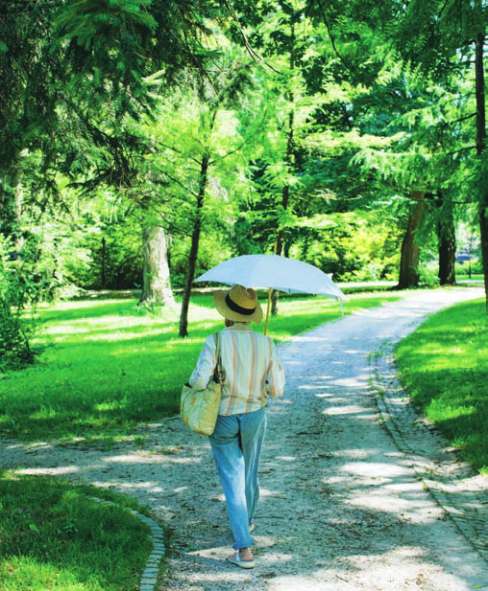




Ljubljana may be small, but the lush Slovenia
capital is receptive to the diverse mixture of
influences of its neighbouring states
CONTINENTAL
BLEND
Words
Jonathan Knott
Photography
Tom Robinson
Illustration
Gary Venn
W
hether visitors to Ljubljana find
themselves at a riverside café in
summer, or enveloped in a magical
winter mist, the beauty of Slovenia’s
capital city is evident in all seasons. Ljubljana is said
to take its name from the Slovene word
ljubljena
,
meaning ‘beloved’, and it is indeed easy to fall for
the city’s civilised ambience. It is, however, the
intriguing creative spirit at Ljubljana’s core which
may make a longer-lasting impression.
Does the city’s energy comes from its young
population (one in five residents are students) or its
diverse blend of influences? Who can tell… The winding
Ljubljanica, the river that runs through the capital,
was once suggested as the boundary between Central
Europe and the Balkans – and there’s no denying that
the city lies at a crossroads of cultures, where the
Slavic, Mediterranean and Germanic worlds meet.
Whether looking south west to Venice, north east
to Vienna, south east to Zagreb or south east to
Belgrade, Ljubljanians can contemplate Europe from
its centre. And like the rest of the country, Slovenia’s
capital brings together some of the best elements of
the Continent. At times, a northern orderliness may
prevail, while at others a southern lust for life may be
uppermost. But in such a compact city, you’re unlikely
to ever be far from another side of its character.
As we enter the peak summer months, however, it’s
the indulgent side we see. Walking trails in the Tivoli
Park, the aroma of the Botanical Gardens, riverside
cafés, balmy club nights at the Metelkova complex –
and a stylish design hostel at the close of the day.
AUGUST-SEPTEMBER 2012
WIZZ MAGAZINE
31