What is the
Internet of
Things?
It’swherephysical
objects “speak” tous
or eachother, analysing
data and sharing it
viawireless networks.
Peoplehavebeen talking
about itspossibleuses
for some time– for
instance in fridges that
reorder foodswhen they
need replenishing, or
smart heartmonitors
that cancall ambulances
–but it’sonly recently
that the technologyhas
seen awider application.
The idea thatwecan
nowdelegate tasks to
machines, removing the
riskof humanerror, has
thepotential toenhance
our personal lives. At the
very least itmeanswe’ll
never runout ofmilk.
Twomore
from the IoT
Eight
Aclever systemof
sensorsunder your bed
sheet analyses your sleep
patterns, and regulates
the temperatureof
your bed.
eightsleep.com
iKettle
Claiming to saveover
twodays a year, this
kettle syncswith your
smartphone, so you
canpop it on, check
water levels and set
temperature remotely.
smarter.am/ikettle
“I
t’s likehavinga taxi driver
going fromdoor todoor,
knockingoneachoneand
asking, ‘Doyouneeda ride?’
–and still gettingpaid if the
answer isno,” saysFredrikKekäläinen, the
Finnish founder andCEOof Enevo.He’s
describinghowwaste-collection
companies traditionallypickupour trash:
their trucks takefixed routes, and they are
paideach timeawastecontainer is
emptied–whether it’s full of rubbishor air.
The idea for Enevocame in2010,when
Kekäläinen, a successful entrepreneur and
computer expert,wasbrainstorming to
comeupwith “thenext big thing”.Having
establishedhimself in the smartphone
realm, hewas looking for away touse
technology tohelp theenvironment, and
was inspiredby the Internet of Things.
“A friend ison thecommittee for a
housingassociation, andwastecollection
wascosting them€9,000 (NOK85,140) per
year,”he says. “Therewas afixedpriceper
collection, andoften truckswouldcollect
evenwhenbinswerealmost empty.
I thoughtwecoulddevelopadevice to
tell awastecompanywhen thebin is full,
so theycanplan their trucks’ routes and
eliminateunnecessarycollections.”
Kekäläinenbeganexperimentingwith
electronics inhis garage, andeventually
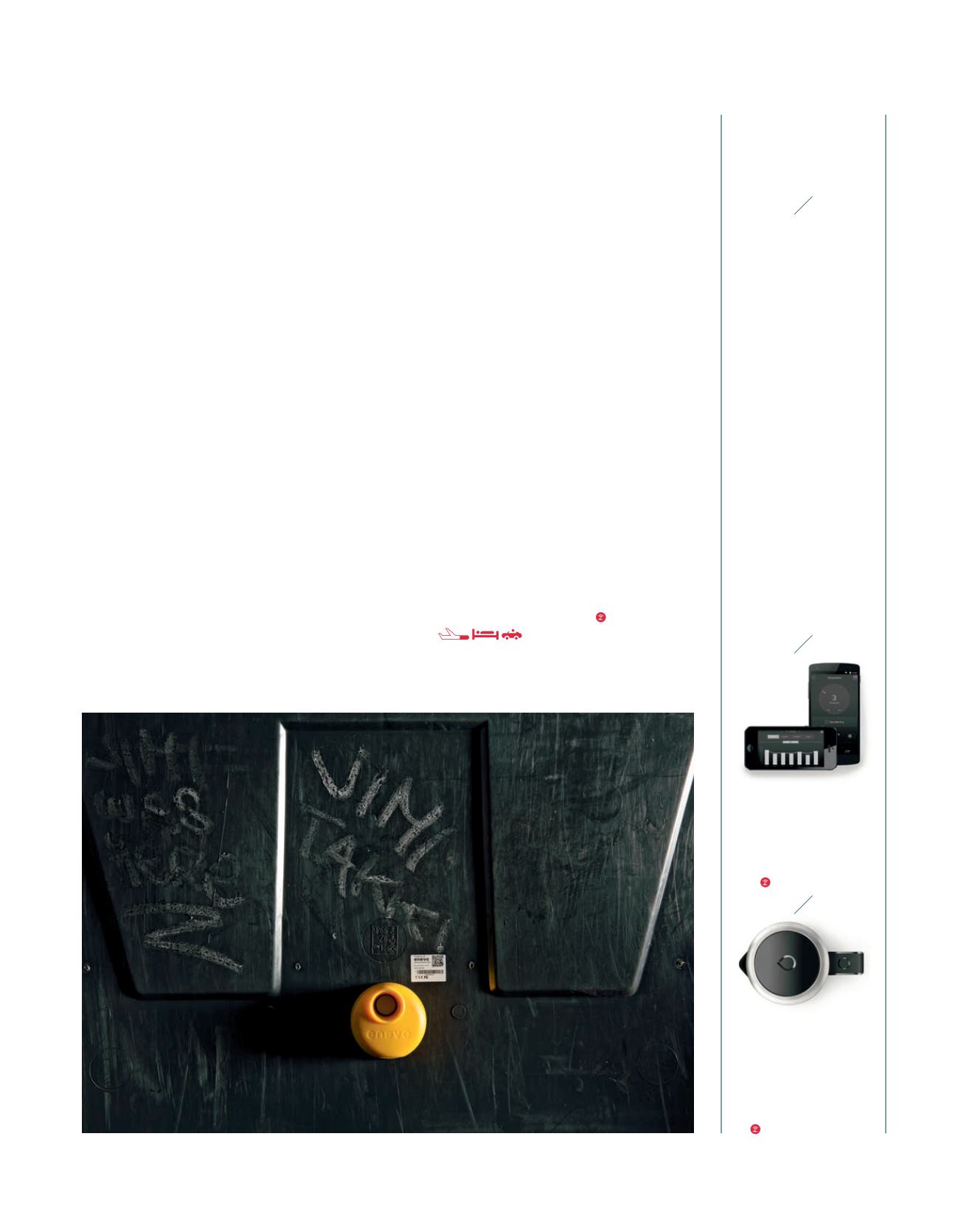
created a sensor that couldbe fixed
inside rubbish containers. Today, Enevo’s
robust sensors canbe left insidebins for
10 years todo their job, sending data to
Enevo’s systemof servers viawireless
cellular communication.
“Basedon this, wecan analyse thedata
andcomeupwith thebest possiblefleet
and resources needed for thecollection,”
says Kekäläinen. “Everything is automated
– a truckdriver simply logs into the system
in their truck, and sees exactlywhich
route to take that day.”
Not only does Enevo’s demand-based
method savemoney for city councils,
municipalities andprivate recycling
companies, it reduces unnecessary fuel
emissions from the rubbish trucks. Enevo’s
technology has already been adoptedby
cities includingRotterdam, Pittsburgh and
Antwerp–and several Londonboroughs
are in theprocess of trialling it.
“We’vedoubled in termsof staff
numbers and tripledour revenues,” says
Kekäläinen “We’re trying touse technology
tochangeanold, gigantic industry, andour
product hasmeaningbehind it.Wehavea
real impact on theworld.”
enevo.com
NorwegianfliestoHelsinki frommorethan
30destinations.Bookflights,ahotelanda
rentalcaratnorwegian.com
500m
Thenumberof
measurements
Enevo’s
sensorstook
lastyear
70%
Percentageof
unnecessary
rubbish
collections
thecompany
claims to
reduce
50%
Directcost
savings in
waste logistics
Enevocan
provide
n
/025


