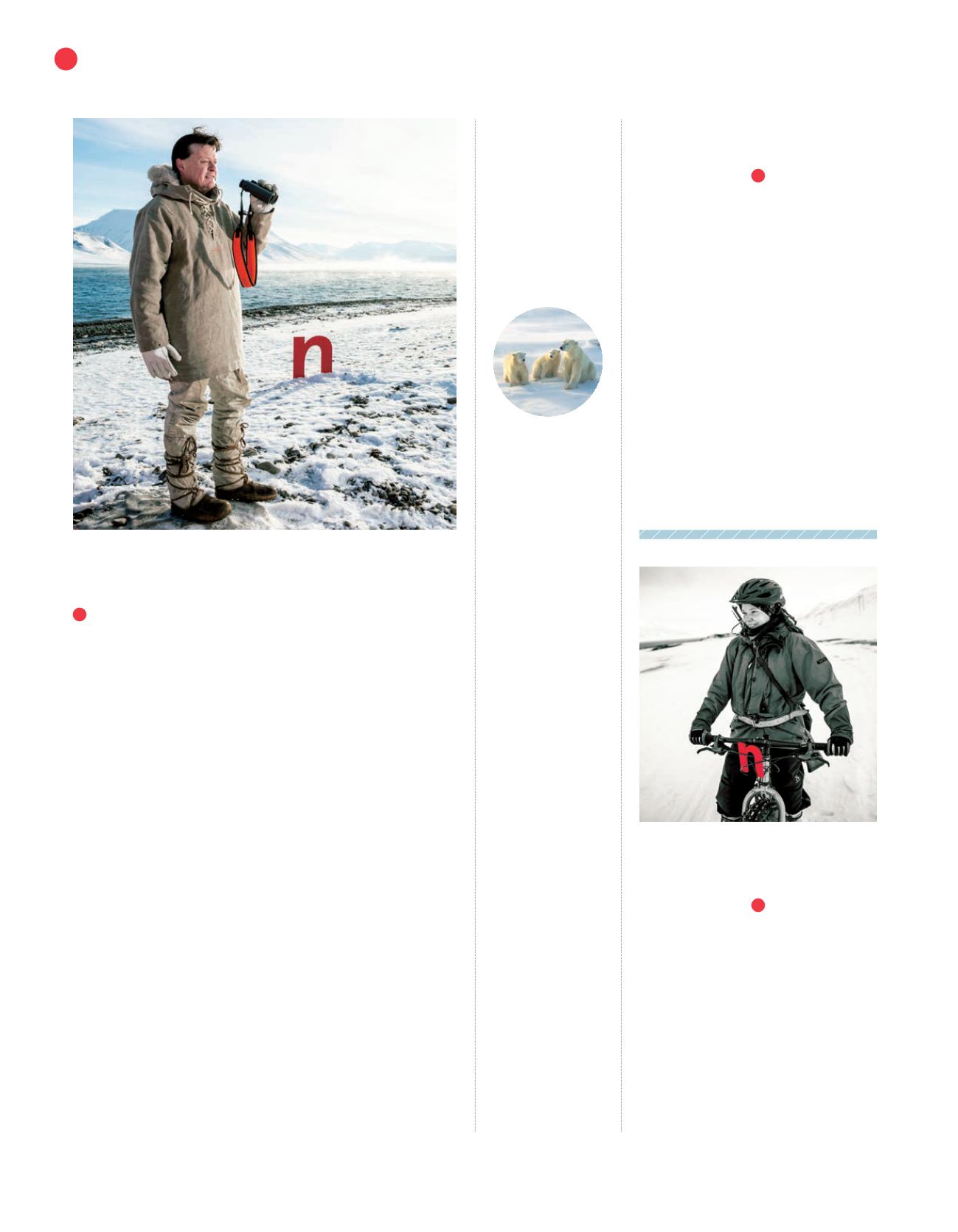
Torgeir
THE SATELL I TE GUY
TheSvalbardSatelliteStation (SvalSat) –31
satelliteantennaeclad inwhiteglobeson
ahill near Longyearbyenairport – is an
awesome sight. Andoperationsmanager
TorgeirPrytz,who’sbeenworkinghere since
2006, still seemsbuzzed that hegets towork
here. “It looks abit like somethingoutof
Star
Trek
,” says Torgeir,who’swearingagloriously
geeky“KSAT inBlack”T-shirt (a
Men inBlack
homage to theNorwegiancompany that
ownsSvalSat).Onlyhalf joking, he says the
aim for SvalSat’s26engineers is“tohave 16
per centmore funeveryday”. Still, serious
stuff happenshere, and24hours aday– it’s
theworld’s largestpolar satellite station, and
isessentiallyagiant server for the images
projected fromaround70 satellitesup in
space. Theweather images you seeon the
BBCandNRKcome fromhere, and it plays a
part inprovidingdata for global crises, from
Thai floods to Icelandic volcanoes–andmost
recently the search forflightMH370.
ksat.no/node/77
Likemany people, SwedeKarinAmby
planned tocome to Spitsbergen for
fiveweeks back in2004, fell in love
with theplace andendedupmoving
here for good in2007. She studied
Arcticbiology at UNIS, Longyearbyen’s
university, and recently startedFatBike
Spitsbergen, running three-hour tours
around Longyearbyenonwhat are
essentiallymountainbikeswith super
fatwheels that can rideon snow.
fatbikespitsbergen.com
Jason
THE POLAR BEAR MAN
KnownasMrPolarBear, JasonRobertshas spent
24years inSvalbard. Twentyof thoseyearshave
beenat thehelmof JasonRobertsProductions,
oneof just ahandful of productioncompanies
specialising infilming in theArctic,workingwith
everyone from theBBC toHollywood.
It’sa longway from the ruralAustralian farm
wherehegrewup, or thestockbrokingcareerhe
leftat 24 toseekadventure, but there’snodoubt
Longyearbyen isnowhome. “People imagine this
placeat theendof theworld tobenearlyhell on
earth,”hesays. “It’s thecompleteopposite.There’s
noothercommunity like it.”
Itwas theearly 1990swhenJasonfirst found
himself inSvalbard,workingasa research
assistant ona study into seals.Afilmcrewasked
him to takeacamerawithhimduringan icedive,
andhewashooked. “One job led to thenext,”he
says. “Itwaswordofmouth thewholeway.At
thebeginning itwasaway togetpaid todo the
extremeexpeditions Iwanted todo.”
Jason isbestknown forhisworkwithpolar
bears–dangerouswork inaplacewhereyou’renot
allowedoutsidedesignatedareaswithouta rifle.
“Youhave to lovewhatyoudo,”hesays. “Ido like
polarbears, althoughnotasmuchassomepeople
would imagine.They’recuteandcuddly, butat the
same time theywant to tearyou tobits.”
jrp.no
If you’veever seen
apolar bear on
television, or a
Hollywoodfilm set in
theArctic, chances
are Jasonmade
it happen.
Finding apolar bear
is noeasy task.
Filming apolar bear
huntingormating is
evenharder. For six
weeks in thefield you
get on average just
threeminutes
of footage.
Jason spent 13 years
filming the
Planet
Earth
,
FrozenPlanet
and
TheBluePlanet
series for
theBBC.
In2002, Jason
facilitated acrew
of 230 in a remote
Arctic location for
the JamesBondfilm
DieAnotherDay
-
thebiggest crewhe’s
everworkedwith.
Jasonhasworked
onover 200
featurefilms and
documentaries –
everything from
The
IncredibleHulk
to
ThePenguinKing.
Polar bears
on screen
Karin
THE FATBIKE GUIDE
n
—Svalbard
⁄
People
058\
n


