 |
  |
| |
|
|
| |
Recommended Reading |
|
From Chapter (1) “Barriers and Gateways to Learning” Debates about educational reform tend to be impassioned, intense, and remarkably repetitious. For decades, two models of education have coexisted in uneasy peace; when debates have arisen, they have invariably pitted the model in practice against an appealing, but less-used, alternative. These models might be called the teacher-centered and the active learning approaches…. —David A. Garvin From Chapter (2) “Premises and Practices of Discussion Teaching” The most fundamental observation I can make about discussion teaching is this: however mysterious or elusive the process may seem, it can be learned… The task is complex… [but] with greater vitality in the classroom, the satisfaction of true intellectual collaboration and synergy, and improved retention on the part of students, the rewards are considerable. —C. Roland Christensen
|
| Copyright © 2004 |
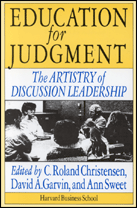 The two chapters listed below, from Education for Judgment: The Artistry of Discussion Leadership, explain the key principles and strategies of discussion leadership and participant-centered learning. (The “Additional resources” section below describes the book and provides purchasing information.)