
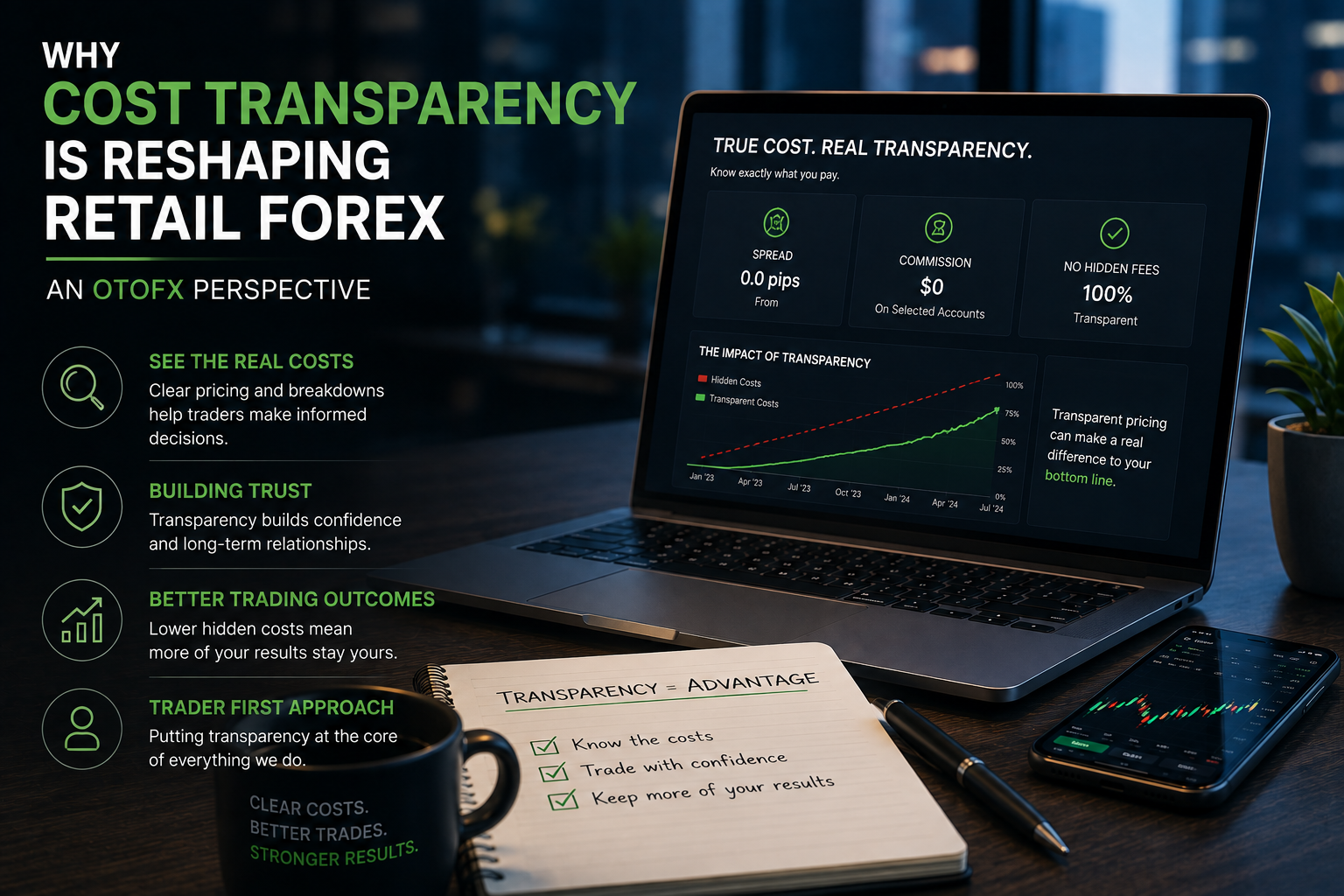
Retail Forex Is Changing, and Traders Are Driving It
The retail forex and CFD industry looks meaningfully different today than it did a decade ago, and much of that change has been driven by traders themselves. Easier access to comparison tools, independent trading communities, and public performance-tracking platforms has made it far harder for any broker to rely on opaque pricing or vague account terms. Traders simply have more ways to check a broker's claims than they used to.
A decade ago, a trader's primary source of information about a broker was the broker itself, supplemented by scattered forum posts of uneven reliability. Today, that same trader can cross-reference independent tracking tools, compare spreads in real time across multiple brokers, and read detailed commentary from trading communities before ever opening an account. That shift in access to information has changed what brokers can get away with, in a good way.
The Shift Toward Transparent Pricing
One of the clearest signs of this shift is how many brokers now offer commission-free account structures, simplified fee schedules, and plain-language explanations of how trading costs actually work. Where fee structures were once buried in lengthy terms and conditions, they are increasingly presented upfront, as a basic expectation rather than a competitive advantage.
Commission-free and simplified cost structures becoming standard requests, not exceptions
Independent performance verification tools becoming part of everyday due diligence
Clearer, plain-language disclosure replacing dense fine print
None of this happened because brokers suddenly became more altruistic. It happened because traders started demanding it, and brokers that adapted early gained a real advantage over those that waited.
Why Traders Increasingly Demand Clarity
This shift is less about any single broker and more about a change in trader expectations. Traders who have spent time comparing brokers, reading independent commentary, or using tools like FX Blue and Myfxbook to check performance claims tend to bring a more skeptical, detail-oriented approach to evaluating where they trade. Vague claims no longer hold up the way they once did when scrutiny was harder to come by.
Where OTOFX Fits Into This Shift
OTOFX's account lineup reflects this broader movement fairly directly. Its commission-free accounts respond to demand for simpler cost structures, its ECN-style accounts respond to demand for market-connected execution, and its PAMM accounts, tracked independently through FX Blue and Myfxbook, respond to demand for verifiable performance rather than self-reported claims. OTOFX's approach is one example of how brokers are adapting to a more informed, more demanding trader base.
Viewed against the backdrop of an industry moving toward greater accountability, OTOFX's account structure looks less like an isolated marketing decision and more like a broker aligning itself with where trader expectations, and the industry more broadly, are already headed.
Lessons From Brokers That Resisted the Shift
Not every broker has adapted at the same pace, and the ones slower to embrace transparent pricing and independent verification offer something of a natural comparison. Brokers that rely on opaque fee structures or unverifiable performance claims tend to face growing skepticism as more traders gain access to comparison tools and independent tracking platforms, making it harder to retain clients who have simply become more informed.
This is not a prediction that every broker will converge on identical practices; differences in business models and target markets will always produce some variation. But the general direction, toward more verifiable, more plainly stated information, has been consistent enough across the industry that it is reasonable to treat it as a lasting shift rather than a passing trend.
How Traders Can Apply This Shift to Their Own Due Diligence
For individual traders, the practical lesson is straightforward: use the tools now available rather than relying on marketing claims alone. Compare spread conditions directly, check whether performance figures for any managed product are independently verifiable, and favor brokers that make their account terms easy to find and understand without requiring a support request just to get the basics.
This kind of due diligence takes a bit more time upfront, but it is considerably easier today than it was even a few years ago, precisely because of the same shift toward transparency and independent verification described throughout this piece.
Transparency as a Competitive Advantage, Not Just a Compliance Box
It is tempting to treat transparency as something brokers do reluctantly, in response to regulation or competitive pressure. In practice, brokers that build clarity into their account structure from the start, rather than retrofitting it later, tend to have an easier time earning trader confidence, simply because there is less for a skeptical trader to poke holes in.
What Independent Verification Adds to the Conversation
Perhaps the most significant part of this shift is the growing role of independent verification specifically. It is one thing for a broker to describe its execution model or a manager to describe their performance; it is another for that information to be checkable through a neutral third party. As more traders factor this kind of verification into their decision-making, brokers that build it into their account structure from the outset are better positioned to earn trust than those that treat it as an afterthought.
What Comes Next for Broker Transparency
It is a reasonable bet that this trend continues rather than reverses. As comparison tools improve and independent tracking becomes more standard across the industry, the brokers that hold up best will likely be the ones that were already built around clear pricing and verifiable claims, rather than those retrofitting transparency after the fact. Traders interested in seeing how this plays out in practice can review OTOFX's current account structure directly on its website.
Frequently Asked Questions
Why did commission-free accounts become so common industry-wide? Largely because traders began comparing brokers more actively and gravitated toward simpler, easier-to-calculate cost structures, pushing brokers to adapt.
What role do independent tracking platforms play in this shift? Platforms like FX Blue and Myfxbook give traders a way to verify performance claims directly, reducing reliance on a broker's or manager's own reporting.
Is transparency becoming an industry norm rather than a differentiator? It is trending that direction, though not every broker has adapted at the same pace, which is part of why it still functions as a meaningful point of comparison today.
What should traders look for when evaluating a broker's transparency claims? Look for specifics: clear cost structures, independently verifiable performance data where relevant, and accessible support, rather than general statements. OTOFX's account lineup is one example of these specifics applied in practice.
How can a trader tell if a broker's transparency claims are substantive rather than just marketing language? Look for specific, checkable practices, clear cost structures, independently verifiable performance data, accessible support, rather than general statements about being "transparent" or "trusted."
Contact:
Company name: OtoFX
Contact Name: Greg Wilson
Website: https://otofx.com
Email: support@otofx.com
Risk Notice: Forex and CFD trading involves significant risk, and no amount of pricing transparency or independent verification eliminates that risk. Traders should trade only with capital they can afford to lose.