We have been thinking that the retail tale ends at the cash counter. The crescendo, the moment of truth being recorded and replayed forever, is that last beep of the scanner. Point-of-Sale (POS) information is a record of what was sold, but it is as silent as an actor stepping out of his costume and performing in the dressing room.
This is where the real battle of the customer is won or lost, and until recently, it was a black hole of data. That ends now. Here is the age of smart fitting rooms that most retailers fail to consider as a data goldmine. Before using the RFID retail technology, we must consult with an expert.
Checkout is not the Real Decision Point
Consider your personal shopping experience. You window shop, you draw things, but the actual inquisition comes about that curtain or door. You stand up against the fit, the drape, the color in fierce lights.
This is the most vital but least comprehended measure in the physical retail, this conversion at the mirror. Whereas one POS data will tell you the final score, smart fitting rooms will tell you all the plays, all the fumbles, and all the dropped passes that occurred on the field.
Understand the Technology That Will Help
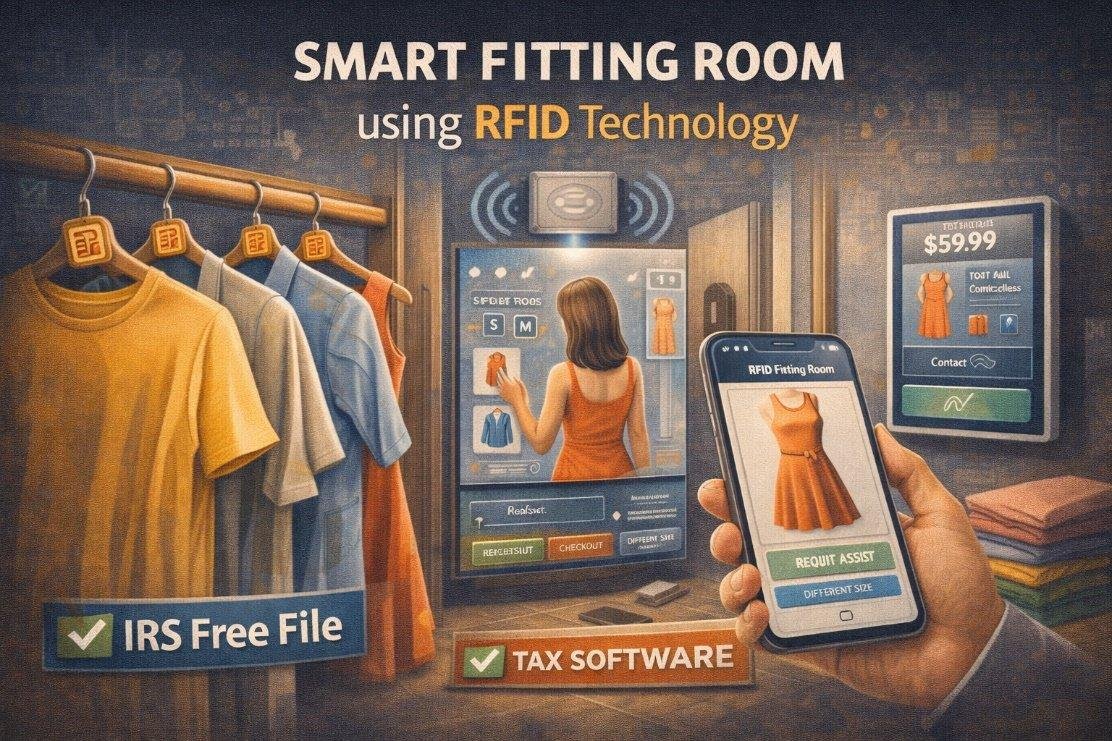
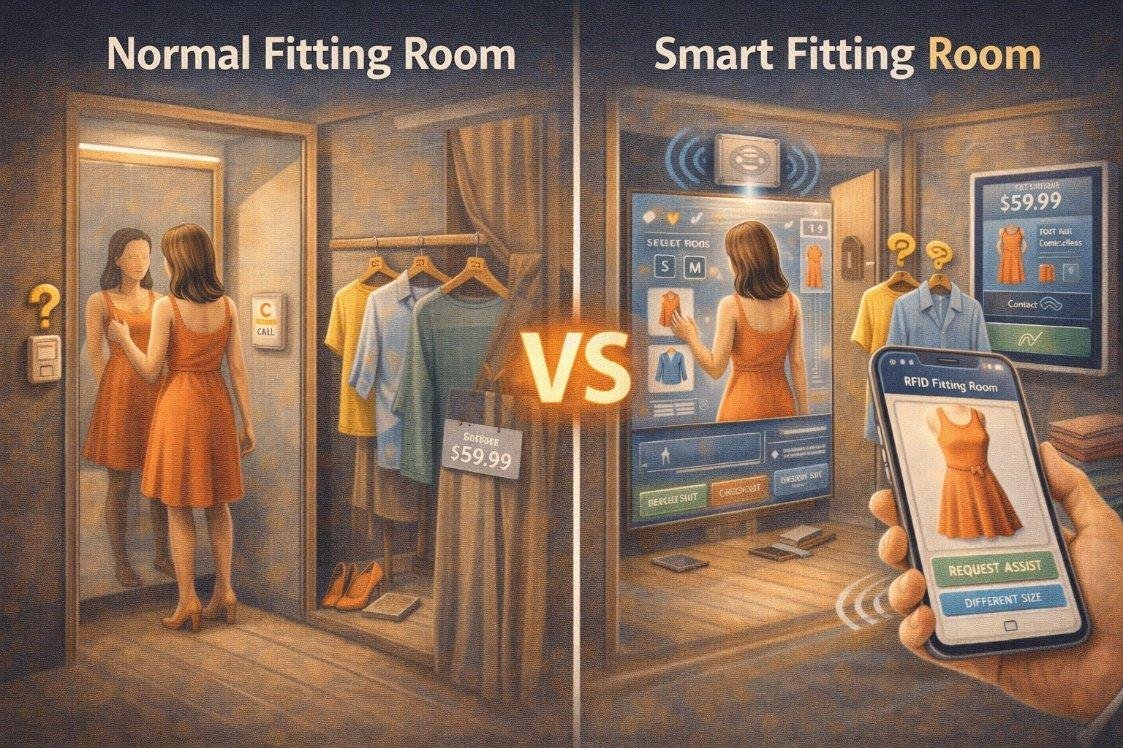
Radio-Frequency Identification (RFID) is the key to this revolution. Little, low-priced tags sewn into clothes may be used to communicate with readers mounted in changing rooms. When a customer enters the room with a garment, this system will record the item, the style, the size, and most importantly, the time it was in the room.
What are the Major Issues?
This is where strategy is overturned. Consider this scenario:
-
POS Data Says: Our new high-end jacket is not selling at all. Marketing failed."
-
Smart Fitting Room Data Says: "That jacket was used 50 times this week. Mirror conversion rate: 0 percent.
The diagnosis has changed completely. This is not a problem of marketing- people are obviously interested. This is a product or fit issue. Maybe it is that the sleeves are too tight, the fabric too cheap to touch, or the fit is not flattering.
In the absence of this, you may spend twice the amount of money on advertisement of a faulty commodity. You are able to instantly notify merchandising and design about a serious issue with it.
Some Key Elements We Can Capture Now
-
True Style Popularity vs. Sales: Determine the so-called Window dressing products that can be tried and bought.
-
Size-Specific Abandonment: The size (e.g., Medium) is tried frequently but not bought, pointing to a potential sizing chart defect.
-
Dwell Time Analysis: Is there a relationship between a longer try-on time and purchase, or is it an indicator of frustration and/or confusion?
-
Cross-Trying Behavior: What are usually tried together? This exposes actual outfit matching information that is much superior to online matching algorithms.
-
Staff Effectiveness: Determine the effect of staff intervention (e.g., bringing another size/style) on room conversion.
Take the Action: Tips for Retail Owners
Gathering information is one thing, and moving on it is where the gold digs deep. Here's how to start:
1. Introduce with High-Value Categories
Start with tagging items that are the most fit and high prices - imagine denim, blazers, formalwear, or technical outerwear. The payback period on intelligence here is quickest. You can try out the RFID Warehouse Tracking System and check the results.
2. Integrate With the Inventory System
The aim is to have a closed loop. Fitting room abandonment data should cause the real-time actions:
Customer in Room 3- Customer has been attempting to try the Astrid Jacket in Medium without success after 5 minutes. Suggest bringing a Large." This transforms data into high-service, immediate service.
Flag Design Merchandising: Automate weekly report to display items with high try-on/low purchase rates to be reviewed immediately.
3. Always Respect Privacy
This is not about names. Employ visible signage: "We have RFID technology to make your shopping experience better and to make sure that your size is always there. Eyes on big-data views, not on individual monitoring.
4. Connection Between Online and Offline
utilizes online product page information by using fitting room try-on information. Add them as notes, such as large; usually downsize after purchase with actual information.
Using the smart fitting room is similar to coaching a football team and only looking at the scoreboard. You do not see the turnovers, the missed blocks, and the strategic moves to win. The RFID-powered smart fitting rooms finally illuminate what the last 10 minutes are all about and your destiny.
FAQ
1. Is RFID an invasion of your customer's privacy?
No. It records aggregate product information, and not individuals. It records that a jacket has been tried, but not by whom it was tried. The critical one is the transparency; you can use signage to clarify the advantage (better service and inventory). This is centered around the merchandise insights rather than on individual surveillance.
2. Is RFID too expensive for small businesses?
Prices have reduced drastically. Begin with a pilot in a single location or in one high-value product category (such as denim). The ROI can be prompt in avoiding the expensive, wrongful purchases of incompatible inventory and enhancing the conversion rates in the area of priority.
3. What is the biggest action you can take?
Identifying the "walk-aways." When there is a large try-on rate and a very low purchase rate of a particular item, then it is a clear-cut product or fit issue rather than a marketing failure. This will enable you to correct design or sourcing level problems instantly.
4. How to use data in your helping your store staff in real-time
Unified systems are used to notify associates when a customer has stayed in a room long enough or attempted an inappropriate size. This allows useful intervention in time, such as putting forward another size or style, which increases service and conversion directly.
5. Can we help our online store with the right data?
Absolutely. Aggregate fitting room information gives true fit information. Apply it to build correct online size guides (e.g., "Runs small" - and note that most fitted items in-store indicate popularity with online customers and their trust).