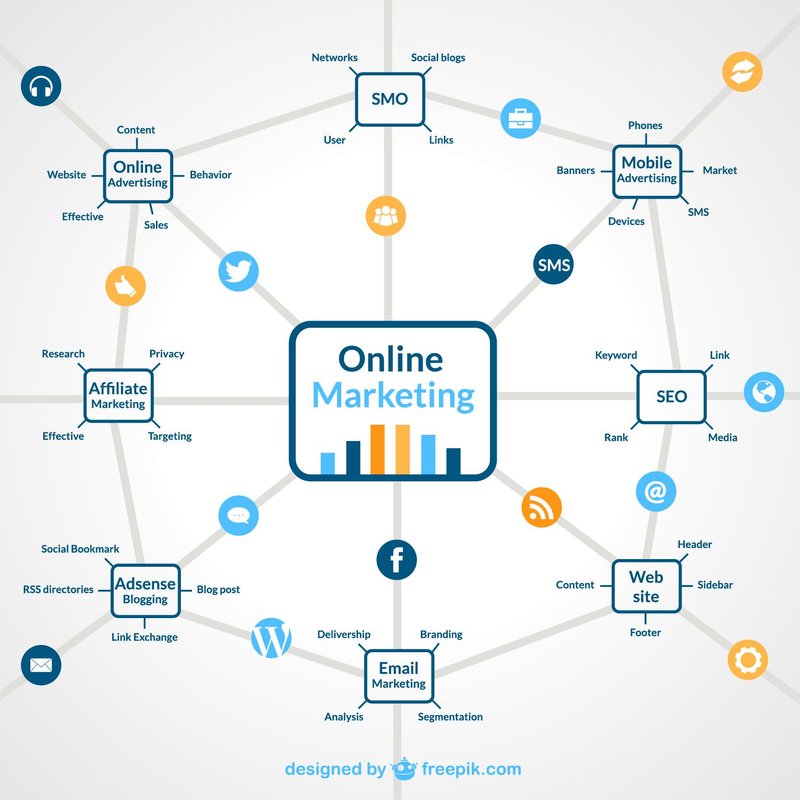
Visual diagram of an internal linking map showing knowledge graph SEO structure connecting online marketing elements like SEO, content, email marketing, and advertising
A SaaS team spends months publishing content—two to three articles a week, consistently, without shortcuts.
Traffic moves… but not in a way that makes sense. A few pages climb. Most sit idle. Some never get indexed properly.
At first, the assumption is predictable: content quality, keyword difficulty, maybe competition.
Then someone looks closer at the structure.
Not the content. Not the keywords.
The connections.
There aren’t any—at least not in a way Google can interpret.
And that’s where things usually break.
Because at a certain level, SEO stops being about what you publish. It becomes about how clearly your content is understood as a system.
Search engines no longer evaluate pages in isolation. Systems like the Google Knowledge Graph interpret content as entities and relationships—connected, contextual, and structured.
If your site doesn’t reflect that logic, it doesn’t matter how good the content is. It won’t scale.
An internal linking map fixes that. Not by adding more links, but by making meaning explicit.
Why Internal Linking Strategy Now Mirrors Google’s Knowledge Graph
Most explanations of internal linking are still stuck in an older model—navigation, usability, maybe a passing mention of PageRank.
That’s not how it works anymore.
Google is trying to answer a different question now: “How do these ideas relate to each other?”
Internal links are one of the clearest signals it has.
A page is treated as an entity
A link defines a relationship
Anchor text adds context
Structure reinforces hierarchy
When those signals align, interpretation becomes easy. When they don’t, Google hesitates. And hesitation usually shows up as unstable rankings.
You see this often on content-heavy sites. Dozens—sometimes hundreds—of decent articles, but no clear structure tying them together. The site feels comprehensive to a human reader, but fragmented to a search engine.
That gap is subtle, but it’s decisive.
Pages don’t compete alone. They’re evaluated as part of a network—whether you built one or not.
What an Internal Linking Map Actually Looks Like (Modern SEO Structure)
An internal linking map isn’t a visual diagram you create once and forget. It’s a working structure—something that evolves as your content grows.
The easiest way to understand it is through contrast.
Before restructuring, most sites look like this:
Articles published independently
Occasional links added during editing
No consistent hierarchy
Important pages buried deeper than they should be
After restructuring, the same content starts behaving differently.
1. Pillar Pages (Core Entities)
These are the pages you want to be known for and not just ranked—associated with.
They sit at the top of the structure and clearly define the topic.
2. Cluster Pages (Supporting Coverage)
Each pillar is supported by content that expands the topic in practical ways:
Processes
Mistakes
Tools
Comparisons
Individually, these pages might not be strong enough to dominate. Together, they create depth that’s hard to compete with.
3. Contextual Links (Where Meaning Is Built)
This is where most of the leverage comes from.
Links aren’t added because they “should be there.” They’re added because they clarify a relationship:
This concept depends on that one
This process connects to that outcome
This topic overlaps with that system
Once those connections are consistent, something interesting happens—Google starts treating the entire cluster as a cohesive unit.
And rankings become more stable. Not overnight, but noticeably.
How to Create an Internal Linking Map Step-by-Step
There’s a tendency to overcomplicate this. In practice, the process is structured but not complicated.
Step 1: Define What You Actually Want to Own
Not every topic deserves a pillar page.
Focus on areas where:
You can produce depth
The search intent is clear
The topic connects to your broader strategy
Trying to cover everything usually leads to weak clusters.
Step 2: Build Supporting Content With Purpose
Each supporting page should answer a specific angle of the topic.
If two pages say roughly the same thing, one of them probably shouldn’t exist—or should be merged.
Depth comes from coverage, not repetition.
Step 3: Map Links With Intent (Not Habit)
This is where most sites quietly lose performance.
Internal links are often added during writing, almost as an afterthought. That approach works at a small scale, but it doesn’t hold up.
Instead, step back and ask:
Which pages reinforce this topic?
Which ones naturally connect?
Where would a reader expect to go next?
That last question matters more than it sounds.
Because what feels logical to a reader usually aligns with how search engines interpret structure.
Step 4: Use Anchor Text That Reflects Meaning
Exact-match anchors aren’t necessary—and overuse can look forced.
Natural variation works better:
Internal linking strategy for large websites
Internal link architecture for SEO
Improving crawlability with internal linking
The goal isn’t precision. It’s clarity.
Step 5: Check Crawl Paths (This Gets Overlooked)
You can have a perfectly designed structure that doesn’t function well if it’s buried too deep.
A few quick checks:
Can key pages be reached within a couple of clicks?
Are there pages with no internal links pointing to them?
Does the structure make sense without a sitemap?
Sites that clean this up often see improvements without touching content.
Semantic Internal Linking & Entity-Based SEO (Where It Compounds)
Hierarchy gets you clarity. Semantic linking builds authority.
Once your core structure is in place, the next layer is connecting related ideas across clusters.
Not randomly—but where it genuinely makes sense.
For example:
A page on internal linking might reference:
Crawlability
Indexing behavior
Site architecture
Not because it needs more links, but because those concepts overlap.
Over time, these connections form a broader network.
And Google starts recognizing patterns—not just individual topics, but how your site understands them.
That’s the point where growth tends to compound.
Internal Linking vs Backlinks — What Actually Moves Rankings
Backlinks still matter. They’re the entry point for authority.
But what happens after that matters just as much.
Internal linking determines:
Where authority flows
Which pages are reinforced
Which topics gain strength
Without structure, backlinks scatter value. With structure, they concentrate it.
Factor
Internal Linking
Backlinks
Control
Fully controlled
External
Speed
Immediate
Gradual
Role
Structure + distribution
Validation
That difference becomes obvious on larger sites.
Internal Linking Best Practices & Mistakes to Avoid
Most issues here aren’t dramatic—they’re small, consistent missteps.
What Works
Keeping important pages close to the surface
Linking where it adds clarity, not just volume
Maintaining consistent relationships between topics
What Breaks Things
Publishing content without integrating it into the structure
Overthinking anchor text while ignoring context
Letting clusters grow unevenly
Skipping periodic audits
Individually, these don’t seem critical. Together, they weaken the entire system.
Tools & Systems to Scale Internal Linking
At some point, manual tracking becomes impractical.
That’s where tools help—not to replace thinking, but to support it:
Ahrefs for identifying gaps and opportunities
Screaming Frog SEO Spider for understanding crawl structure
They don’t build the strategy. They make it easier to maintain.
Conclusion: Where Structure Becomes Leverage
That SaaS site mentioned earlier didn’t publish any additional content to improve performance.
It reorganized what already existed.
The shift wasn’t dramatic on the surface. No redesign. No new keyword strategy.
Just clearer connections.
And once those connections aligned with how search engines interpret information, rankings followed.
Not instantly—but steadily, and with far less volatility.
That’s the difference.
Visibility doesn’t come from having more content. It comes from making your content easier to understand—at scale.
An internal linking map does exactly that.
And once it’s in place, everything else tends to work better.