
Marine Science Sample
Zooplankton are mostly larger than phytoplankton, although at small sizes the differences between plants and animals can be difficult to discern. Most zooplankton are microscopic, but since the defining characteristic of plankton is that they drift in the water (rather than swimming), there are some very large species.
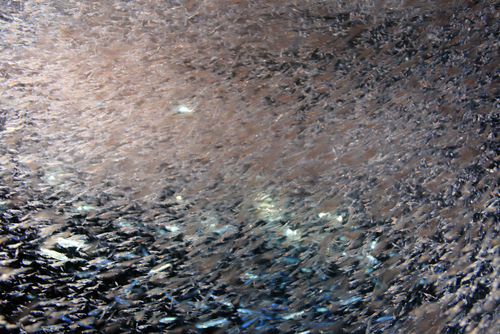

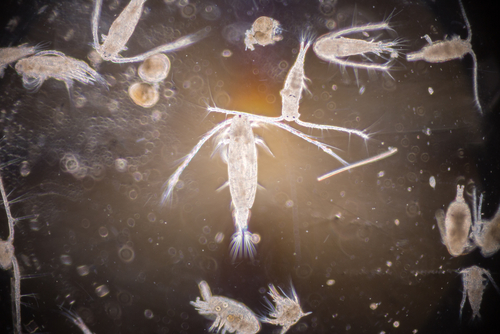
Some animals, such as fish larvae and starfish, begin as zooplankton but eventually develop out of this classification. Many Protozoa are zooplankton. Let's have a look at some other types of Zooplankton and their roles in our oceans.
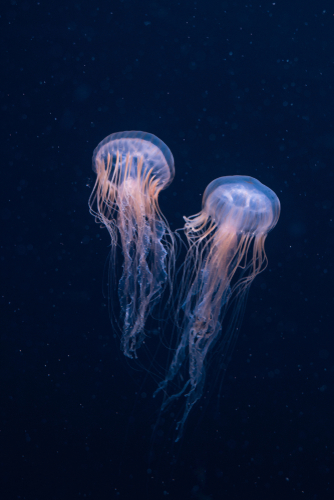
Some, called mixotrophs, are hybrid organisms that are half plant and half animal. Mixotrophs are able to eat other organisms through phagocytosis (eating cells) but also are photosynthetic and therefore are able to gain energy as plants do, through sunlight. .
Some zooplankton are quite large
For example, cnidaria are aquatic creatures such as jellyfish and sea anemones, and although some are microscopic, some are very large. These animals are almost exclusively salt-water creatures that exist right at the surface of the water. There are thousands of kinds of cnidarians, and they come in a variety of sizes. They are mainly predators but can feed on algae. These animals have stinging tentacles called cnidocytes. We will cover them in more depth in a later module.
Also called arrow worms, chaetognatha are planktonic throughout their life cycle and are abundant worldwide. They are approximately 3cm long with transparent bodies and functional fins on the sides. All chaetognatha prey on zooplankton. They swim in bursts, aided by their tail fins, and use spines on either side of their mouth in hunting.
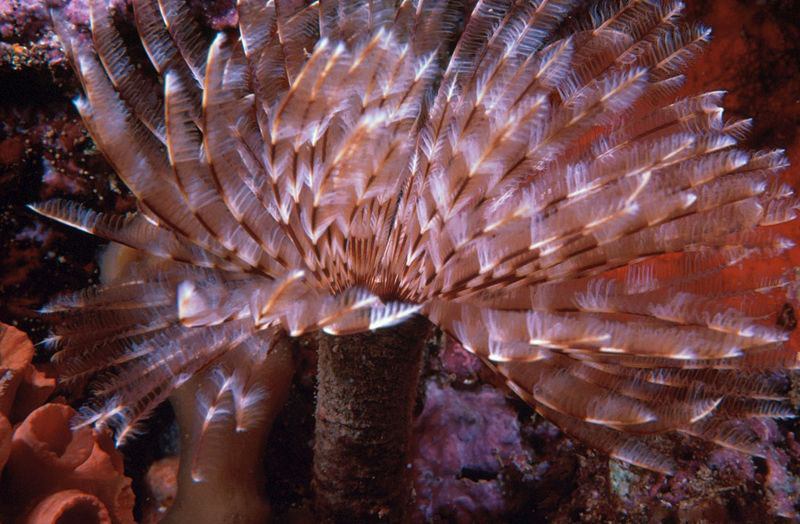 A feather duster worm or fan worm of the Polychaeta
class. Image courtesy Wikipedia.
Polychaetes are commonly referred to as "bristle worms" and the word itself means "many-bristled." Scientists have discovered more than 10,000 kinds of polychaetes. Some you may have heard of are the sandworm and the lugworm.
Different species of polychaetes have different body types, depending on the ecological niche that they inhabit
Polychaetes can be carnivores or herbivores, and can hunt, scavenge, or filter feed for food, depending on their niche. Some are even parasites. They can also inhabit a wide range of depths of the ocean.

Most copepods are on the order of macroplankton (20-200 millimeters) and visible with the naked eye. They are commonly found in both marine and freshwater environments. Their primary method of locomotion is by using their large antennae and supporting structure.
Copepods prey on all manner of phytoplankton and much smaller zooplankton.
Cladocera are meroplanktonic crustaceans in shallower marine environments near the coasts. Like the copepods, they use antennae to swim. Their bodies appear segmented but are actually just covered by an outer shell that contains a fold. Cladocerans eat phytoplankton and smaller zooplankton and as with many species of zooplankton, they migrate to the surface at night.
Worldwide, the total biomass of krill is roughly twice that of humans.
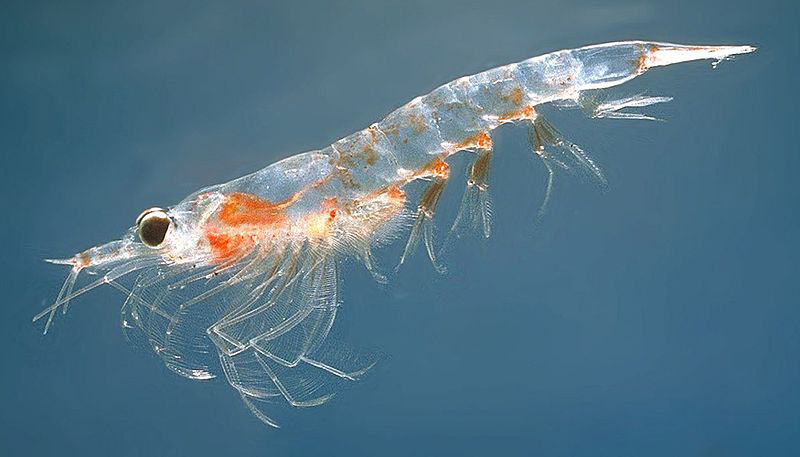 A Northern krill (Meganyctiphanes norvegica).
 Image courtesy Wikimedia Commons.
Krill are found all over the world. These meroplankton are most known as a food source for many types of whales, as well as many other types of mammals and fish. Krill often feed on diatoms, a type of phytoplankton that exist in cold-water climates, but can also feed on smaller zooplankton.
Krill tend to be filter feeders, meaning that they filter their food out of the water through tiny combs near their mouths. They are crustaceans and have an exoskeleton similar to that of their much larger crustacean counterparts: shrimps, crabs, and lobsters. Because krill have such an important place on the food web—feeding on phytoplankton and serving as the majority food source for large animals that cannot consume algae—changes in their populations can have particularly important effects.
Tunicates have species that are holoplanktonic as well as meroplanktonic. All species have bodies that appear like hollow tubes. Both classes filter their food particles through a mucous membrane filter.