
Creative Writing Sample
One goal of editing a short story is to create a sharper focus on what matters--to direct readers' attention to your story's most significant details. When you revise a story, you might rearrange entire sections or reorder the series of events. Since editing is focused at the level of the sentence, it involves moving words and phrases around instead. Sometimes you may even replace words or add them. The point of any of these approaches is to create emphasis.
Study the strategies on the tabs below--each represents a highly effective approach to getting more from your words.
Place what is important at the beginning or end of a sentence. Notice how the following sentences, though both contain the same information, emphasize a slightly different idea.

Muffy, our Lhasa Apso, though she can’t be trusted to stay confined in our backyard, loves to play with the neighborhood children.

Muffy, our Lhasa Apso, loves to play with the neighborhood children, but she can’t be trusted to stay confined in our backyard.
Question
What aspect of Muffy's temperament is emphasized in each sentence?
Another way to emphasize an idea applies to a particular sentence structure--one that includes a parallel series of items, such as the one below. Notice how the meaning of the sentence changes, based on which word appears last.

The movie was tragic, sad, and long.
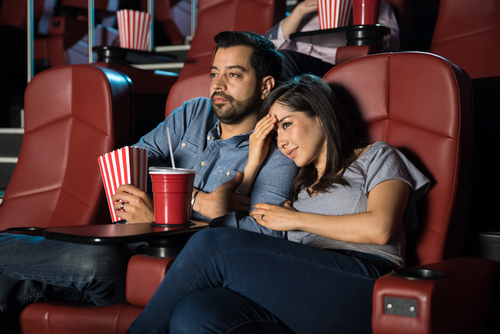
The movie was long, sad, and tragic.
Question
Reading the first sentence, you might assume that the writer got bored with a movie that went on and on and on. That's because placing the word long at the end of the sentence emphasizes that word. What does the second sentence do differently?
A somewhat more obvious way to emphasize ideas, of course, is to repeat them. This strategy can be tricky, though, and definitely requires practice. A sentence with repetition can just sound sloppy if you're not careful about its wording.

Don’t join too many gangs. Join few, if any. Join the United States and join a family—but not much else in between, unless a college.
- Robert Frost
Question
What exactly does Frost emphasize by repeating the word join in this way?
A sentence written in active voice puts the subject (or actor) first, the active verb next, and the object (the receiver of the action) last. A sentence in passive voice reverses this order. Typically, the active voice is the best approach, but not always. Your choices about active and passive voice can determine what is emphasized in a sentence--the action itself, the actor, or the object that is acted upon. Note the difference between these two sentences.

Our cat caught a bird!

The bird was caught by our cat.
Question
How does the use of passive rather than active voice affect how you react to the second sentence?