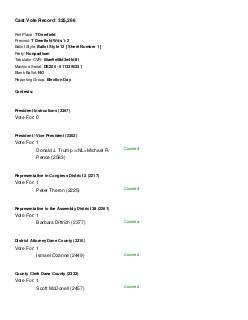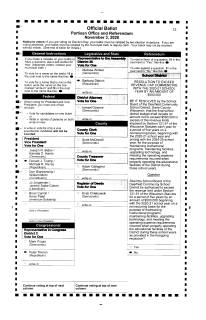
Scanned ballots are fed into a tabulator machine — essentially, a scanner similar to the ones used for standardized school tests. Depending on the manufacturer, the tabulator may save individual files for each ballot, including an image of the ballot itself and a text record of the votes it recorded.
Later, election staff can refer to these files to help audit election results.
Instead of (or in addition to) those files, tabulators may produce a single file that reflects all the ballot markings it has scanned, which is easier to audit than thousands of individual files. This single file is usually referred to as the "cast vote record" (CVR), and can be in several formats, including, frequently, a spreadsheet.
The exact information included as part of a cast vote record depends on the manufacturer and the model of tabulator. But a typical CVR will have information about the ballot in rows down the left, and the candidates or contests in columns across the top. The votes from each ballot are recorded at the intersection of those rows and columns.
If this seems tedious and routine, that’s because it is. The CVR is essentially a receipt of everything the machine scanned, and it’s mostly used by researchers and political scientists. Cast vote records can help experts audit tabulated votes to ensure accuracy, though they don’t account for votes processed in other ways, such as ballots that have to be adjudicated and manually added to the count.