
Beyond Eating Less and Exercising More... A Smart (and Easy!) Approach to Your Health
Dear Reader,
Oh good... two more doctors touting the benefits of eating less and exercising more.
When the doctors told me what they wanted to write about for this month’s issue, they said exactly what I didn’t want to hear.
Dr. Roberts begged me to allow him to pen a piece on the virtues of exercise.
What’s new? I asked.
Dr. Jain said he had an angle on dieting - specifically, why we should eat less.
Frankly, I was prepared to be embarrassed. We don’t publish those sorts of mainstream ideas.
That’s not our mission. Far from it.
But then the docs sent me their work. Now I’m embarrassed for another reason.
As a business leader... I’m embarrassed because I’m giving this stuff away for free.
I’m not going to hold back. But I’m also not being hyperbolic when I tell you the essays that follow are flat-out extraordinary.
They fit the bill for everything I had in mind when I set out to bring a team of forward-thinking doctors into our publishing business.
Not What, Not Why... but How
You see, I’ve long held to a simple idea.
Any of us can tell somebody what to do. We’ve all heard that we should exercise more and eat less.
I’d fire any doctor who stopped there.
We must never publish something that merely tells somebody what to do or even why to do it. Instead, we must tell them how it works.
It’s why pilots don’t hop into the seat and start flying on their first day. Instead, they learn about the physics of flight. They learn about weather patterns. And they learn how the plane was made.
It’s why any of us can spot the work of a true craftsman in an instant. His work stands out because it’s beautifully customized not for its form, but for its function. The artist understands how it’s supposed to work.
That’s why I’m so proud to publish this issue.
It’s clearly the work of artists who know how the human body works... and have the ability to share it in simple, easy-to-understand terms.
After reading it, I’m extremely excited to put these good ideas to work in my own life. Eat less and exercise more never seemed so smart... so effective... and so easy.
This issue is about much more than “what” and “why.” It’s about “how” your body works and how to take full advantage of its own natural systems to ensure that it performs better for longer.
It’s absolutely fascinating. You’ll be a better person for reading it.
And that makes me very happy.
Mission accomplished.
Be well,
Andy
P.S. When you’re done reading, be sure to send us your thoughts on the issue... and what questions you have for the doctors or topics you’d like to learn more about. Email us at mailbag@manwardpress.com.
Add Years to Your Life in Just 10 Minutes a Day
Arizona is home to a unique plot of land called the Petrified Forest National Park.
It’s a stunning albeit barren chunk of Earth.
Colorful swaths of rock formations eroded by gusty winds seem to go on forever.
But no matter the time of year visitors wind up there, they don’t expect to see the changing of the leaves.
This is a forest of a distinctly different color. And the story the trees tell has major implications for your health.
All It Took
At one point this area of Arizona was a humid subtropical land where streams flowed in from a nearby sea in the west.
And those flowing rivers helped spread and feed vegetation.
But at some point, something went very wrong.
All those trees were uprooted... by either a massive flood or the destructive flow of lava.
And the vegetative remains and waterways were buried under silt and volcanic ash.
As those logs sat buried, small amounts of groundwater seeped in. And cell by cell, decaying wood was replaced by vividly colored silica.
Many millennia later, the once-buried logs were uncovered by groundswells, rain and heavy winds.
While these fossilized pieces of wood are beautiful in their own right, their organic functionality is lost.
Some of these petrified pieces of wood still show the prehistoric rings from their time alive.
But they’ll never bear fruit or deliver oxygen into the air again. They are functionally dead.
A single wave of environmental stressors was all it took to kill these trees and change the surrounding environment forever.
Our Nature Within
Before you get the wrong idea and think that I’m moonlighting for the Arizona Office of Tourism, what I’m really getting at is how one catastrophic act can change how things function in the blink of an eye.
When it comes to our health, the interconnectedness of all our systems can lead to critical issues.
Take our vascular system, for instance.
Like the streams that once carried water to the forests of the Arizona valleys, our vascular system carries blood and lymph through our bodies.
In doing so, oxygen and nutrients are delivered to the body’s tissues where they are needed and waste is rinsed away.
When those pathways are disrupted or broken down, it leads to big problems in the body.
Vascular aging plays a direct role in our health as we get older.
And when the vascular system isn’t operating at peak effectiveness, the result is a constellation of ailments...
Rapid aging, heart disease, neurological conditions - like dementia and Alzheimer’s disease - and overall frailty are just the starting points.
You see, as we get older, if our tiniest blood vessels are left to their own devices, they naturally wither and die.
This causes reduced blood flow, compromises the oxygenation of organs and tissue, and leads to a buildup of toxins that cause oxidative stress.
When left to stagnate, eventually blood flow to most of the body diminishes...
And muscles and organs, which rely heavily on a vigorous supply of blood, eventually cease to function when the vascular system isn’t able to reach them.
But research has proven that it’s never too late to turn back the clock on this process.
So here’s the single most important step you can take to support a healthy vascular system.
A Call to Action
Even the smallest bit of exercise and movement comes with big benefits.
It actually makes us happier.
It boosts energy levels.
It helps us lose weight.
It gives us better cognitive function.
And it supports a healthy heart.
What was unknown until recently is why exercise plays such a vital role in all of these things.
But now we have a much clearer picture...
When muscles are working hard, they need more blood. And the need for more blood is met with the creation of more blood vessels.
This is especially important as we age.
Here’s why...
Blood vessels are lined with endothelial cells.
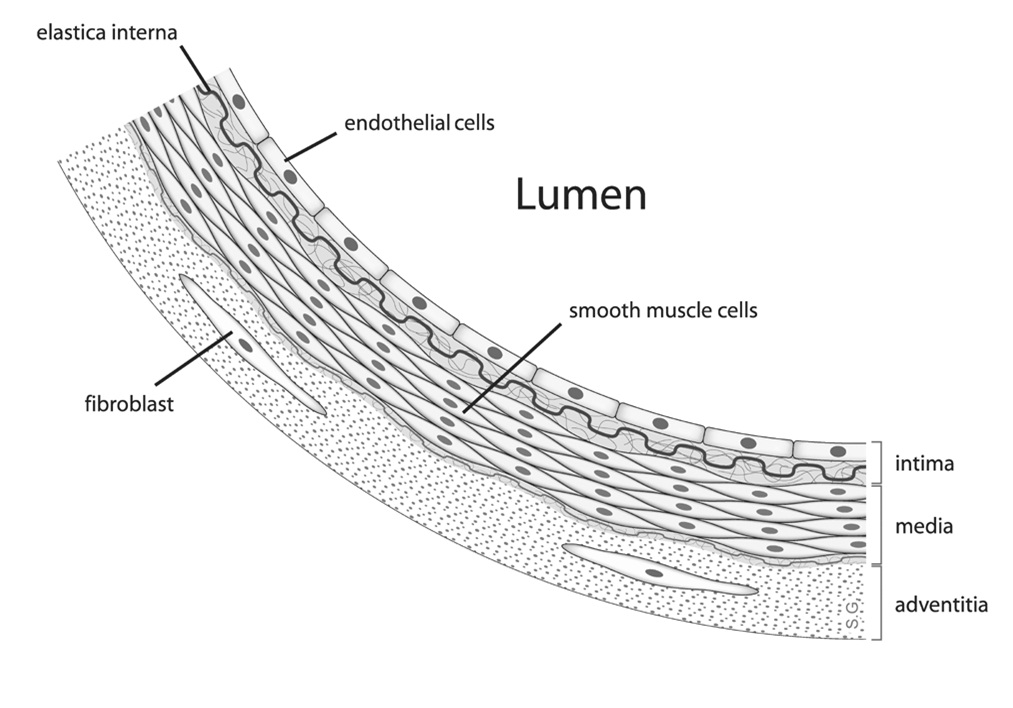
These are the cells responsible for the health and growth of new blood vessels.
As we grow older, endothelial function declines. But research published in the journal Sports Medicine has shown that this decline is significantly less in those who exercise regularly.1
And endothelial cells don’t just help grow new blood vessels... They also produce a circulation-boosting molecule that our vascular system craves called nitric oxide.
That’s right. The same foul gas that spews out of power plants along the New Jersey Turnpike and contributes to a wide range of environmental issues also plays an important role in our circulatory system.
In this case, it all boils down to scale.
The tiny amounts of nitric oxide created by endothelial cells keep artery walls smooth and slippery (and pose no risk to our overall health).
By keeping the artery walls nice and slick, white blood cells can’t get caught along their paths.
This is a big deal because if white blood cells get caught up in a given area for too long, they cause inflammation and can also result in artery-clogging blood clots.
The nitric oxide also relaxes the middle layer of the artery - called the “media” - which prevents contracting spasms and keeps arteries wide open for healthy blood flow.
Incidentally, this is the same way sexual performance drugs like Viagra and Cialis work.
They boost the production of nitric oxide in a specific area, which promotes blood flow.
But unfortunately, these drugs target only a specific area of the body. And the result is very temporary.
So they don’t offer much help to the arteries in other places in the body.
No drug does that...
For levels of nitric oxide that benefit the whole body, only exercise can do the trick.
An Added Benefit
When working out - especially via weight training - microscopic tears are developed in the muscle.
This boosts the formation of free radicals... and in turn oxidative stress.
While that sounds like the antithesis of a good idea, the levels created are very temporary.
That’s chiefly because physical activity also stimulates the production of free-radical-busting antioxidants.
And the oxidative stress that comes from physical activity also gives newly formed antioxidants a chance to flex a little muscle of their own while getting better at their job.
It’s like letting a firefighter practice on a campfire before he graduates to larger infernos.
All of these factors are why exercise leads to happier, healthier people who age more slowly...
Because the vascular system is working at peak efficiency and we’re developing well-trained antioxidants ready to pounce on cell-damaging free radicals throughout the body.
Your Routine Is Right in Front of You
One of the biggest roadblocks folks run into when it comes to picking an exercise routine is finding one that isn’t too daunting.
Ladies and gentlemen, it couldn’t be easier.
The real key is consistency.
Take it from me... The guys I go to church with in their 70s and 80s who are in the best shape are the ones who make an effort to go for a walk and move around regularly.
It sounds almost too easy to be true, but trust me.
I don’t need to point to a study to know we’ve become an increasingly sedentary species.
Say what you will about the kids glued to their phones who never go outside to play...
On average, we’re not doing much better.
And that’s costing us a lot of money in healthcare and valuable years of our lives.
Look, I get it. We’ve paid our dues. And we’ve earned our R&R.
But I don’t plan on going the way of the Petrified Forest anytime soon.
It’s too easy to keep the waterways flowing and prevent a catastrophic event.
A 20-minute walk every day can do wonders.
But for my money, one of the best ways to keep blood vessels healthy...
Maintain blood flow to the muscles and organs...
Preserve healthy endothelial cells...
Promote nitric oxide production...
Boost healthy blood flow...
And create free-radical-busting antioxidants...
Is through a trick I picked up from the bodybuilding community.
And it takes even less time than going for a walk.
Wrap It Up
My little secret is called blood flow restriction (BFR) training...
It’s a technique that’s been proven to stimulate muscle growth while taking half the time and a third of the weight typically needed to maintain muscle mass.
And manipulating blood flow in a way that’s so beneficial to the muscles is also a boon to the vascular system as a whole.
Even better, you don’t need heavy weights to make those microscopic tears in the muscle.
A 10-pound dumbbell is more than enough to create an army of well-trained free-radical-busting antioxidants ready and willing to protect the vascular system.
And seriously, it doesn’t get much easier than this.
Start by wrapping a cuff around the tops of your limbs to restrict blood flow when you exercise.
You can use an Ace bandage, athletic tape, or knee or elbow braces.
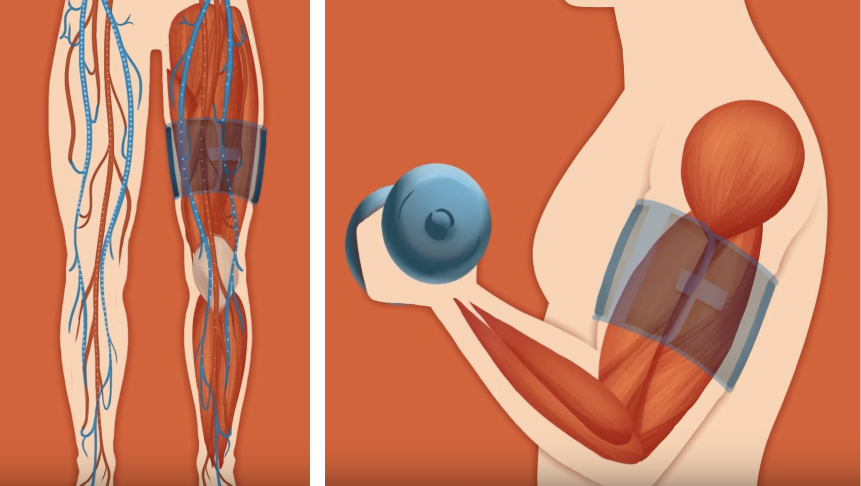
The vital element of this technique is that you DO NOT fully cut off circulation.
You’re not tying a tourniquet under your shoulders or above your thighs. The goal is to temporarily limit the amount of blood flow... and it’s best to err on the side of it being too loose until you get the hang of it.
It should be just tight enough to allow blood to flow through the arteries but not the veins.
Then you just do some rudimentary exercises like pushups, bicep curls or squats.
And there’s absolutely no need to pile on the weights.
It sounds wild, but here’s how it works: The blood that flows from the muscle to the heart is being restricted... which turns low-level effort into a maximum workout.
Wearing a cuff near where the arm or leg meets the body during exercise will cause the limb to fill with blood.
Then lactic acid starts to accumulate.
When blood flow is obstructed from flowing back up through the veins, the brain is tricked into thinking the body is engaging in more intense exercise than it actually is.
This simple exercise hack can quickly and effectively increase strength and endurance, as a study published in the Journal of Applied Physiology showed.2
And a comprehensive analysis of BFR studies in the elderly published in the journal Integrative Clinical Medicine showed that specifically targeting the vascular system with BFR training has been proven to improve vascular function in older adults.3
This simple method strengthens the blood vessel walls while making them better at expanding and contracting with natural changes in blood pressure.
This reduces the likelihood of plaque buildup.
And being able to dynamically change with the needs of the body makes them less likely to collapse and fail.
Unsurprisingly, it’s also been found to be a great way for those with cardiovascular disease to rehabilitate and get the vascular system back on track... and in turn slow down the aging process.
This practice has been used for decades in Japan where it was fine-tuned...
There, orthopedic specialists have been relying on BFR training for older adults who don’t have the stamina to undergo long rehab sessions.
Heck, NASA’s even looked into BFR training to help astronauts deal with gravity-free conditions and mitigate the vascular deconditioning that happens in space.
And the National Space Biomedical Research Institute found that BFR training increased strength and reduced muscle atrophy out there in zero-gravity conditions... and that’s applicable here on Earth too.
This is the ultimate way to take total control of your body without setting aside a huge chunk of time to fit in some exercise.
Just a quick workout a few days a week can be enough to keep the vascular system spinning like a top, keep all of the systems functioning at peak potential and add healthy years to your life.
If that’s not worth your 10 minutes, I don’t know what is.
Flip Your Anti-Aging Switch

Humankind has been searching for the fountain of youth since we first comprehended our own mortality.
The Greek historian Herodotus posited it was in the Horn of Africa...
Roman philosopher Pliny the Elder speculated the beneficiaries of the fountain of youth were actually in India...
Then Spanish explorer Ponce de León went searching for it in the Bahamas and Florida...
It may look a little different from what they anticipated, but it turns out their instincts were right. There is a fountain of youth... It’s just been inside us the whole time.
Faster, Better, Stronger
As my colleague Dr. Roberts pointed out this month, the health of our vascular system is critical to our overall health.
Maintaining good blood flow in our vascular system will ensure that our organs and muscles will be better nourished... wounds will heal faster... nerves will be healthier... energy will increase... and we will be stronger overall.
There are simple things you can do to support vascular health... including supporting a recently discovered compound in our bodies that plays a vital role in slowing the aging process.
Flip the Switch
As we age, the vascular system slowly wears down. That results in blood flowing less efficiently through the body. When that happens, less sirtuin 1 (SIRT1) is produced.
This powerful enzyme flips the body’s aging switch to the “off” setting.
Now, even though scientists are still trying to figure out exactly how it works, cutting-edge research published in the journal Cell Metabolism confirms that elevated levels of SIRT1 can delay the aging process, keeping us healthier longer. It can also extend overall life spans.1
SIRT1 has also been found to slow neuron loss and protect brain function.
In short, SIRT1 is a critical enzyme that fights the effects of aging at the DNA level. That’s why it’s so important to support it if you want to feel stronger and healthier longer.
Here’s how to do it.
Short on Calories, Long on Life
Calorie restriction is all the rage right now. But it’s nothing new.
It’s the basis of almost every diet out there – both the fads and the effective ones.
But here’s the thing... Almost a century ago, a scientist at Cornell University made an extraordinary discovery.
Placing rats on a low-calorie diet extended their life spans by 33%.2
Plus they stayed youthful longer. They also suffered fewer diseases later in life than their well-fed counterparts.
This generated scores of spinoff studies. Limiting calories was found to benefit everything from fish to fruit flies. Even more exciting is that the body of evidence supporting its effectiveness in humans is constantly growing.
But these studies seemed more like mad science until the last few years.
It wasn’t until a recent breakthrough study by researchers at Harvard, Cornell and the National Institutes of Health that we began to understand why this was the case.
We now know that restricting the amount of calories consumed to below the maintenance level creates a stress signal in the body.
Basically, specific types of stress create different types of reactions.
In this case, caloric restriction revs up the SIRT1 enzyme and gets it to protect cells from the aging process.3
When the body is dealing with a caloric deficit, insulin levels drop. So do levels of a closely related hormone called insulin-like growth factor-1 (IGF-1), which regulates SIRT1 levels.
And with IGF-1 out of the way, SIRT1 levels can flourish.
The Key to the Calorie-Restriction Castle
It almost goes without saying that the longer people are able to maintain a caloric deficit, the higher SIRT1 levels will go.
But even short-term restriction is beneficial...
Which is why just a couple of days of consecutive calorie restriction can boost SIRT1 levels.
So how do you do it?
Start by finding out your total daily energy expenditure (TDEE).
This is a good indicator of how many calories a person should consume in order to maintain their current weight.
It calculates a person’s basal metabolic rate... and that figure is paired with the thermic effect of feeding, exercise, energy expenditure and nonexercise activity thermogenesis.
If it sounds complicated, that’s because it kind of is.
But thanks to the modern marvel that is the internet, you can leave the math up to others.
If you type “TDEE calculator” into your search engine, you’ll see a wide variety of calculators like this one.
All you’ll need to know is your age, weight, height, activity level and body fat percentage (optional).
It will then let you know how many calories you need to consume to maintain your current weight.
Once you’ve got your maintenance calorie number, the goal is to come in under that a couple of days a week. Nothing crazy. Start with 100 calories less than your TDEE. You likely won’t even notice they’re gone.
Now, I know not everyone out there is going to suddenly start reading the nutrition labels on everything they eat and calculate their TDEE score to make sure they are restricting their calories.
Not a problem. That’s not necessary.
We can just employ a little trick that’s gained a lot of popularity recently...
Close the Window
It’s called intermittent fasting. The basic premise is that you limit the times you eat to an eight- or 12-hour period.
For instance, if you are doing a 16-8 fast, you eat only during an eight-hour window. During the other 16 hours of the day, you consume nothing but water and other unsweetened drinks, like tea and black coffee.
If you have your first meal at 8 a.m., you should have your last meal by 4 p.m. If your first meal is at noon, your last one should be at 8 p.m.
There are no food restrictions per se, but that doesn’t mean you should see how many Big Macs you can get in an eight-hour period. You still need to use common sense.
The benefit to a simple approach like this is that it isn’t technically a diet. You’re simply limiting the window of opportunity for eating, which can cut out a lot of the empty snacking that raises our caloric intake.
And it’s been proven to work for many people. A study published in Nutrition and Healthy Aging found that this is a simple and effective way to reduce the amount of calories consumed.4
You can also try a 24-hour fast. This is a little tougher to do. But cutting food out for an entire day is a way to fast-track the level of SIRT1 enzymes. And doing this once a week or even (more realistically) once a month will be a major boon for SIRT1 levels.
And there’s another way to give SIRT1 levels a boost...
Skin in the Game
One of the most potent activators of the SIRT1 enzyme is a plant compound called resveratrol.
If you’re a wine drinker, no doubt you’ve heard of it.
It’s a powerful antioxidant that has been shown to lower blood pressure and protect brain function in its own right.
But one of its biggest benefits to our health might be the way it activates SIRT1 and really boosts its proliferative abilities, as a study in the Journal of Biological Chemistry showed.5
Resveratrol is also found in grapes (most notably in the skins) and nonalcoholic grape juice. But it’s not typically found in high enough concentrations to do much good for SIRT1 enzymes.
To reap this benefit, a concentrated supplement is more beneficial. But a glass of red wine certainly won’t hurt matters.
Near to Your Heart
Targeting the SIRT1 enzyme through caloric restriction and boosting your intake of resveratrol is key to “turning off” the aging process.
But it’s also crucial to support the vascular system as a whole... and one of the easiest ways to do so is through the foods we eat.
A simple rule to remember is that if a food is good for the heart, it’s good for the arteries and veins too... which means it’s also boosting your SIRT1 levels.
Maintaining healthy blood flow and strong and flexible arteries as we get older can be difficult... especially for those battling other health problems.
But incorporating “heart healthy” foods into the diet can make a huge difference.
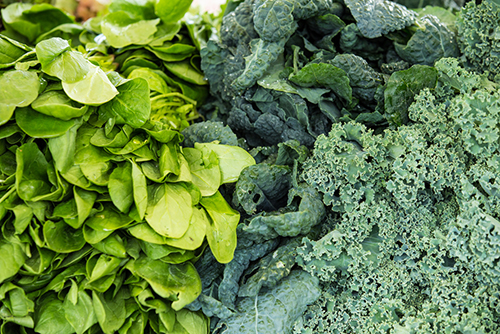
Leafy greens like spinach and kale are high in vitamin K, which is a key nutrient that helps protect the arteries from calcifying and growing stiffer. The natural nitrates in leafy greens also reduce blood pressure and improve the functionality of the cellular lining of blood vessels.
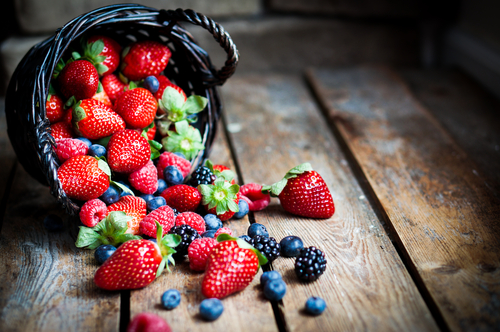
Berries of all sorts are another food your heart will thank you for. The antioxidants found in strawberries, blackberries and blueberries contain compounds called anthocyanins. These protect against oxidative stress and inflammation.6
Anthocyanins also promote the healthy function of the cell lining of the blood vessels.
Potassium is another vital nutrient that helps reduce blood pressure and take some strain off the arteries.
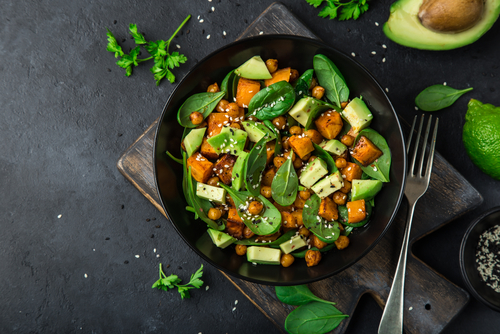
And while the traditional go-to for potassium intake has always been bananas, foods like avocados, potatoes (both sweet and regular), legumes, beets and pomegranates have substantially more potassium packed in them.
Let It Flow
Last is the important task of getting the right viscosity of the blood. When everything is flowing inside of us like it should, the blood should flow like wine, not barbeque sauce. And again, good blood flow means more SIRT1 is produced.
Classic superfoods and adaptogens, like turmeric, garlic, cinnamon and ginkgo biloba, all contain anticoagulant properties that help thin the blood to healthy levels.
In fact, cinnamon is so good at thinning blood, the popular blood-thinning drug Warfarin is derived from an agent naturally found in cinnamon called coumarin.7
There is also a digestive enzyme found in pineapple called bromelain that has been found to reduce blood pressure. It’s nearly impossible to get enough of this enzyme from just eating pineapple. But it is readily available in most drug stores and vitamin shops as a supplement. Look for one derived naturally from pineapples.
And research has confirmed that concentrated doses of bromelain break down and reduce the formation of blood clots while also acting as a blood thinner.8
Just the Beginning of the End (of Aging?)
Discovering the SIRT1 enzyme may be the closest we’ve gotten to finding the fountain of youth.
And although we’ve only just scratched the surface of what SIRT1 can do, we’re already seeing the benefits.
Just making small changes to your diet to target this powerful enzyme can have far-reaching effects on your overall vascular health and longevity.
It’s amazing we now know that the fountain of youth isn’t hidden in the far ends of the planet...
It’s been right inside of us the whole time.
Anti-Aging Recipes to Tap Your Fountain of Youth
It’s crucial to support your vascular health through your stomach.
Here are three “fountain of youth” inspired recipes that won’t just fill you up… They’ll bring the vital nutrients you need to maintain a healthy vascular system and promote healthy SIRT1 levels.
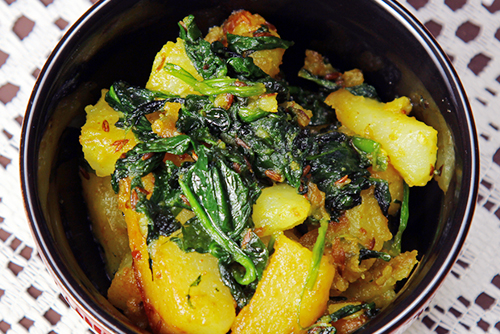
Hearty Potatoes and Spinach
- 4 russet potatoes (peeled and cubed)
- 3 cloves of garlic
- A large bunch of fresh or frozen spinach
- 1/4 cup extra-virgin olive oil
- Salt and pepper to taste
The easy way is to place the cubed potatoes in a microwave-safe dish, cover with plastic wrap and cook for five minutes.
Or you can place the potatoes in a large pot, completely cover them in cold water and bring the water to a boil. After they’ve cooked for 10 minutes (stick your fork in them, but they shouldn’t completely break apart), drain and keep to the side.
Next, in a large pan, heat up half the olive oil over medium heat and sauté the garlic for five minutes.
Once the garlic is browned, add the potatoes, season with salt and pepper and continue to cook, adding more oil as needed.
Add the spinach and stir until it’s fully wilted and bright green. And try to flip over the potatoes along the way to brown them on both sides.

Garlic Skillet Chicken With Lime
- 2 tablespoons extra-virgin olive oil
- 4 skinless chicken breasts
- 2 limes juiced and zested
- 1 large yellow onion (diced)
- 3 to 5 cloves of garlic (chopped)
- 1 cup chicken broth
- 2 teaspoons smoked paprika
- Crushed red pepper
- Salt and pepper
- A splash of heavy cream
Add the olive oil to a large skillet and heat over medium heat.
Season the chicken breast with salt and pepper on both sides.
When the skillet is heated up, add the chicken breasts, quickly sear both sides and remove from the skillet.
With the skillet still warm, add the onion and garlic and sauté until soft.
Next, add the chicken broth, lime juice and zest, paprika, and crushed red pepper and stir while allowing the flavors to come together for about five minutes.
Once the sauce is ready, return the chicken to the pan and continue to cook for a few minutes.
Then add a splash of heavy cream and mix well to finish the sauce for a silky-smooth texture.
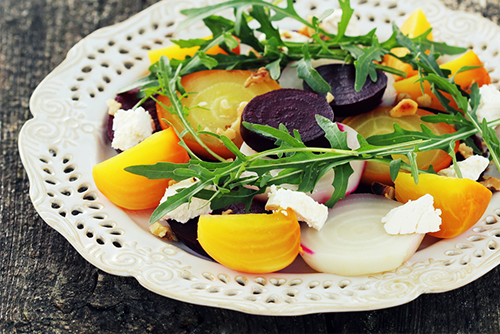
Roasted Golden Beet Salad
- 5 golden beets
- 2 packed cups of microgreens
- 1/4 cup goat cheese
- 1/4 cup extra-virgin olive oil
- 2 tablespoons white balsamic vinegar
- 2 teaspoons chopped Italian parsley
- 1 teaspoon Dijon mustard
- 1 teaspoon honey
- Salt and pepper to taste
Preheat the oven to 400 degrees.
While the oven is warming up, scrub the beets clean and fully dry them.
Once the oven is preheated, wrap the beets in aluminum foil and roast for about an hour.
As the beets roast, add the olive oil, vinegar, mustard, honey, and a sprinkle of salt and pepper to a small bowl and whisk them together.
Once the beets are ready, open the tin foil package and let them cool.
When they are cool enough to handle, peel and cut them into thin slices and add them to a large bowl.
Then add the microgreens to the same bowl.
Pour the dressing over the beets and greens and toss to fully combine.
Then plate the salad and top with the parsley and goat cheese.
References
Add Years to Your Life in Just 10 Minutes a Day
- https://www.ncbi.nlm.nih.gov/pubmed/19757859
- https://www.ncbi.nlm.nih.gov/pubmed/16339340
- https://www.oatext.com/the-effects-of-blood-flow-restriction-exercise-on-vascular-function-in-the-elderly-a-systematic-review.php
Flip Your Anti-Aging Switch
- https://www.ncbi.nlm.nih.gov/pmc/articles/PMC3794712
- https://www.ncbi.nlm.nih.gov/pubmed/2520283
- https://www.ncbi.nlm.nih.gov/pubmed/15205477
- https://content.iospress.com/articles/nutrition-and-healthy-aging/nha170036
- https://www.ncbi.nlm.nih.gov/pubmed/15749705
- https://www.ncbi.nlm.nih.gov/pubmed/17533652
- https://www.ncbi.nlm.nih.gov/pubmed/15199454
- https://www.ncbi.nlm.nih.gov/pmc/articles/PMC3529416