
Train Your Body Like the Best Athletes... Without Leaving the Comfort of Your Bed
Dear Reader,
This is your chance to get the same training as top-level athletes.
It’s your chance to see the same benefits... get the same results... and do exactly as they do.
We’ve all seen and heard of the great efforts the best athletes undertake to stay in shape. They spend hours in the gym each day. They have nutritionists optimize every meal. And they have a team of coaches helping them outline everything they need to do to be at the peak of their performance.
You and I... well, we aren’t so lucky.
We can’t spend all day in the gym. We don’t have a personal chef. And the last time I had a coach was when I was in grade school.
But there is something you and I can do that is exactly what the world’s best athletes do. It’s the great equalizer. And in many cases, in fact, we can do it better.
It’s what this special health-only issue is focused on.
Did you know that famed tennis star Roger Federer slept 12 hours each night at the peak of his career? Or how about the fact that Usain Bolt (one of the world’s fastest men) gets 10 hours of sleep each night?
And it’s not because they’re lazy or unmotivated.
Far from it. It’s because they know that sleep is one of the largest determinants of our overall health and performance.
We spend a third of our lives asleep, and yet the medical field is just now getting serious about researching the subject.
In fact, most of what we know about sleep has been discovered only since the 1970s.
But the facts are clear...
Sleep affects our lives in incredible ways. It enhances our metabolism. It alters our mood. It even affects our immune system. It’s critical to our health.
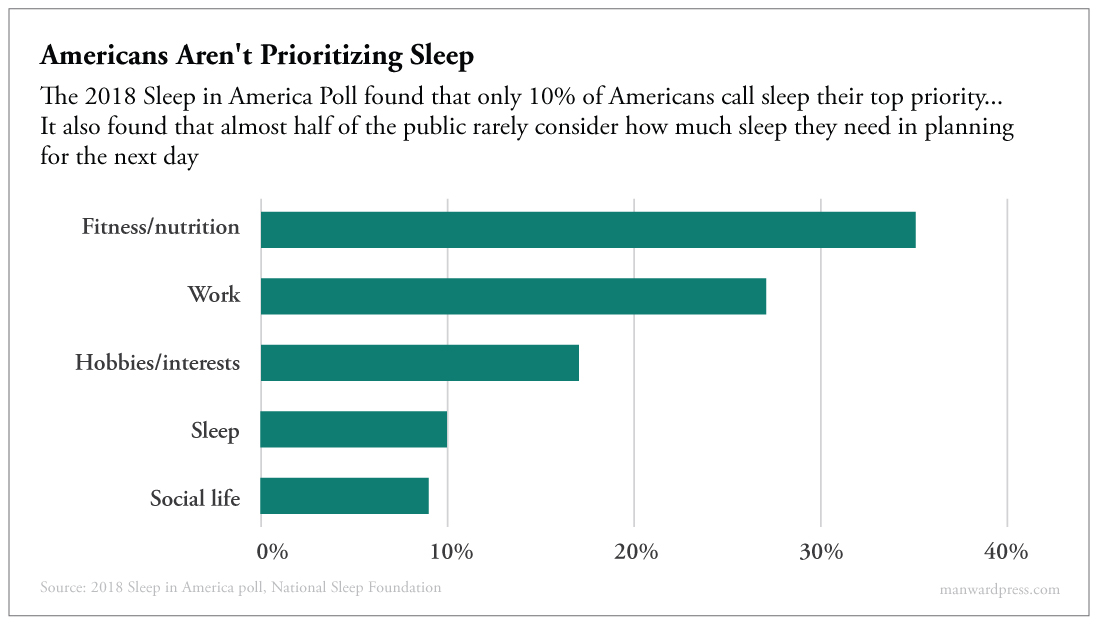
And yet... most folks go to bed when they’re tired and get up when the alarm goes off. We put very little effort or thought into the “performance” of sleep. That must change.
I hope this issue serves as a first step on your journey to better, healthier sleep. It will change your life.
It was just one fact that pushed me over the edge and made me serious about the idea. It’s the notion that humans are the only species on the planet that willingly delay sleep.
We stay up late to watch TV, read a book or have another beer. Nowhere else in the animal kingdom is that trait alive.
It can’t be. In the “thrive or die” natural world... anything but peak performance is a death sentence. That’s why animals are programmed to be much more serious about their sleep.
If they don’t get the job done... it could kill them.
That’s the idea I beg you to have in mind as you read this month’s issue. I urge you to take your sleep seriously... and know that your health depends on it.
You may not have hours to spend at the gym. You might not have a personal trainer. But you have a bed... which means you can get the same sleep “training” as some of the most performance-focused athletes on the planet.
Take advantage of it. And enjoy the issue.
Be well,
Andy
P.S. When you’re done reading, be sure to send us your thoughts on the issue... and what questions you have for us or topics you’d like to learn more about. Email us at mailbag@manwardpress.com.
Sleep Tight
Why Falling (and Staying) Asleep Is More Important Than Ever... and How to Do It
Immune health has been on the tip of everyone’s tongue lately.
As COVID-19 spreads like wildfire through metropolitan and rural areas, it’s growing increasingly clear that our immune systems just aren’t strong enough to defend themselves. It’s partly because we’re an aging nation.1 And as we grow older, a process called immunosenescence takes over. Our immune systems are a little more worn down... and more infections, diseases and even cancer can take root.
But it’s not just seniors who should worry.
We live in a hyper-sterilized world. Toddlers are using hand sanitizer when they should be out playing in the mud.
If a kid comes down with the sniffles or a sore throat? Boom, they get an antibiotic.
It’s okay to pick your nose. Get your hands dirty. The immune system needs little challenges to stay prepared for when a real battle comes.
But even the nose-pickers and dirt-eaters don’t stand a chance against a virus if they don’t get enough sleep.
That’s why you should use every tool at your disposal – like the ones I’m going to tell you about – to ensure a good night’s sleep.
Crucial Proteins
There’s a direct link between not getting enough sleep and getting sick more frequently. And a sleep deficit also slows the body’s ability to recover from getting sick.2
When we’re asleep, key processes in our bodies stay awake...
The immune system works on producing proteins called cytokines. Some of these help promote sleep.
But cytokines have another job as well. They’re crucial to our immune and inflammatory responses.
In fact, these little proteins play a decisive role in the consequences of all sorts of infectious diseases and autoimmune disorders.
If cytokine levels are low, so is the likelihood that you’ll bounce back from an infection.3
But if you’re getting the right amount of sleep, you’ll be pumping out plenty of helpful proteins... regardless of whether your hands are sanitized.
Sleepless Nights
If that’s all that came from a good night’s sleep, it should be incentive enough to make sure you’re logging your seven to eight.
But there’s even more to it than that.
You know that brain fog you have the day after a bad night of sleep? Well that ain’t the half of it. If anything, that’s just a little preview of things to come after too many sleepless nights.
Those who start stringing together multiple sleepless nights are taking a shortcut to significant memory loss and brain deterioration.
Because when we’re asleep, something else important is going on...
Brain waves are produced in order to store our memories. When we’re asleep, the brain transfers memories from the hippocampus to the prefrontal cortex – that’s where long-term memories are kept safe.
But for folks who aren’t getting sufficient sleep, that transfer never happens. And that’s why sleep-deprived drowsiness leads to forgetfulness and trouble remembering simple things like the names of people you just met or where you put your sunglasses.
But those are just short-term problems.
Long term, when these neural pathways are disrupted, it speeds up cognitive decline.
You see, when the brain’s networks start to break down, information needs to travel via new routes. And that slows down your brain’s processing power.
That’s no good...
If the brain takes longer to process and make sense of information, it’s more likely to forget it. And that leads to memory loss, confusion and rapid cognitive decline.
But it’s not just immune health, processing power and memory making that we miss out on after a restless night.
When we’re asleep, our brain’s “wash cycle” starts up.
The Great Cleansing
During a proper night of rest, the brain sends out electrical activity in the neurons. This triggers a pulse of fluid that literally washes through the brain.
Scientists have observed this in real time using MRI techniques on sleeping patients. And they found that while folks are asleep, cerebrospinal fluid (CSF) is hard at work.
Around every 20 seconds or so, a large, slow wave of CSF is spread around the brain that removes dangerous neurodegenerative toxins that are known to lead to Alzheimer’s disease.4
But it happens only during a specific stage of sleep.
This is a powerful reminder that it’s not just the quantity of sleep that matters... It’s also the quality.
Half of a night’s rest is spent in light sleep. That’s followed by a short period of deep sleep.
Then the body transitions to the rapid eye movement (REM) stage, when dreams occur and the body approaches a waking state.
It’s during the deep sleep stage that the body and brain waves slow down. And this is when the brain sends electrical slow waves to trigger the release of CSF that washes the brain of harmful toxins.
But too many sleepless nights cause those toxins to build up, which leads to a dirty brain covered in toxins.
It really boils down to the simple fact that when we’re awake, our brain is too busy and active to attend to simple routine maintenance. And the cleanse requires concentration.
That being said, there are things called glial cells that bounce around the fluid spaces of the brain and clean up during the day. But they mostly attend to the surface levels. They’re like running a Roomba over a pile of dirt. Sometimes you need to break out the Shop-Vac if you want it cleaned right.
And that’s what CSF does for the brain while you’re asleep.
The New Normal?
In many ways, this is just the beginning of the story. There are so many reasons a good night’s sleep is important.
Insomnia and trouble falling or staying asleep (or both) has been linked to increased risk of heart attack and stroke, depression, and even weight gain.5, 6, 7 So yeah, this is serious stuff.
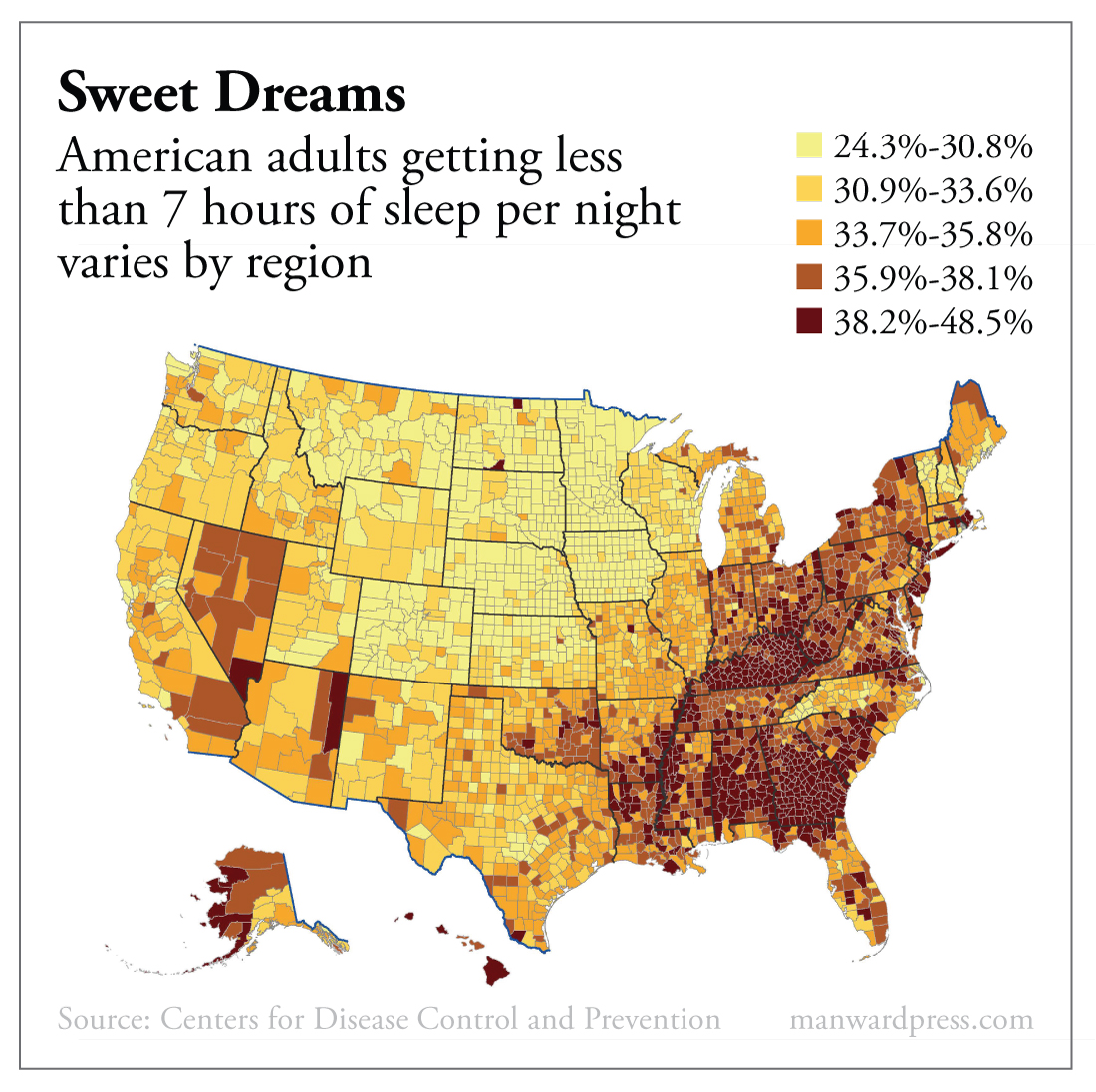
But that doesn’t change the simple fact that more than 50 million Americans deal with chronic sleep disorders.8
And it disproportionately affects older adults...
As we age, sleep patterns change. And we grow accustomed to lower-quality sleep. Waking up in the middle of the night happens more frequently. And we wind up accepting that less sleep overall is just part of the equation.
That’s no good. There’s a better way...
And it doesn’t involve going to the doctor and asking for a prescription sleeping pill. Those things are more trouble than they’re worth thanks to all the dangerous side effects they come with. Not to mention the fact that many of them are habit-forming.9
I prefer to sleep the nonaddictive way.
And there are plenty of tricks out there to do so.
Some are simple, little hacks you can implement in your life. But they might not be feasible for everyone’s situation. For those folks, there are great all-natural supplements with a long-proven track record of helping people go down for the night and stay there until the morning.
So if you’re one of the millions of Americans who could use a good night’s sleep right now, there’s plenty of hope for you to make sure that when the lights go off, so does your brain.
Here are a few tricks to try...
Tips to Get Some Shut-Eye
Put your feet up. It’s often touted that by elevating your head, you’ll sleep better. But that’s backward. You should instead elevate the foot of the bed just a few inches. This increases circulation to the brain at night. It won’t help you fall asleep any faster, but it can increase sleep duration.10
Some like it hot. Speaking of head and feet, over time our bodies developed a penchant for playing a rotten trick on us. We’re best at falling asleep when the temperature is between 60 and 67 degrees. That’s why the cool side of the pillow really is better at helping us sleep. But our feet don’t like it that cold. By wearing socks or putting a hot water bottle by your feet, you will cause blood vessels to dilate, which sends a signal to the brain that it’s time to go to sleep. A study published in the journal Nature found that those who sleep with socks on fall asleep 15 minutes faster than their barefooted brethren.11
Keep it regular. Develop a steady sleep pattern. We humans are creatures of habit. By going to bed at the same time every night, we can train our body to know when it’s time to start winding down as long as we stick to the same routine. And that’s all seven days of the week, not just weekdays. This will normalize the body’s timed release of melatonin and help you fall asleep faster.
The eyes have it. Even the faintest bit of light can disrupt sleep and reduce the production of sleep hormones. So it’s important to make sure your blinds are always closed. Forgo the night-light. And ditch the LED alarm clock. This isn’t because the light itself can wake you up. It’s because of light-sensitive eye cells called intrinsically photosensitive retinal ganglion cells.
These have nothing to do with vision. Their only job is to absorb light in order to set our circadian clock.12 So if they’re getting a taste of light, it can throw the whole body’s sleep process out of whack.
On the sunny side. It’s important to try and get sunlight during the day. That will also keep the body’s circadian rhythm in order. And this way your personal biological timekeeper will know that when the sun goes down, it’s time to start preparing for sleep. And you’ll be able to fall asleep faster.13
Supplement Your Sleep
After you’ve improved your sleeping environment, you’re ready for Phase 2.
There are all sorts of pills and gummies that are touted for their ability to help you achieve a better night’s sleep. And some are legitimately helpful.
You’ve undoubtedly been told by your doctor... your neighbor... your cousin... and your checkout clerk about the powers of taking melatonin.
And I’m a firm believer in its power.
But there are a few things to know about it...
The brain’s pineal gland produces this hormone in response to darkness. While it doesn’t directly put us to sleep, it does produce a sense of peace and quiet and helps induce sleep.
But not everybody’s churning enough of this stuff out. That’s why melatonin supplements are some of the most popular sleep aids out there.
There are two types of melatonin on the market: natural and synthetic.
While the natural version is virtually identical to the melatonin our bodies create, it comes from the brain tissue of cows.
So it’s crucial to make sure it comes from a reputable source. Because the supplement world (and therefore melatonin manufacturers) isn’t regulated, there is an ever so slight risk of catching mad cow disease.
So instead of taking melatonin, it’s better to make melatonin.
You can actually help your brain get better at making melatonin by drinking a single glass of tart cherry juice 30 minutes before bed.
This helps boost the body’s production of melatonin. And it’s proven to improve sleep quality and the duration of sleep.14
Better Than Xanax
There are two lesser-known nutrients that also deserve a look...
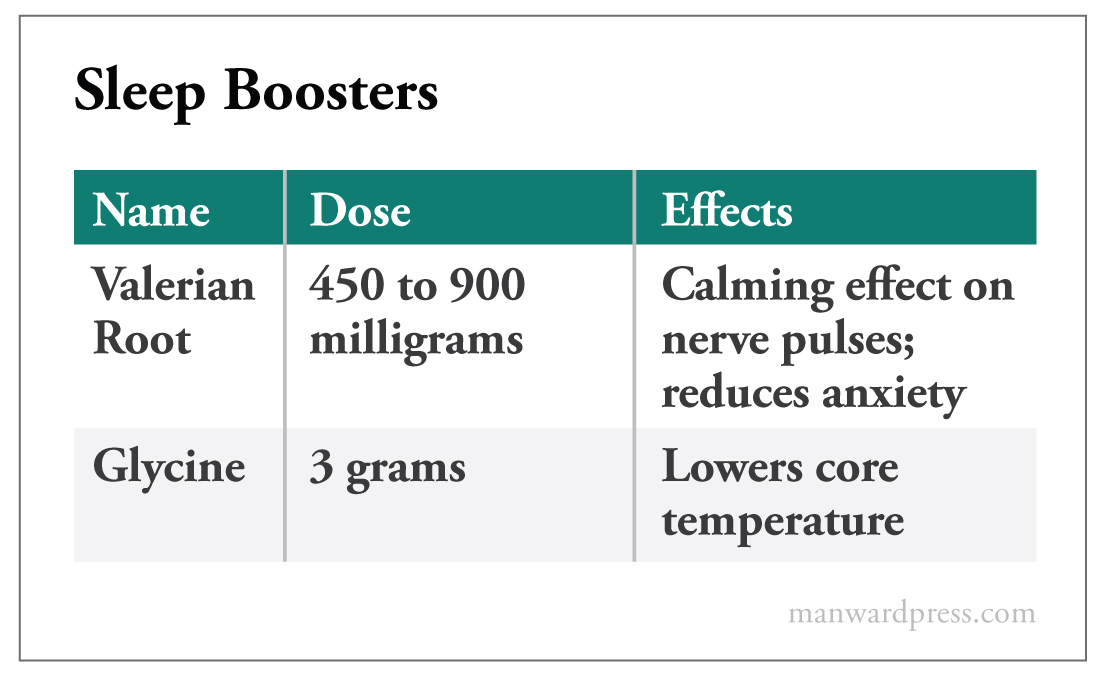
Valerian root. There’s a chemical messenger in the brain that regulates nerve impulses called gamma-aminobutyric acid (GABA). The problem is this messenger is fragile and breaks down easily, which can lead to anxiety.
But the valerenic acid in valerian root prevents the breakdown of GABA. And this has the same calming effect as Xanax.15
Valerian root also contains potent antioxidants known to have sleep-inducing properties in their own right.16
Anywhere from 450- to 900-milligram doses have shown to be extremely effective at helping people fall asleep and stay asleep.17
But it’s not without its risks for a certain portion of the population.
This should NOT be combined with alcohol, other sleep aids or antidepressants. And those who are planning on having surgery should absolutely let their doctor know because it can increase the effects of anesthesia.
Lastly, even though it is completely safe, the sedative effect can be addictive. So this is best used when you know you’re going to have trouble falling asleep and not necessarily every night.
Glycine. This amino acid plays a key role in the nervous system. And recent studies have shown that it can also improve sleep quality.
Three grams (taken as a pill or a powder) just before bedtime help folks fall asleep faster and improve sleep quality.18 Glycine does so by lowering the body’s core temperature and mimicking the effects of the cool side of the pillow, even on a summer night.19
As an added bonus, those who take glycine before bed also report to be peppier in the morning and have a clearer head the next day.20
By lowering body temperature, it signals to the body that it’s time to sleep.21
Now, keep in mind, different people have trouble sleeping for different reasons. So it might take a little trial and error to find out what works for you.
A combination approach might be the key to better, more consistent sleep.
Vital for Your Health
If you’re having trouble sleeping, it’s high time you take steps to find a remedy.
We’re in the midst of a war with a virus that spreads as well as anything we’ve ever seen before.
Depending on who you ask, anywhere from 40% to 70% of the world’s population could catch this sucker before it eventually subsides.22
So it’s as important as ever that we stay ready to fight it off. And that starts with good, consistent sleep.
Turn Out the Lights on This Coronavirus Time Killer
When I was younger, I had an alarm clock that sounded like a drunken moose in heat.
Sounds pleasant, doesn’t it?
But I needed something that abrasive to wake me up.
Not because I was such a sound sleeper. No, because I was exhausted.
I had a dirty little secret... I was a TV junkie.
Every night, I’d fire up the boob tube and watch whatever the TV gods were willing to serve me.
It didn’t matter whether it was an infomercial about knives or an old black-and-white cowboy movie. I thought it was what I needed to relax after a long day... to help lull me to sleep.
Needless to say, I didn’t understand the vicious cycle I was putting myself in... and what it was doing to my health.
And the lesson I learned the hard way is just as critical today.
Nonstop Screen Time
The nasty coronavirus has left us in a state of suspended animation.
Many folks are glued to their screens for the latest on this crisis... and turning to any device they can get their hands on to pass the time as the days bleed together.
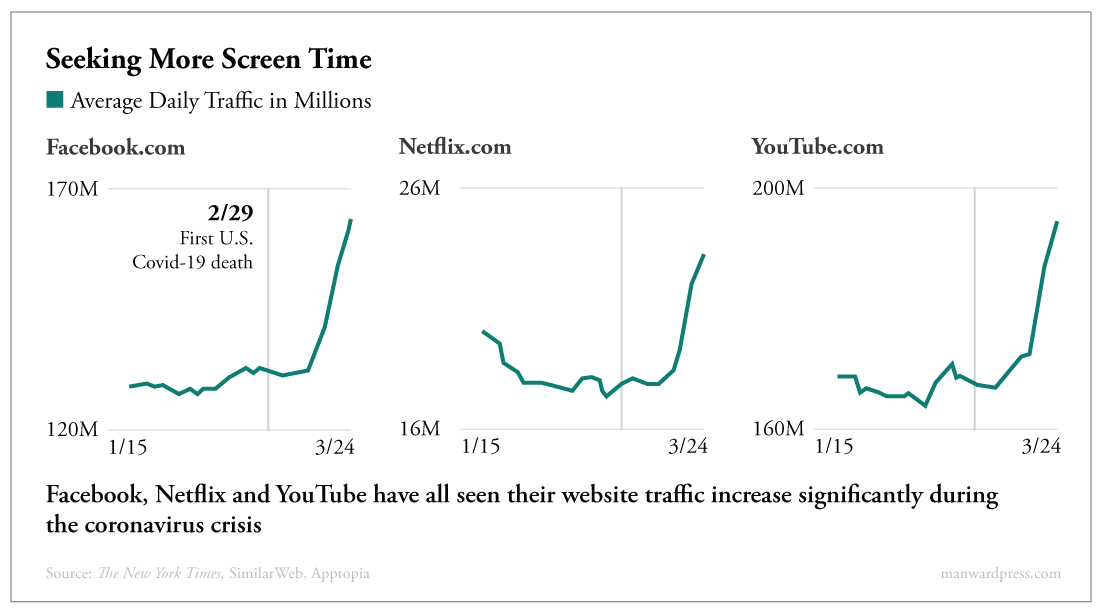
They’re saturating themselves with a particularly dangerous type of artificial light virtually ’round the clock.
And this has the potential to cause an epidemic of its own.
Feeling Blue
This virus is certainly affecting the way people sleep – for many reasons.
But screens are making it much worse. And I’m not just talking about stress-induced information overload.
I’m talking about blue light.
It comes from TVs.
It comes from smartphones.
It comes from tablets.
Heck, cities are replacing regular old street lights with blue-light-emitting LED lamps (much to the chagrin of health-conscious residents).1
And there’s a huge problem with that.
Following the news into the wee hours of the night via whatever device is handy exposes people to artificial blue light that shuts down the body’s production of melatonin.2 And we all know that’s no good when we want to fall asleep.
But there’s way more to melatonin production than just sleepless nights. Everyone’s favorite sleep hormone has its hands full at night...
And that’s why staying off screens can be doubly beneficial... for your health and sanity.
Radical Amounts of Damage
While we’re in deep sleep, melatonin plays the role of a powerful antioxidant and scavenger of free radicals.
Our body is under constant oxidative stress.
When oxygen enters the body, it splits into single atoms with unpaired electrons.
The problem is that electrons prefer to act in pairs. So these solo atoms (free radicals) search for other electrons to pair with. This process causes damage to our cells, proteins and even DNA.3
It’s a devastatingly fast-paced domino effect.
When a free radical pulls in an electron to mate with, it destabilizes the molecule it pulls the electron from.
That molecule, in turn, becomes a free radical on the hunt for a stabilizing teammate.
This chain reaction leads to broken cell membranes that can change the entire structure of a lipid.4
In its new form, a lipid could be more likely to get caught in an artery, causing critical buildup. And damaged molecules are more likely to mutate and grow tumors.
These free radicals are the stuff most diseases are born from. And because the process never stops, it’s believed that free radical buildup is what’s behind the entirety of the aging process.5
Because as free radicals damage our very DNA, new cells don’t have the instruction manual to grow correctly. So they end up malformed, which leads to aging.
It’s clear why melatonin is so important.
If we aren’t producing enough of it, we can’t take free radicals out of their misery... possibly leaving us with cancer, joint inflammation, diabetes and degenerative eye disease.6
Blue Light Special
The scariest thing about this is that blue light is pervasive. It’s not just late-night screen time that causes all this trouble for melatonin.
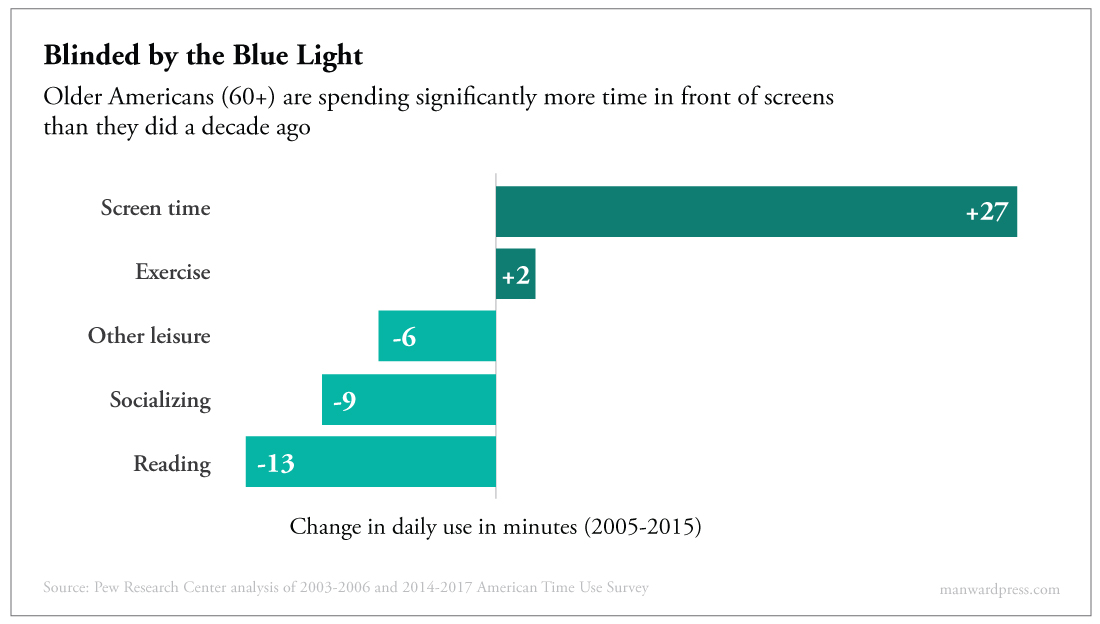
Even using electronic devices and watching TV during the day can leave a mark.
Research has proven that the more people look into the hypnotizing blue light, the less sleep they get.
The average American has no idea how much time they spend looking at their phone, tablet or computer. But suffice it to say, it’s a lot.7
A recent national survey conducted by Common Sense Media found that adults spend an average of 9.3 hours per day looking at some form of toxic blue light.8
Multimedia are designed to be engaging and habit-forming, so we do not even realize how much time we spend when we heed the siren call of our devices. – Catherine Steiner-Adair, clinical psychologist and author of The Big Disconnect
And a large study found that folks who spend more than five hours a day looking at a screen (it’s surprisingly common) were significantly more likely to get less than five hours of sleep per night.
And they were 49% more likely to need more than an hour to fall asleep in the first place.
That’s unacceptable... but the solution is obvious.
While these devices may be our only connection to family and the outside world right now, it’s easy to see how destructive they can be to our health – both physical and mental.
It’ll do everyone more good to just turn the damned things off... stay away from them as long as possible... and find other ways to pass the time.
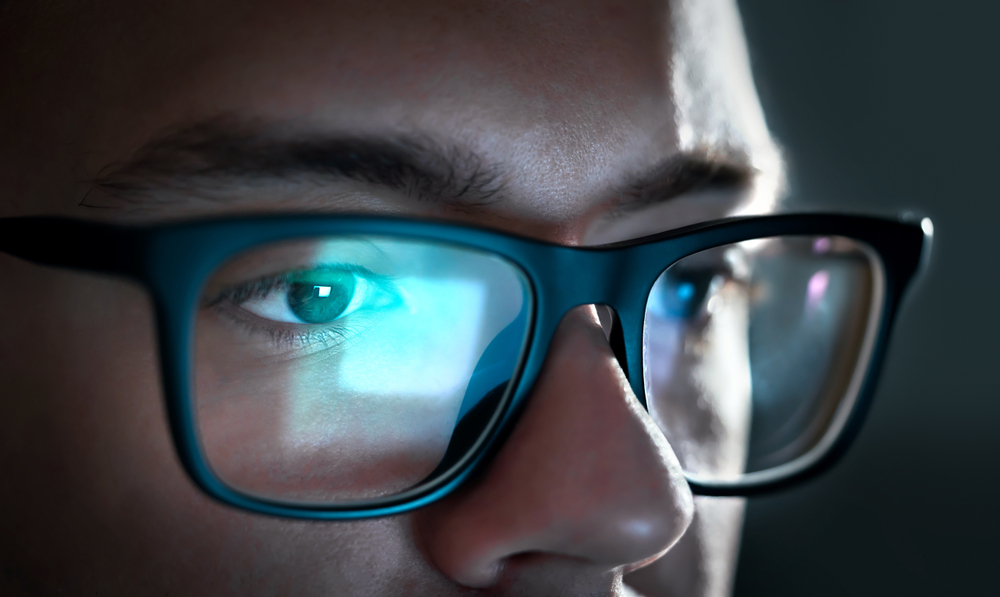
All that screen time is also doing a number on our eyes.
The blue light kills off photoreceptor cells in the macula.
And once these cells are dead, they’re gone forever. They don’t regenerate.
That’s how blue light exposure can lead to macular degeneration and even blindness.
Appendix
References
Fighting the Coronavirus With Your Eyes Closed
- https://www.census.gov/newsroom/press-releases/2018/cb18-41-population-projections.html
- https://www.mayoclinic.org/diseases-conditions/insomnia/expert-answers/lack-of-sleep/faq-20057757
- https://www.ncbi.nlm.nih.gov/pubmed/8813336
- https://science.sciencemag.org/content/366/6465/628
- https://onlinelibrary.wiley.com/doi/full/10.1038/oby.2007.118
- https://www.ncbi.nlm.nih.gov/pubmed/21300732
- https://www.ncbi.nlm.nih.gov/pubmed/25128225
- http://www.healthcommunities.com/sleep-disorders/overview-of-sleep-disorders.shtml
- https://www.addictioncenter.com/sleeping-pills
- https://www.ncbi.nlm.nih.gov/pmc/articles/PMC5700252
- https://www.nature.com/articles/43366
- https://science.sciencemag.org/content/295/5557/955
- https://www.ncbi.nlm.nih.gov/pubmed/24394440
- https://www.ncbi.nlm.nih.gov/pubmed/22038497
- https://www.ncbi.nlm.nih.gov/pubmed/20042323
- https://www.sciencedirect.com/science/article/pii/S009130570300368X
- https://ods.od.nih.gov/factsheets/Valerian-HealthProfessional
- https://onlinelibrary.wiley.com/doi/full/10.1111/j.1479-8425.2007.00262.x
- https://www.ncbi.nlm.nih.gov/pubmed/22293292
- https://onlinelibrary.wiley.com/doi/abs/10.1111/j.1479-8425.2006.00193.x
- https://www.ncbi.nlm.nih.gov/pmc/articles/PMC4397399
- https://www.businessinsider.com/coronavirus-outbreak-could-hit-3-billion-adults-harvard-expert-2020-3
Turn Out the Lights on This Coronavirus Time Killer
- https://www.wuft.org/news/2020/03/26/up-all-light-micanopys-new-led-streetlights-generate-mixed-reactions
- https://www.sleepfoundation.org/articles/how-blue-light-affects-kids-sleep
- https://www.ncbi.nlm.nih.gov/pmc/articles/PMC2684512
- https://www.hsph.harvard.edu/nutritionsource/antioxidants
- https://www.ncbi.nlm.nih.gov/pubmed/11718765
- https://www.ncbi.nlm.nih.gov/pubmed/7619452
- https://www.scientificamerican.com/article/most-adults-spend-more-time-on-their-digital-devices-than-they-think
- https://bmjopen.bmj.com/content/5/1/e006748