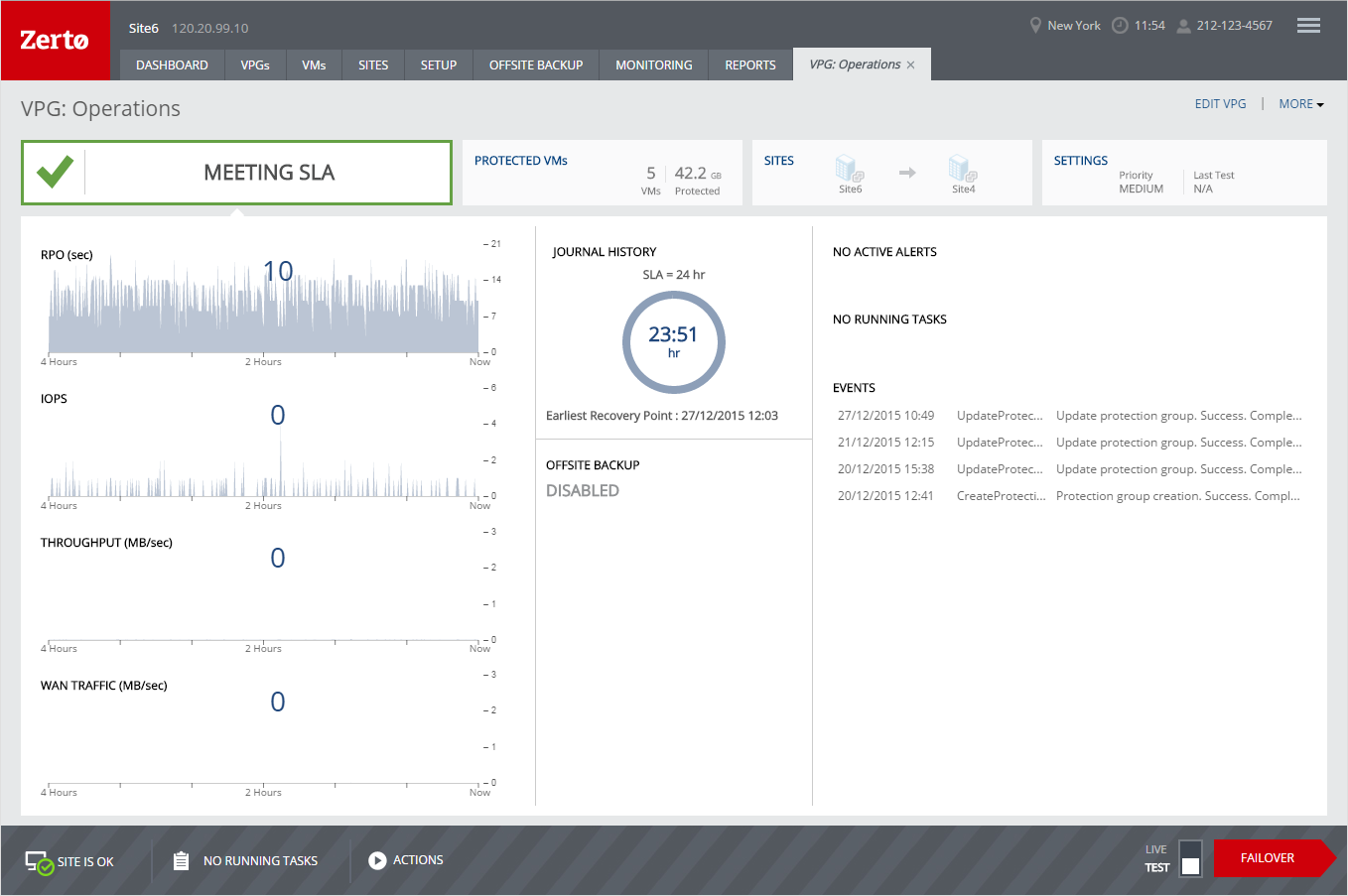
What Happens After the VPG is Defined
After defining a VPG, the VPG is created. The VRA in AWS is updated with information about the VPG and its protected virtual machines. Until a recovery operation is performed, all data managed by the VRA is stored in an S3 bucket.
The synchronization process can take some time, depending on the size of the virtual machines, the amount of data in its volumes, and the bandwidth between the sites. During this synchronization, you cannot perform any replication task, such as adding a checkpoint.
For synchronization to work, the protected virtual machines must be powered on. The VRA requires an active IO stack to access the virtual machine data to be synchronized across the sites. If the virtual machine is not powered on, there is no IO stack to use to access the protected data to replicate to the target recovery disks, and an alert is issued.
Once synchronized, the VRA in AWS includes a complete copy of every virtual machine in the VPG. After synchronization the virtual machines in the VPG are fully protected, meeting their SLA, and the delta changes to these virtual machines are sent to the recovery site.