
WA
A Deep Foundation
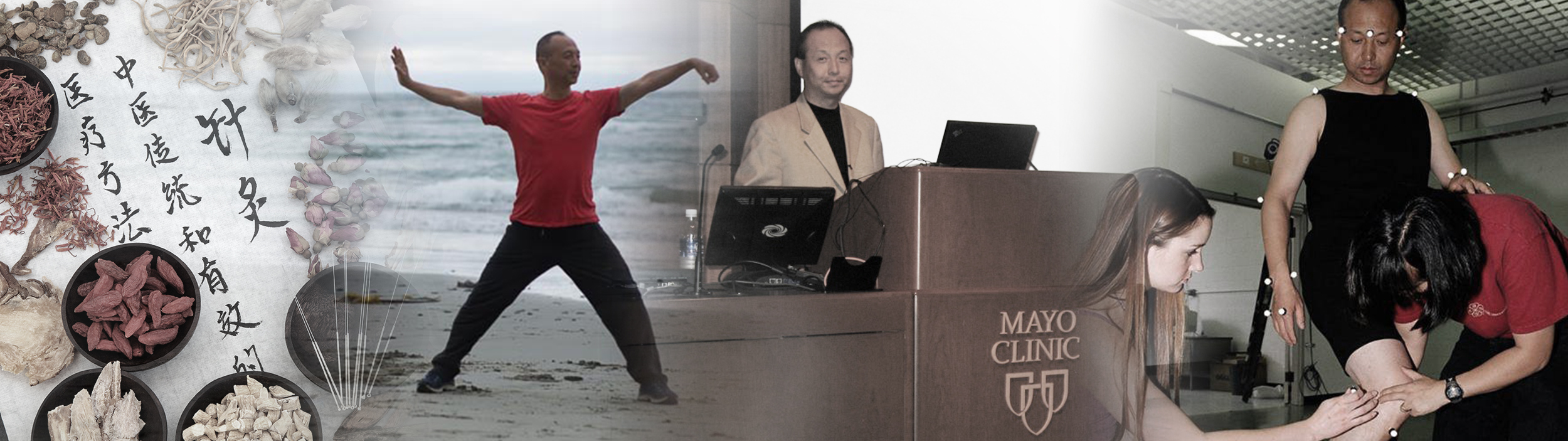
WaQi stems from ancient arts that were passed on to Dr. Yang in the traditional way: through apprenticeship. Having learned from legendary masters in the martial and healing arts, and having attained his own mastery through diligent practice, he has the deep foundation needed to convey ancient practices for modern use in cultivating optimal health.
A Scientific Approach from the Beginning
Dr. Yang was being trained at an engineering school in his early 20s at the same time that he was deeply involved in his apprenticeship in the traditional martial and healing arts. Because of this dual focus, he closely analyzed his traditional training from a systematic, empirical point of view.
With his scientifically inspired curiosity, Yang began asking the following questions of his traditional training: Which health benefits derive from which elements of the practices? What are the synergetic benefits of combining different components of his training? What is the most efficient and direct way to derive maximum benefits? This decades long approach--both traditional and empirical, ancient and modern--has guided the development and refinement of this art and its teaching, and led to the birth of WaQi. It is indeed an evidence based ancient practice.
WaQi Research
Working with Drs. Karl Rosengren, Wojtek Chodzko‑Zajko, and other leading researchers in health science at the University of Illinois, Urbana-Champaign, Yang tested and documented benefits of traditional Eastern practices. These findings are published in peer reviewed international journals. And they led Dr. Yang to refinements of ancient practices for the cultivation of youthful energy, optimal health, and martial skill. ... Read more
Other Research
Research into the health benefits of traditional Chinese practices continues to grow. Investigators from diverse disciplines are examining these practices from the points of view of health promotion, mind/body interactions, disease and injury prevention, and rehabilitation in cases of disease and injury. ... Read more