|
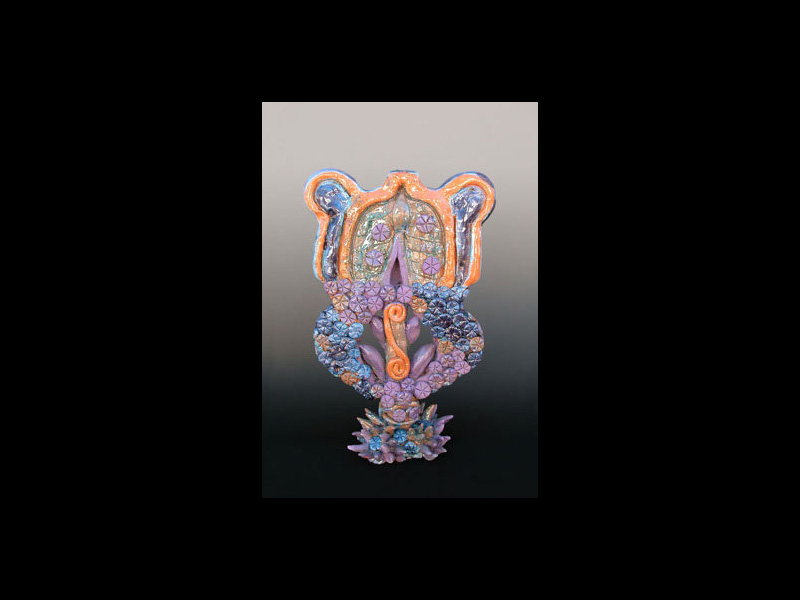
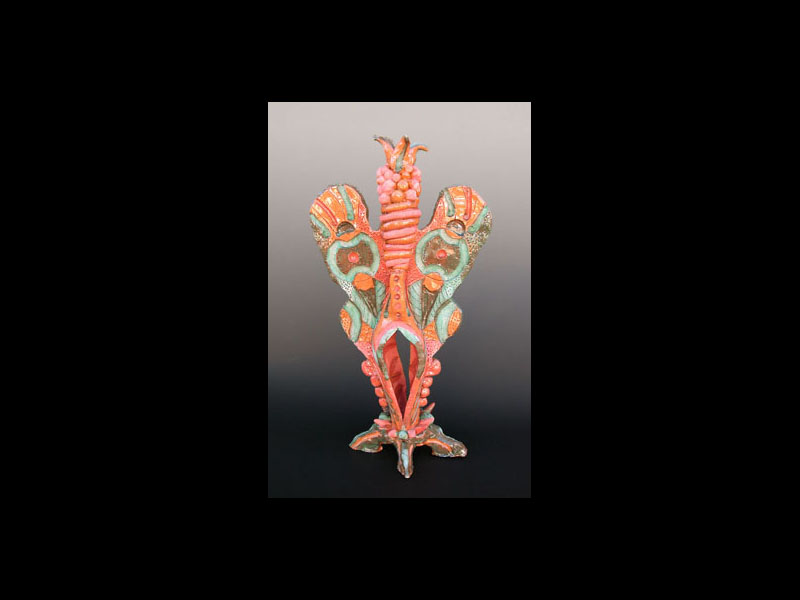
"Who is the Artist? — who is breathing, seeing, feeling and being? These are some of the questions I ask myself when entering into the process of creating. When creating art, I enter into a meditative state where, if all control is surrendered to the will of the universe, one can express the Essence of Being: the Dance. My current artworks explore facets of Energy, the Force that pulsates through Mother Earth, the Kosmos, and all sentient beings – activating the potency of the Dream-time Space. The Dream-time matrix is where all things are continuously birthed from the Void. In learning to utilize the Dream-time and its potency of energy, there is no time — nor distinctions between real or imagined, dream or dreamer. This becomes a silent retreat, a sanctuary in the Womb of the Infinite and its cauldron of possibilities. "
|
Tobya Negash | Dream Time
“The liberated [non-dual] field of energy of the earth element displays the glorious warmth and wealth of earth. This energy is inexhaustible and free to whomever needs it. Wealth and generosity go hand in hand…”
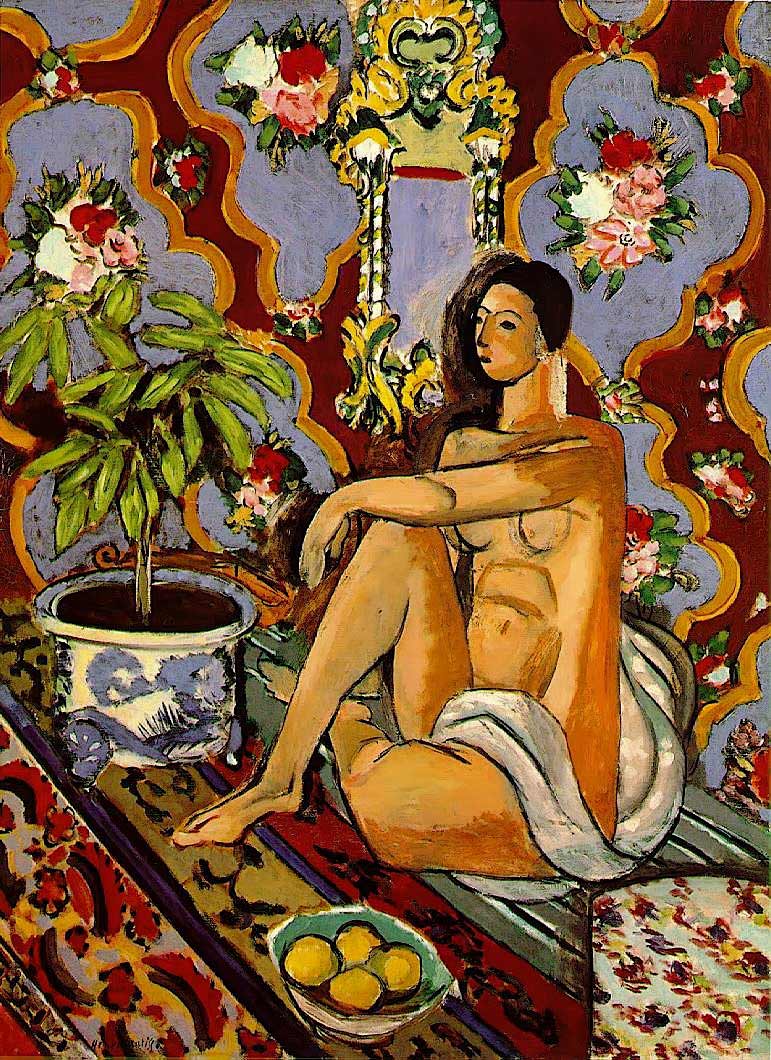
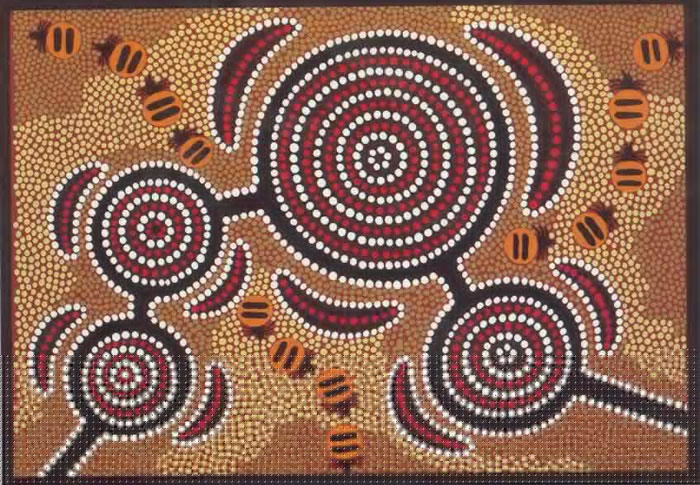
And yet, this tells us nothing about how her art is integral, as art can be integral in incredibly sundry ways.1 So let’s take a closer look. Stages Tobya’s paintings (the focus of this commentary) are abstractions with biomorphic and natural references, with complex, layered, and juxtaposed patterns (as in the work of Matisse). This sophisticated layering and interweaving of planes—and spaces within spaces—comprise a network of diverse worlds-within-worlds: a meshwork of perspectives, often composed as sacred mandalas, this dancing order expressive of second-tier cognition.2 Deskilling Negash is art-school trained, yet works in a “self-taught” manner—a style that seems to spontaneously come forth, as if unmediated by art’s artifice. The canvases have heavy paint and thick brushwork, an apparent coarseness of execution, enacting a quality of deskilling (a term sometimes associated with certain strains of modernist and postmodernist art).3 In this case, this deskilling creates an effect of naturalness, rawness, and freshness of expression. Earth Element Many of the world’s wisdom traditions have posited archetypal realms of subtle forms and forces. In Tibetan Buddhism, one speaks of the five wisdom energies or elements.4 Different integral artists often have proclivities to express different elemental energies—in Negash’s case, the very substance and style (if not the content) of her paintings are largely animated by the element of Earth: overflowing abundance, material fullness, rich teeming fecundity—Mater’s own perpetual birthing. States The interlocking patterns of the mandalas and thick material painted surfaces evoke Oneness: a fullness of unity-in-diversity, spirit in the 3rd person. Any viewing position is disrupted by the multiplication of perspectives, as if there is no fixed self doing the seeing. This radiant fullness, dancing for “no one” at all, is a glorious gift of the Feminine, in consort with the Masculine’s gift of the freedom of emptiness. Color in these paintings is self-luminous, self-glowing.5 The paint application is thick, the very matter of these picture-worlds shining. There is a shamanic feel to the rhythms and textures as energetic force-fields, as one often finds in aboriginal art. Ecology Forms are nested in more encompassing forms, part-wholes within part-wholes—holons within holons. Local regions of such holonic nests (pattern clusters) are woven with other such regions—Negash’s visionary art offering an integral ecology, radiant and full, redeeming and celebrating nature, in all her elemental glories, and especially with regard to matters of Earth. Michael Schwartz 1 On this topic and related matters in integral art theory, see my “Frames of AQAL, Integral Critical Theory, and the Emerging Integral Arts,” in Integral Theory in Action, edited by Sean Esbjörn-Hargens, SUNY Press, 2010, chapter 9. 2 Cf. my discussion of how second-tier cognition is encoded in the best of synthetic cubist collage, “Encoding Stages and States”. 3 On deskilling, see Hal Foster et. al., Art Since 1900, volume 2, Thames & Hudson, 2004, p. 531. 4 For commentary, see Ngakpa Chögyam with Khandro Déchen, Spectrum of Ecstasy, Aro Books, 1997. 5 On modernist color as self-luminous radiance, see my “Modernism, Impressionism, and Color”
|
|