|
"My voice is in my paintings, Vienna, 13.9.2006
|
De Es Schwertberger - Heavy Light
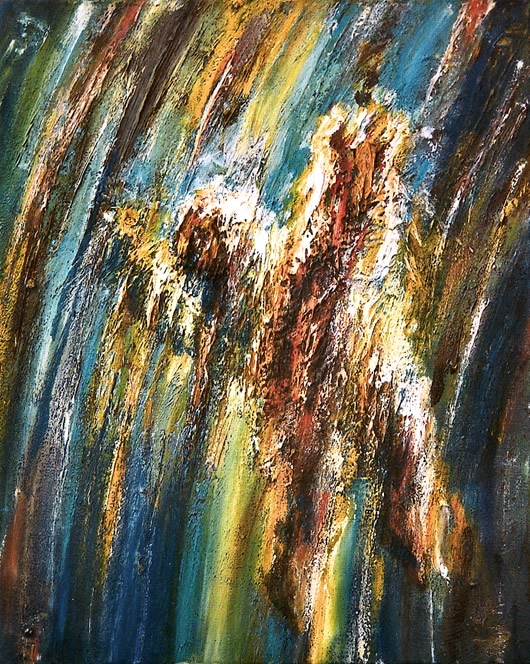
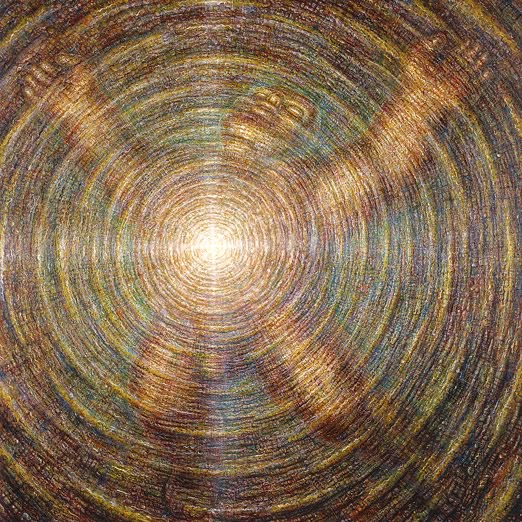
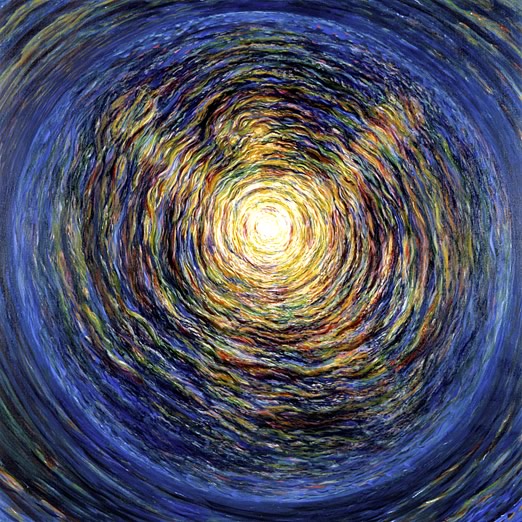
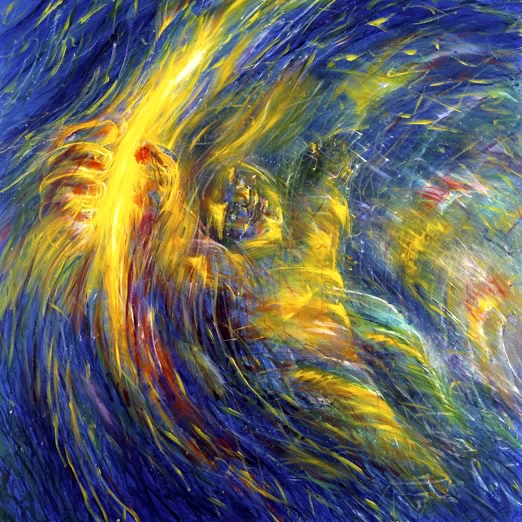
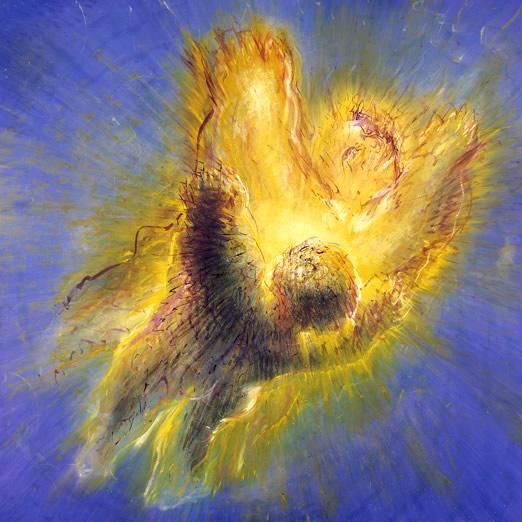
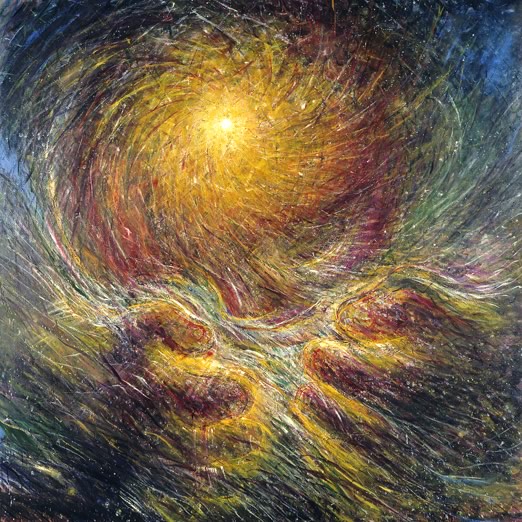
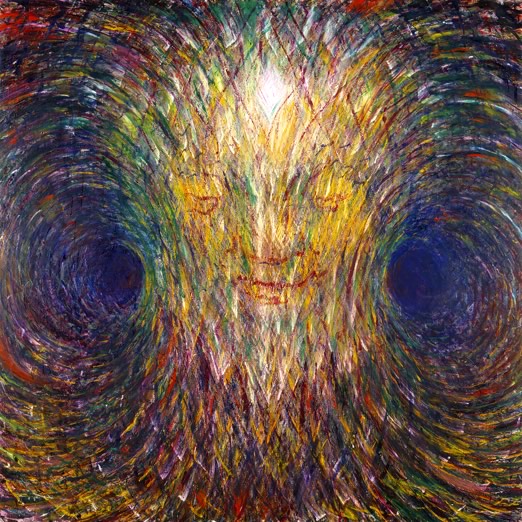
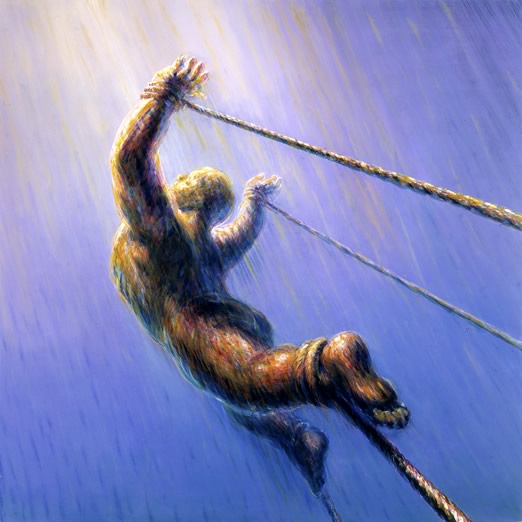
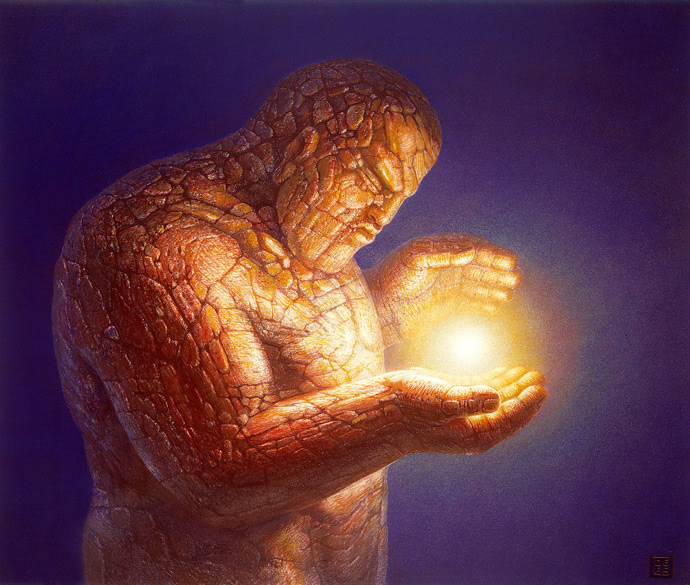
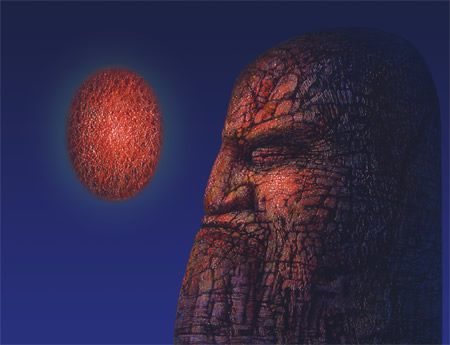
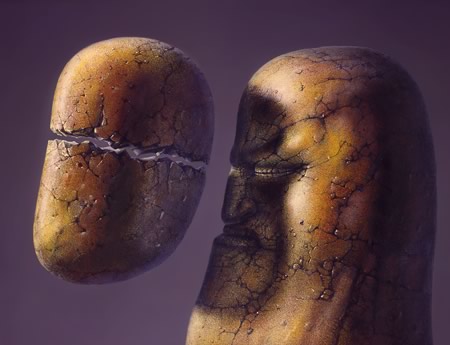
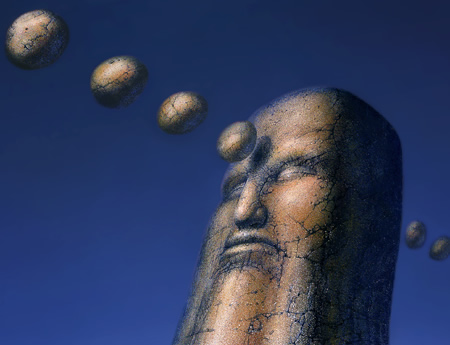
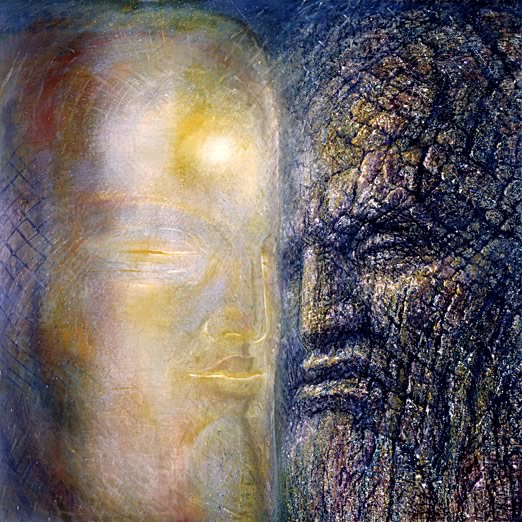
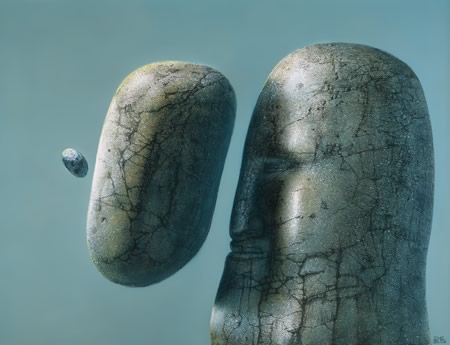
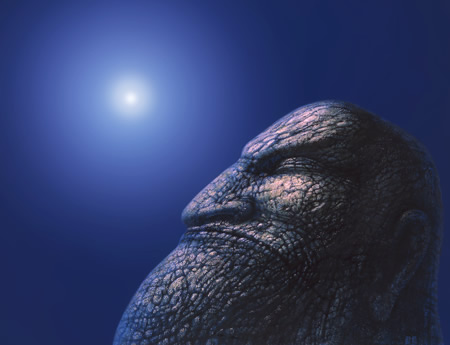
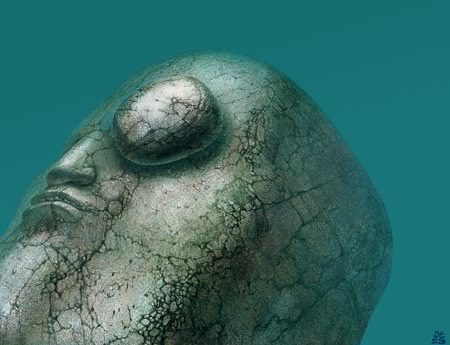
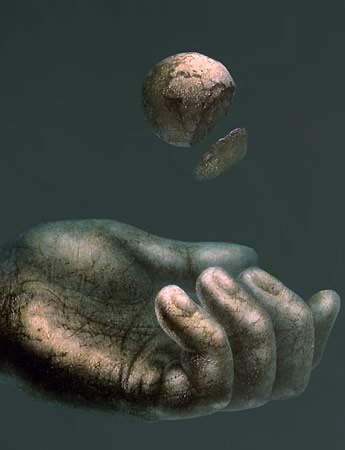
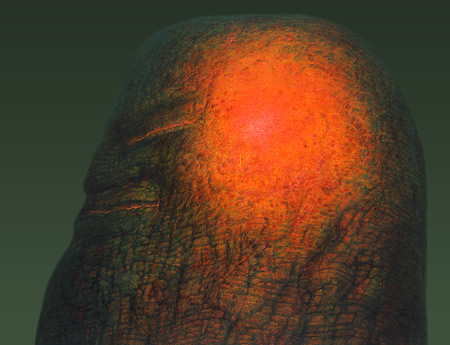
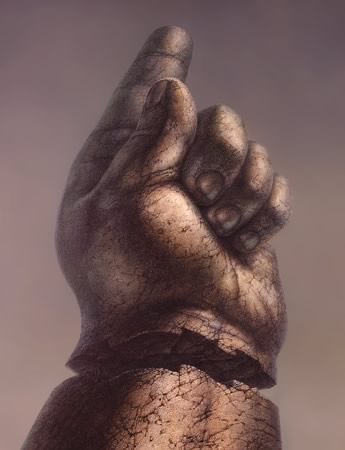
Integral Life presented this past September the first of two galleries devoted to the work of one of today's great living visionary artists: De Es. While that gallery highlighted pictures disclosing the orders and forces of manifestation, this month's offering focuses on artworks pondering the mystery and glory of being human. In the opening works on display this month, the human being is presented as woven into the Light-fabric of the Kosmos, able to reflect on, engage, and celebrate the paradox of being One with what is and also determinately Other. In Spark a figure holds a yellow beam; its body shimmering with this very color—Light holding Light—human being joyously knowing the source of its own essence, the essence of All. In the second group of works on display, Stone rather than Light is the central metaphor for the essential substance of humanity. In Thinking we view from below a monolithic human head located in clear blue sky. Smaller stones orbit the head, human being and thought made of the same stuff. The face is dignified, the monolithic form majestic; with the status of thinking nonetheless withdrawing from immediate sense. Stone lacks an "inside"—the philosopher Heidegger called the element of Earth "the self-concealing"1—for when one breaks stone one finds only more stone, an elemental movement signaling a mysterious and impenetrable opacity. What then are we to make of the dignity of thinking?—the orbiting stones around the head are indeed like a solar system in vast empty expanse, Kosmic in effect; yet all the while finite and limited in being proper to this single human presence. De Es's art de-familiarizes our taken for granted sense of what it means to be human. Please take your time to allow these subtle and profound images to crack your soul wide open to the sheer mystery and extraordinary gifts of being here now, just as you are. Michael Schwartz 1 Martin Heidegger, "The Origin of the Work of Art." Contemporary philosopher John Sallis has developed this theme in his books Stone and Force of the Imagination. |
||||||||||||||||||||||||||||||||||