|
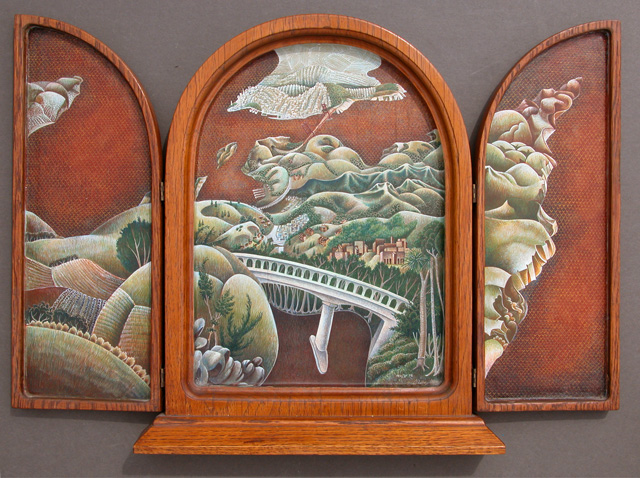
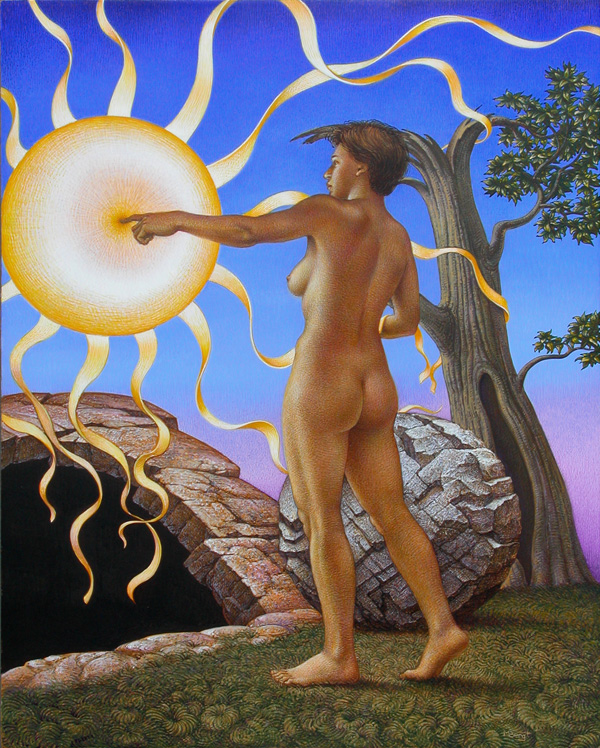
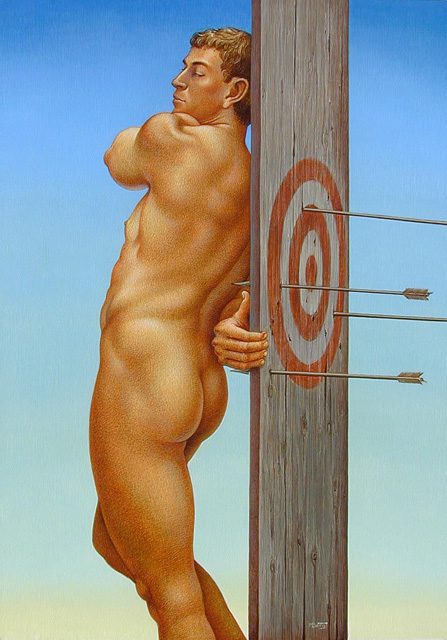
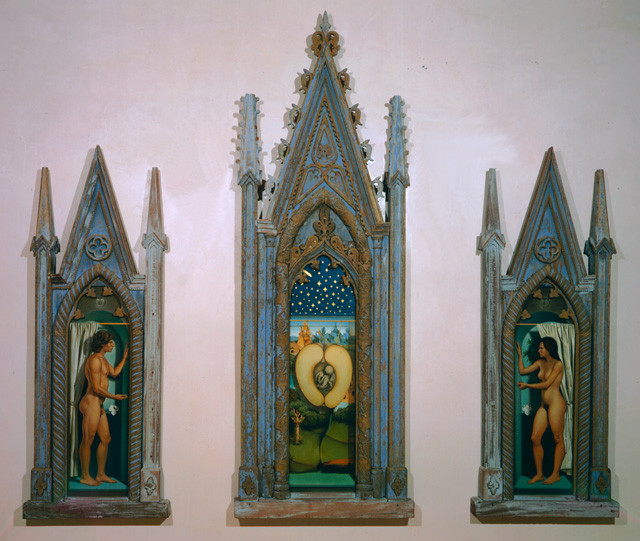
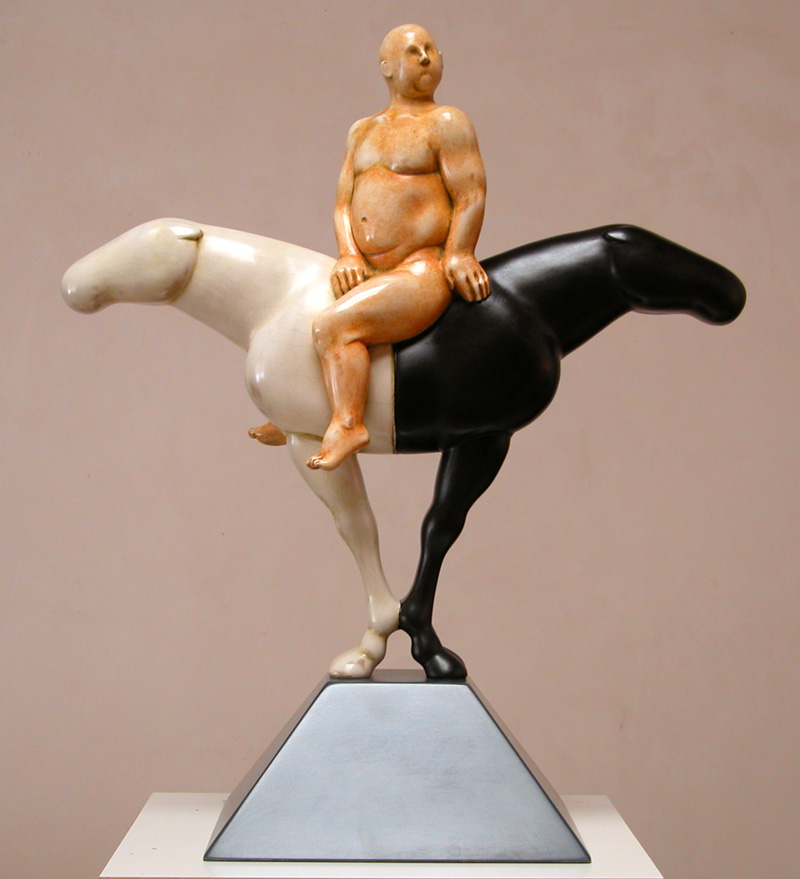
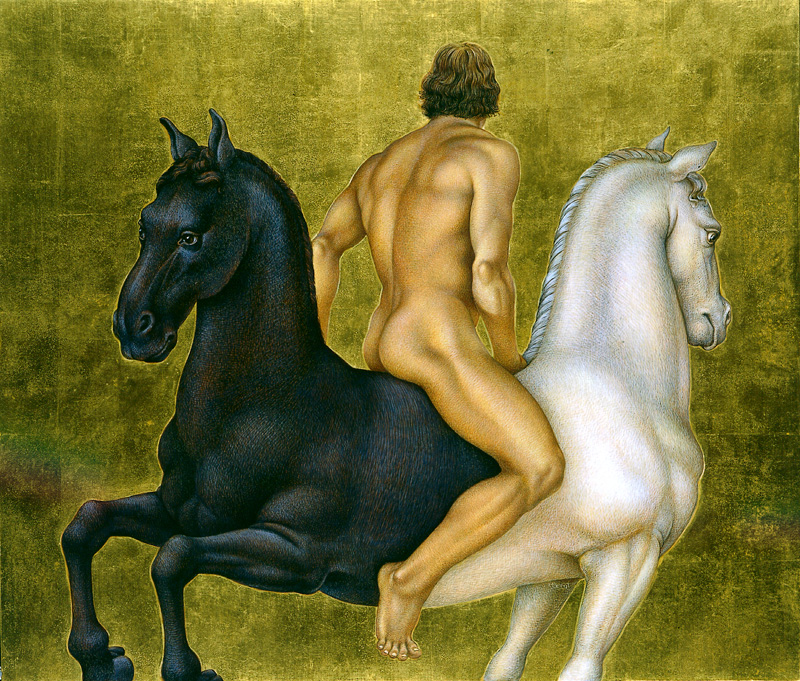
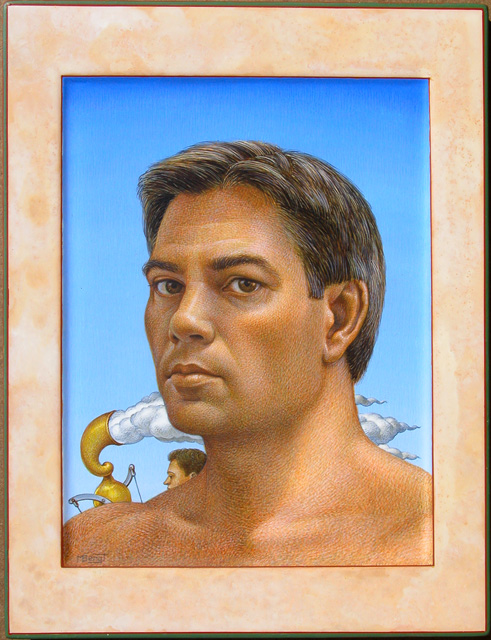
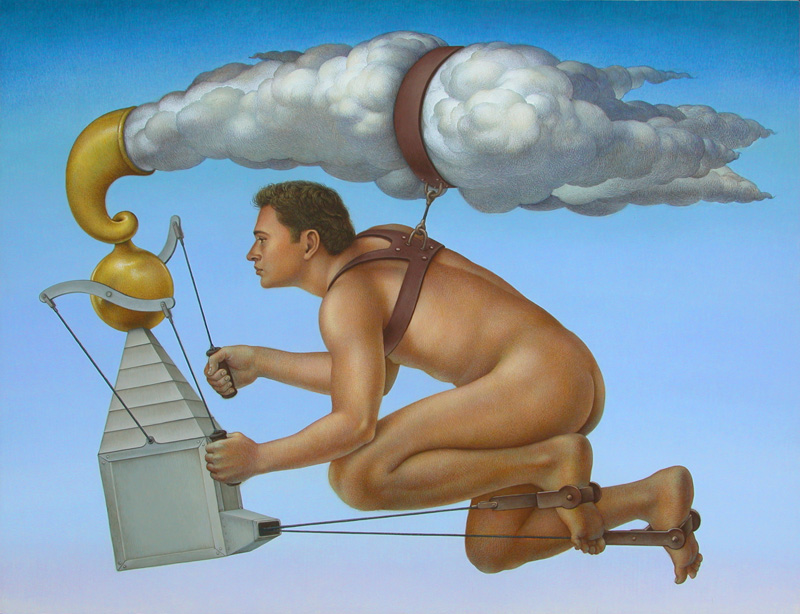
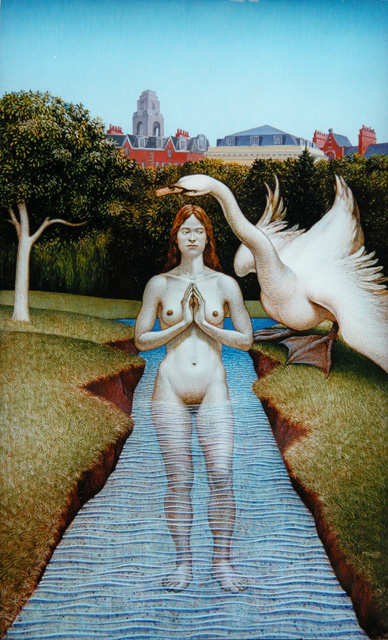
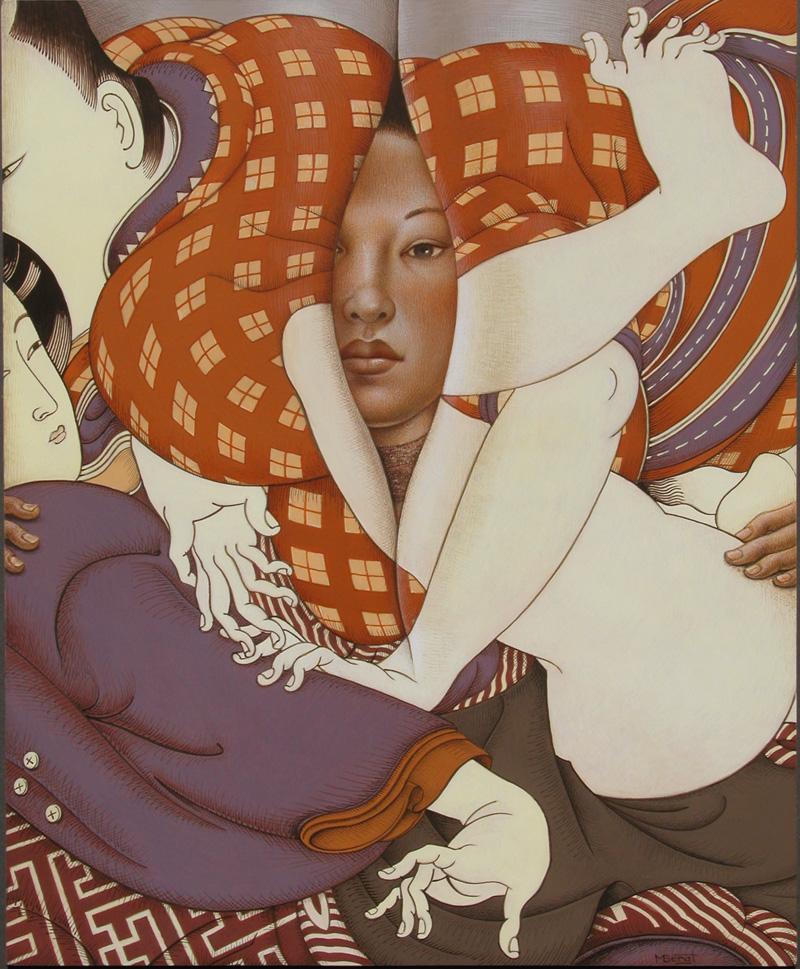
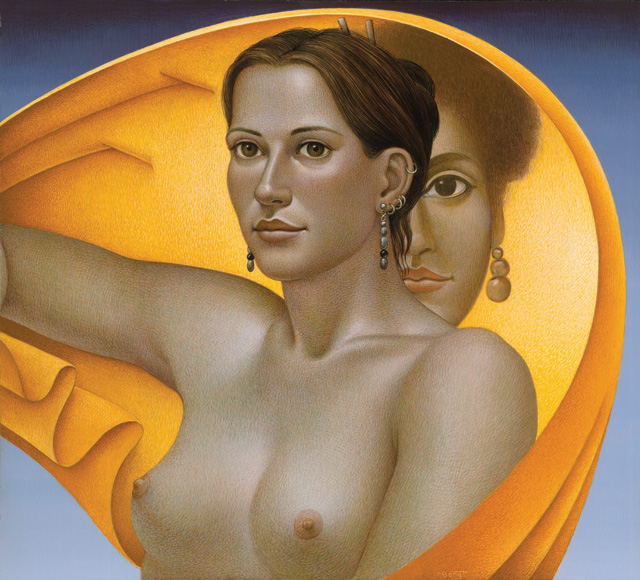
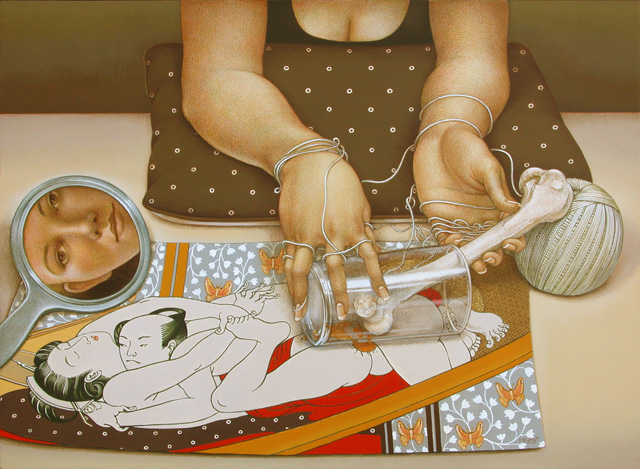
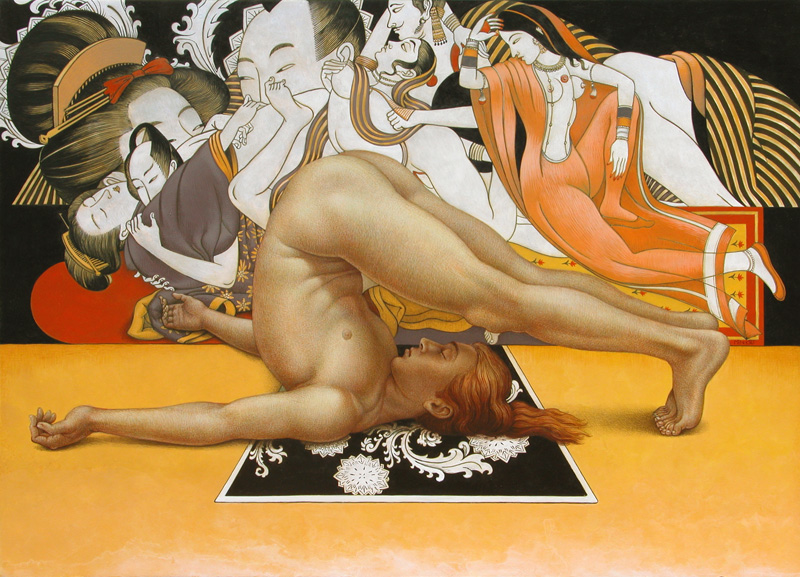
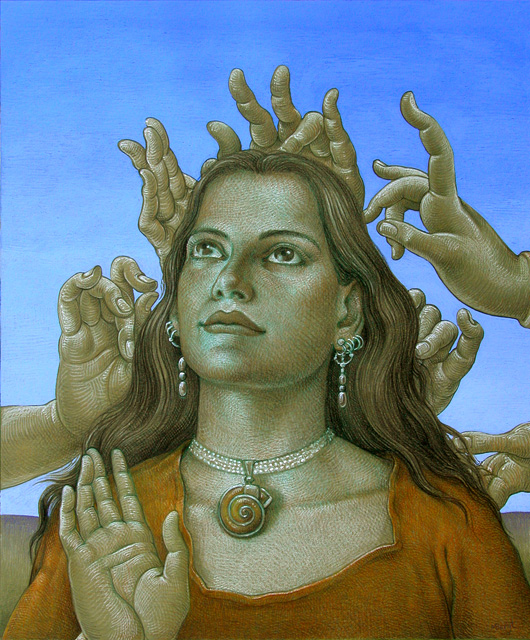
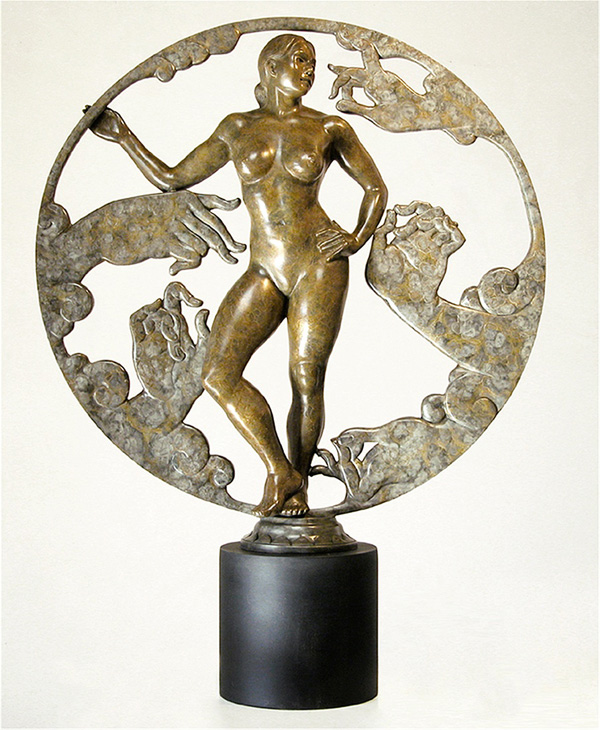
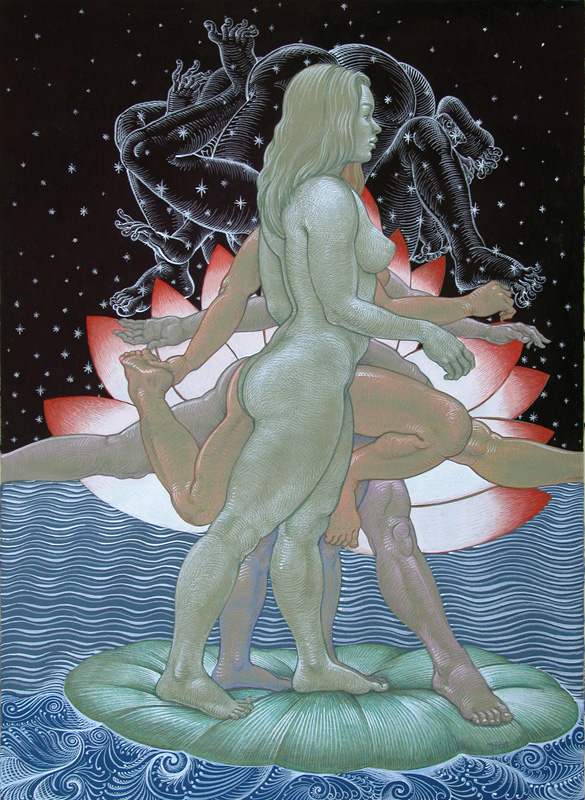
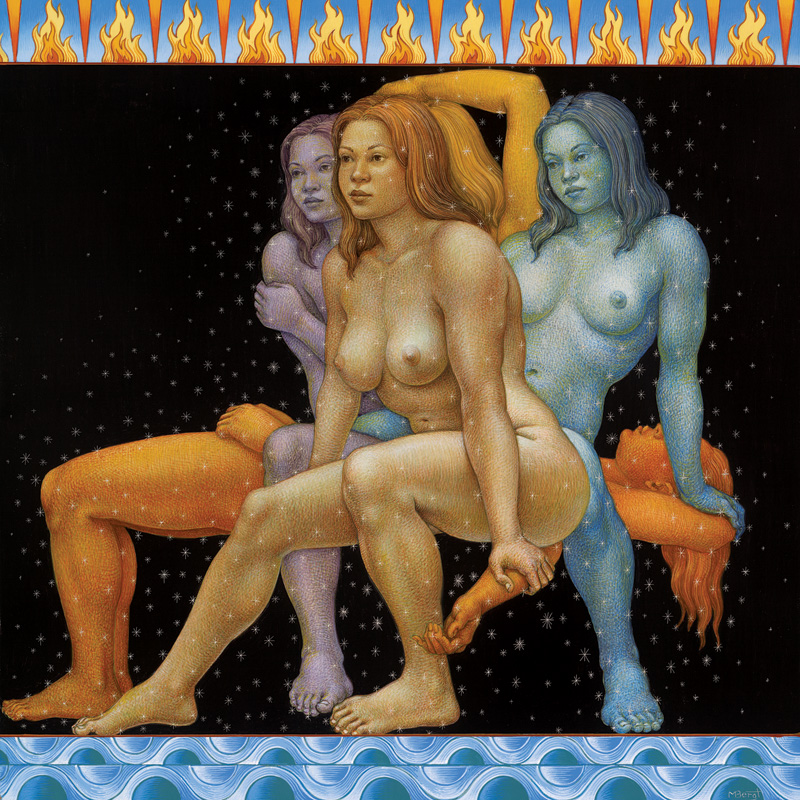
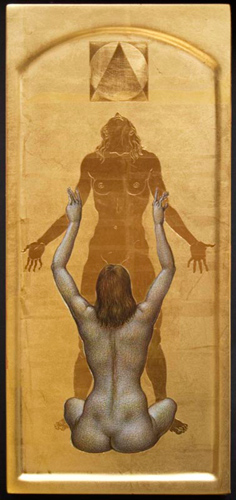
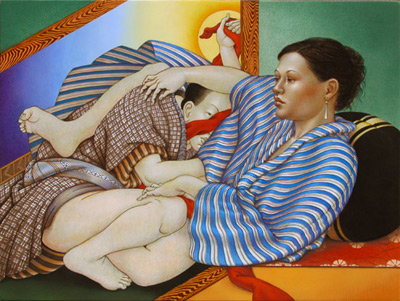
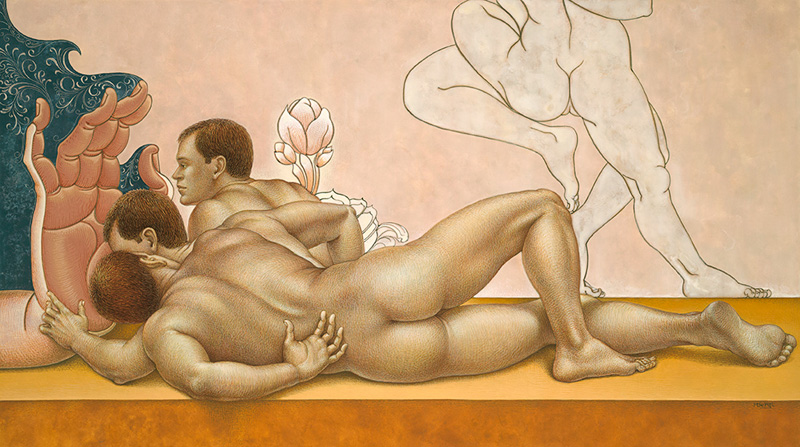
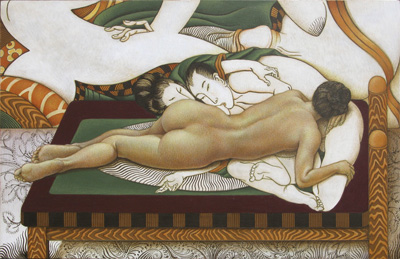
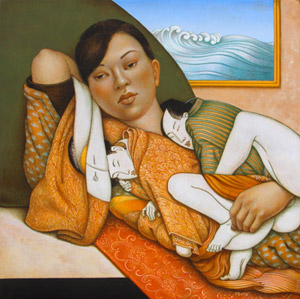
"I've always been fascinated with the figure beautifully rendered and by pattern and decoration. In my new work, I focus on these two interests: my figure studies are given a context within the designs found in erotic Japanese "Shunga" prints, Persian miniatures and the pattern traditions of Eastern Art: realism and pattern/Eastern and Western aesthetics. The history of art can be seen as an attempt to balance these two intentions: to create the illusion of three dimensions, or focus more on an interpretive, abstract quality, thereby enhancing pattern and decoration. This reflects the contrast between a literal and symbolic view of the world—confirming what we perceive—contrasted with what we feel about what we perceive. When you include a narrative, the dynamic becomes even greater. What is the meaning of what we're doing, how does it look, and what pattern does it create? If we relax the need to separate what is real from what is imagined it becomes simply a relationship, and thus gains power. Those relationships are the potentialities from which we construct our culture, our sense of self, and our identity. Time and space are in play, and "play" is the operative word for what I'm doing."
|
Michael Bergt | Crossing Lines
The last eight works in this month’s gallery are a focused selection from Bergt’s diverse oeuvre. What all these paintings have in common, as do many others discussed by Michael and Ken, is an innovative integration of pictorial styles that, in its unique and alluring presentation of human faces and bodies, points to Boundless Spirit. In this light, and complementing the analyses on the recorded interview of works like The Observer, The Shroud, and Spirit and Flesh, we shall focus on one work: Night at the Opera.
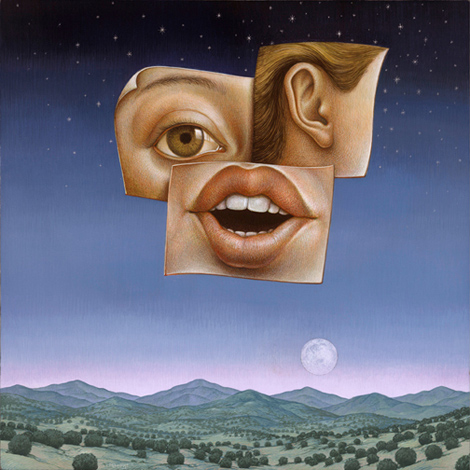
Night at the Opera depicts a vast landscape, moon low in a sunset horizon, stars above, sky taking up most of the square field. Floating against the sky are three discrete images of facial parts—eye, ear, and mouth—seeming cuts from larger fields, each possessing spatial depth and modeling-effects distinct from those of the landscape. These floating images are physical objects in their own right, the upper corner of the eye-field folded back, paradoxically revealing flesh tones, as if the flipside of the face’s skin. Not only do the body images float in the sky, but any viewing position we might assume hovers above the ground. Eye, ear, and mouth evoke seeing, hearing, and speaking—the primary sensory conduits of the operatic spectacle. The eye looking at us mirrors our own act of seeing that, along with our disembodied viewing position, presses us into Self-recognition as the Seer who can never been seen (cf. Ken’s audio comments on Douglas Harding’s exercises of “having no head” as a practice of recognizing one’s Original Face1 ). The ear keys our listening, the open mouth at the center of the composition speaking or singing, the seeming mouthpiece of this vast vista—yet we hear nothing; or rather, we come to hear (into) Nothingness, the Silence that is not other than this Vastness Singing its Sublime Love Song of Freedom and Release. The juxtaposition of the two image-systems is dream-like, de-familiarizing the everyday. Looking back and forth between the two image orders, feeling into their differing space-light effects, a gap opens between them, a “something” that is unseen yet permeates the whole—Openness itself. Night at the Opera moves to awaken us from the nightmare of exclusive identification with the mortal separate self—an uncanny and compassionate allegory pointing us directly to our Original Face, the One True Self2. Michael Schwartz 1 See now: www.headless.org. 2 On the Integral distinction between True Self and Unique Self, see Ken Wilber’s ISE Keynote: Emptiness + Perspective = Unique Self
|
|||||||||||||||||||||||||||||||||||||||||||||||||||||||||||