34
/
WIZZ MAGAZINE
BUCHAREST
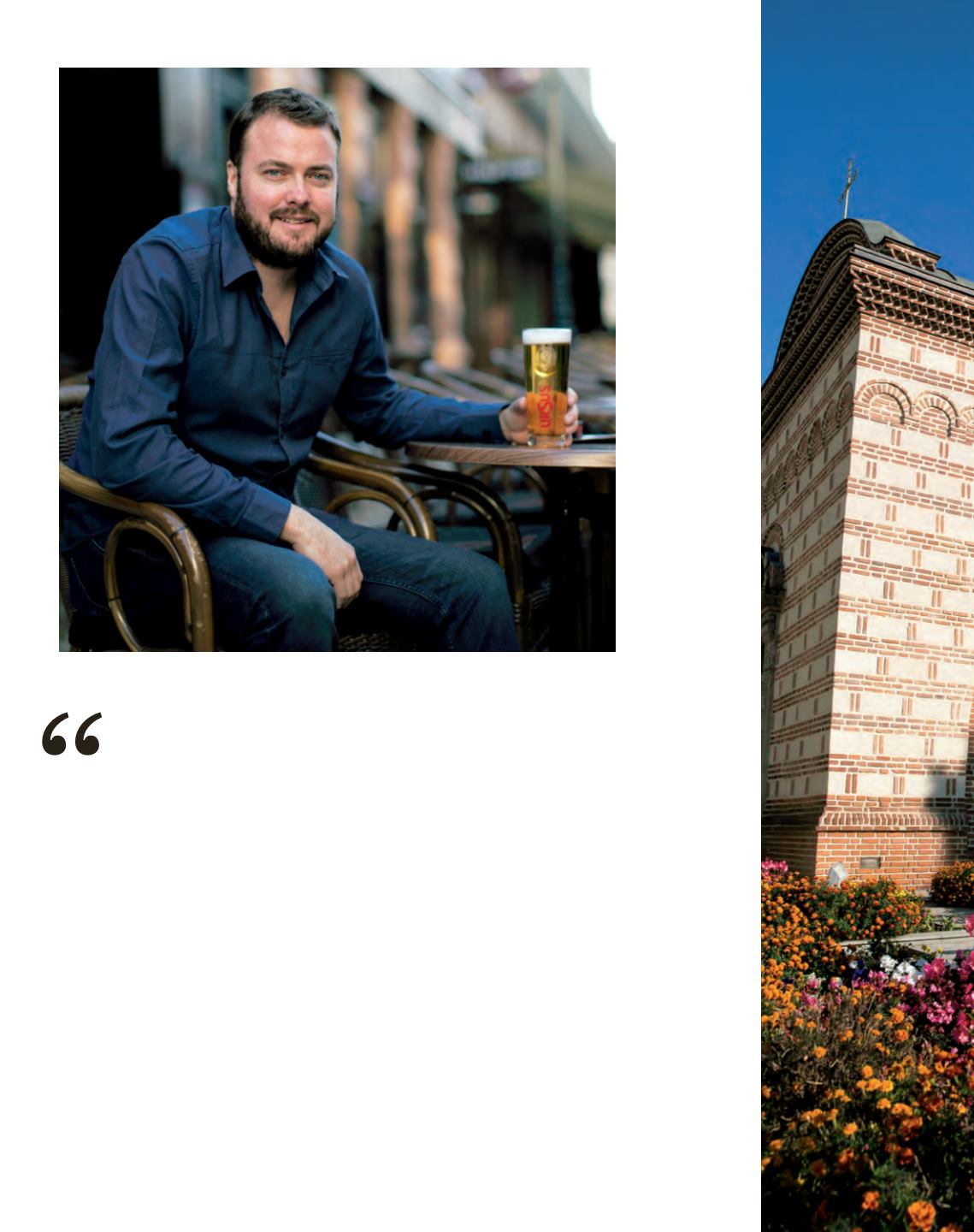
Peoplesaidweweremad toopena
clubona street thatwas littlemore
thanabuilding site,” saysMichael
Fraser, theBritishmanagerofMojo, oneof
Bucharest’s top livemusicvenues. “Thecouncil
hadbegun to repair the roadbut thenwork
suddenly stopped.Ourpuntershad toclamber
overan improvisedwoodenwalkway toget to
the frontdoor.”
Thatwas in2009. LastOctober,Mojo
celebrated itsfifthbirthday.The street it stands
on, StradaGabroveni, hasbeen repavedand is
packedwithavibrantmixofpubsandclubs–
andalthougha fewof theoldbuildings lookon
thebrinkof collapse, it’sa farcry from thepast.
“We’vecomea longway,”Fraser says, “and the
OldTownwith it.”
He’snotwrong.TheRomaniancapital has
changed immeasurablyover thepastdecade,
and itsCentruVechi, or ‘oldcentre’, has seena
total overhaul.CentredaroundStradaLipscani
(in fact, thewholearea isoftencalledLipscani),
it’soneof very fewpartsofoldBucharest that
survivedmoreor less intact themodernisation
of thecity in the1980s.
Before thedemolitionsbegan in1984,much
of thearea southof theOldTown (including
thezonenowoccupiedby themonstrousCasa
Poporului, orPalaceof theParliament) looked
much like thevenerabledistrict,withelegant
18th- and19th-centuryhousesnestled in
among shops, churchesandcafes.Communist
PartyheadandRomanian leaderNicolae
Ceaușescu’sdesire to remodelBucharest in
hisown image sawalmost afifthof thecapital
destroyedbetween1984and1989, and the
OldTown itselfmaynothave survivedhad the
revolutionofDecember 1989not intervened.
In the late1990s,CentruVechiwas
somethingof aghost town.While the restof
thecitywasgrowingat apaceunmatchedeven
today, theOldTownwas ignored. It resembled
anabandonedfilm set, seeing little footfall
bydayandeven lessbynight. If youhad said
then that thiswouldbecome themost visited
partof theRomaniancapital –and thecity’s
liveliest entertainmentdistrict–most residents
wouldn’thavebelievedyou.
“I rememberwalkingaround theOldTown
shortlyafter I arrived inRomania, back in


