May2016
Smile
73
Got skills?
K E E P Y O U R
S E T T I N G S
S I MP L E
Ifyou’re justgettingstartedwithunderwater
photography, don’tmake the jump toa
pro-levelSLRrig. It’sbetter tobeginwith
oneof themanyhigh-qualitypoint-and-
shootcameras thatareavailablewitha
polycarbonateclamshellhousing.Theseare
usuallypricedaroundUS$200or less, and
arecapableofbeingusedatdepthsof40m
(the limit fornormal recreationaldiving).
IuseaCanonG16,whichofferspro-level
features like fullmanualmode, raw format
(unprocessedfile)supportand theability
toaddanexternalflash (calleda “strobe”).
That’snot tosay that themorebasicor less
expensiveoptionsout therearen’talsogood
— thefirstphoto Ihadpublishedby
NatGeo
was takenwith that little5-megapixelElph!
Onceyouhaveacameraandunderwater
case, it’s time toset itup foryourfirst
underseaadventure.Acommonmistake
madebymanyanaspiringJacquesCousteau
is tospend toomuch timeunderwater
fiddlingwithcamerasettingsandnotpay
enoughattention towhat’sgoingon. Ionce
missedanamazingphotoopportunitywith
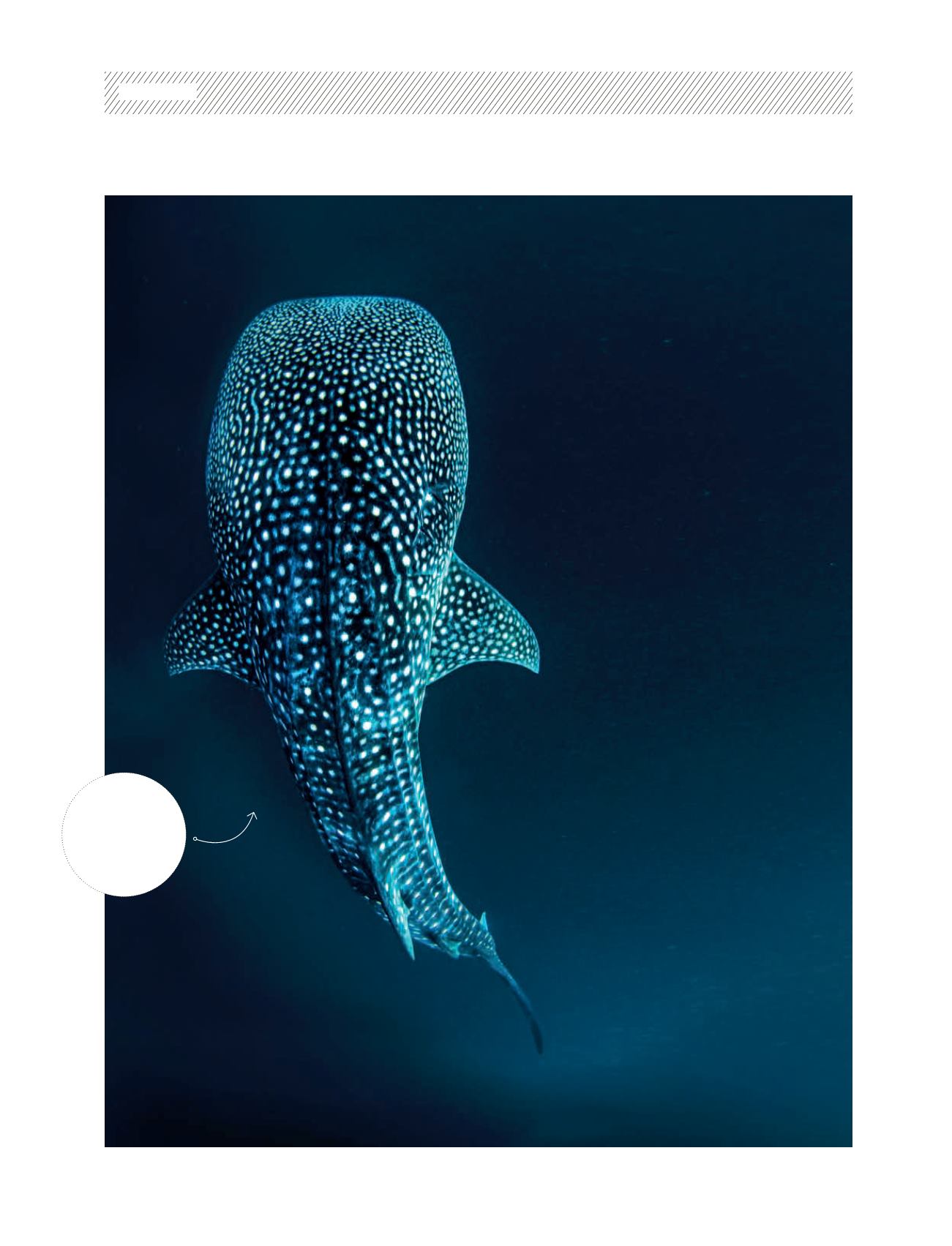
awhalesharkbecause Iwasfine-tuning the
shutterspeedonmycamera. I’ve learnedmy
lessonsince.
Whenstartingout, it’sbest tosetupyour
cameraon thebeachwithonebasicsetting
and thenspendyour time in thewater
focusedonabsorbingandcapturing the
actionaroundyou.Agoodall-aroundsetting
formostcameras is toactivate the “shutter
priority”mode (youmighthave toreadyour
instructionmanual tofindouthow todo
this), adjust it toavalueof 125—andyour
camera’s ISO (light setting) to400— then
set the imagequality to thehighestpossible
level supportedbyyourcamera.Thisset-up
willhaveyoucovered formostdaylight
shootingconditionsdown toabout 10m.
Whoa!
moment
Theunderwater
world isaglorious
spectacle


