May2016
Smile
121
Streetart
Butevenback in2003, thewayang
performerswerealreadyararebreed.
Theirshowvenuesweresoobscure— they
staged theirplaysanywhere fromopen
fields to templegrounds, orevensidewalks
— theywentpracticallyunnoticed.This
isa farcry from theirheyday in the1800s,
when thisstagedramawas thepreferred
entertainment incolonial-eraSingapore.
Thewayangwere therockstarsof their
period, their traveling troupesdrawing
hugecrowdswherever theyperformed.
Theirpopularitydidn’t last long, though,
as thecountryentered thefirstworldand
Singaporean lifestylesbecamewesternized.
Fiftyyearsago thereweremore thana
dozenprofessional operagroupson the
island; today thereareonly three.
Thewayangmayhavegone from the
limelight in today’seraofYouTubeand
television, but thankfully theyhave
managed tosurvive (albeitbarely).This I
experienceoneevening in thecompanyof
anoperaperformer,CarineLim.At39she
isoneof theyoungerartistson thescene,
yetherexperiencewith thewayanggoesall
thewayback tochildhood—her father isa
manageratSingapore’soldestactiveopera
troupe,LaoSaiTaoYuan.On thisoccasion
—agod’sbirthday, celebratedatanearby
Taoist temple— Iambackstagewithher
crewofmore thanadozenoperaactorsand
musicians.
“Itwasmypersonaldecision tobecome
awayang, but formanyofmyolder
colleagues, this lifewassomething they
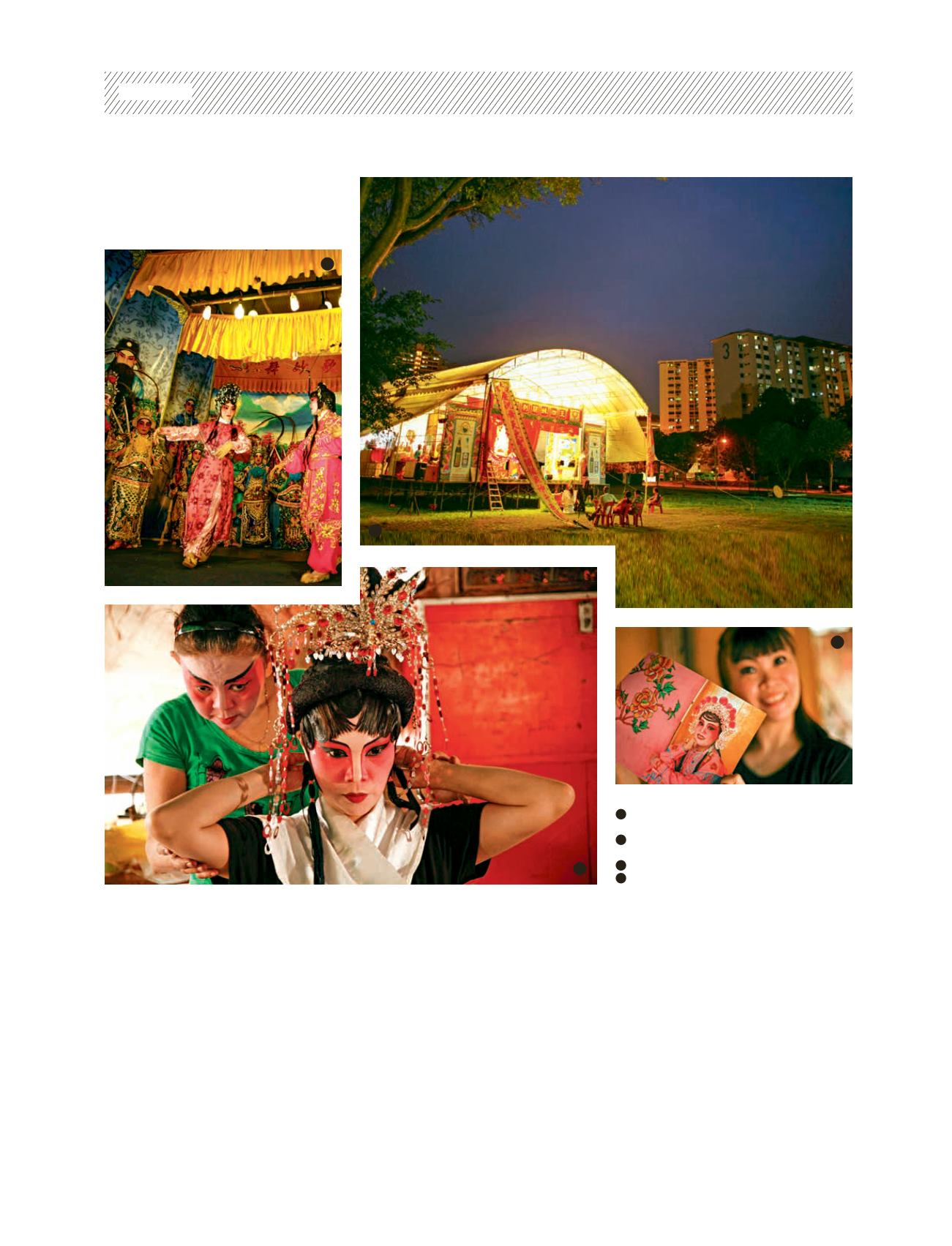
1
Chineseopera isahighlight atmany temple
events
2
Wayang stagesareoften setup inopen
fields
3
Performersgethelpdressingup
4
WayangCarineLimandher onstagepersona
1
2
3
4


