79
Pho Thin’s
timeless recipe
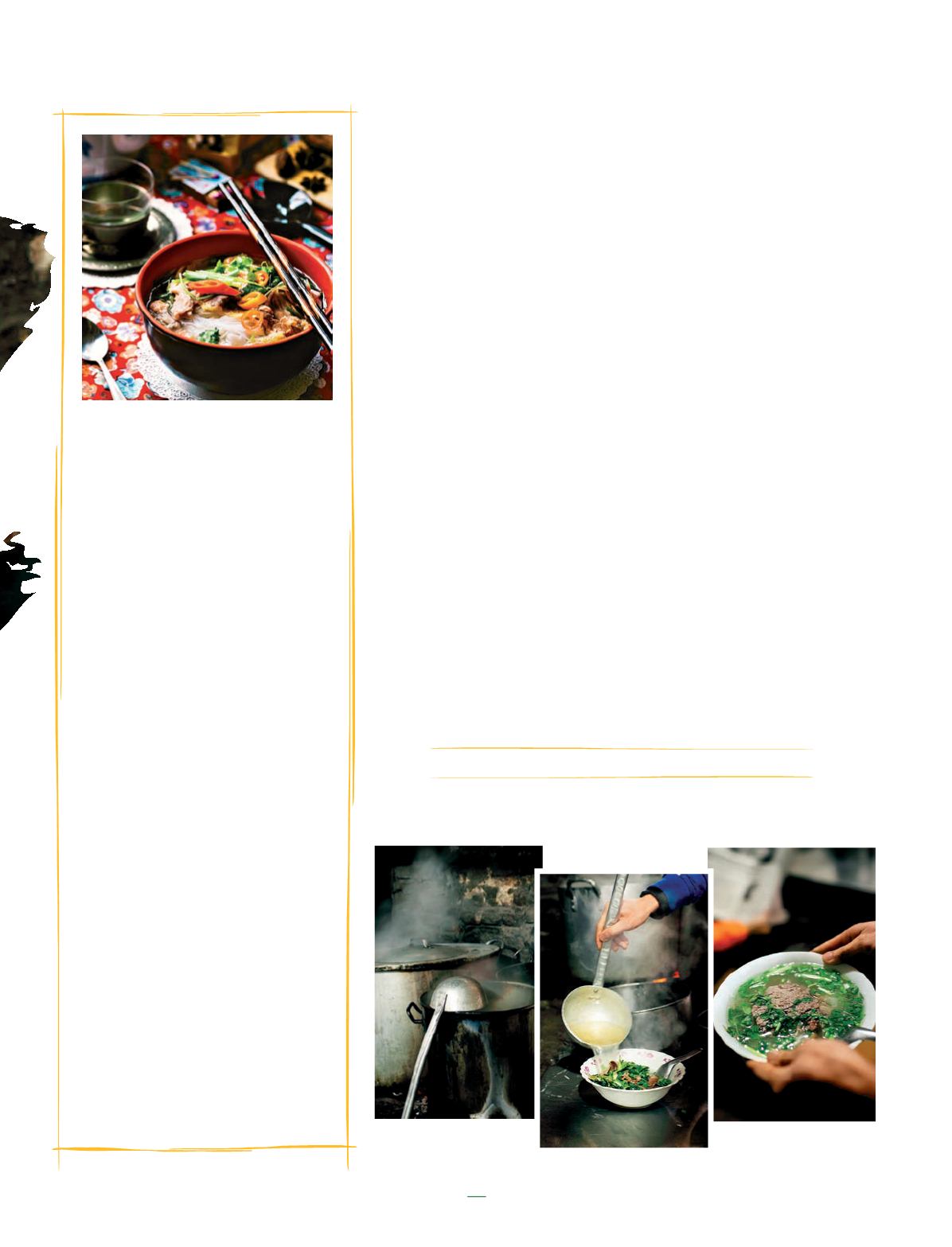
INGREDIENTS:
1 (3-inch) piece of unpeeled fresh ginger
4 lb beef shanks and brisket
7 qt cold water
5–6 lb beef bones
3 tbsp fish sauce
1.6 kg fresh rice noodles
A small handful of green onions
INSTRUCTIONS:
Put a pot on the stove, submerge the beef
bones in cold water, soak for 1 hour, then
drain.
Set the barbecue grill to medium-high
heat and grill the unpeeled ginger for
10 minutes until all sides of the skin turn
slightly black.
Peel the blackened skins off, then chop the
ginger.
Put the beef bones, beef shanks and cold
water in a stockpot and bring to the boil.
While the stock is boiling, regularly skim
any impurities off the surface, then slowly
reduce the heat to a low simmer.
Add the fish sauce, salt, fish sauce and
ginger.
Cover and simmer until the stock has been
reduced by almost half.
Blanch each portion of noodles in boiling
water for a few seconds. Drain, then place
the noodles in a serving bowl.
Place three or four slices of beef on top
of the noodles, followed by a sprinkle of
thinly sliced green onions. Pour over the
hot stock to cover the noodles and beef.
“Hanoi pho has its roots in Guangdong noodles
stuffed with buffalo meat, where spices were
only used to marinate the meat”
own blend of pho on the streets. With
two wooden boxes balanced on a
bamboo pole slung over his shoulders,
he meandered around Thi Sach
Street, an area saturated with French
colonists. Later he sold pho from a
cart and in 1955, he settled at 61 Dinh
Tien Hoang Street.
Because it takes hours to prepare
traditional pho, it was always
Mr Hoa’s job to get the beef stock
ready for the following day while his
father served the morning customers.
“I woke up as soon as I heard my
father’s footsteps on the floor,”
Mr Hoa recalls. “Every day started
out pretty much the same way: first
slicing a mountain of rice noodles,
then marinating the meat fromthree
to four cows and simmering the bones
with minced ginger at a high heat for
eight to 10 hours.”
Mr Thin’s insistence on devoting
so much time to preparing the stock
arose from his conviction that it was
the beef bones — rather than the
addition of spices such as cinnamon,
star anise and cloves — that made for
a full-flavored broth. “As far as I know,
Hanoi pho has its roots in Guangdong
noodles stuffed with buffalo meat, where
spices were only used to marinate the
meat,” Mr Hoa says. “Later, Hanoians took
things to another level by using beef. Today,
many shops rely on these spices to enhance
the flavour, as beef bones are pricey.”
There was a time whenMr Thin had
to turn to selling
mien ga
(chicken glass
vermicelli soup) owing to a French ban on
selling
pho bo
(beef noodles) on Sundays.
Then in the mid-’60s, the state imposed a
ban on the slaughter of cows and buffalo —
animals needed to help prop up Vietnam’s
wet-rice agriculture — thus allowing
for the sending of food aid to what was
then South Vietnam. This paved the way
for the introduction in Hanoi of
pho ga
(chicken noodles).
Despite the crackdown on beef,
Mr Thin continued selling his pho bo
and ended up spending 18 months in
prison for doing so. Once restrictions
were loosened during the darkest days of
the VietnamWar, pho bo returned. Even
as bombs rained down, Pho Thin stayed
open around the clock and was typically


