Basic HTML Version



95
{ }
O F F T H E B E A T E N T R A C K
taste. “The water tastes like vinegar!”
was how a German backpacker
described it, after he plummeted into a
swimming hole. Apart from diving into
the pools, the cascades flowing down
slippery rock also became entertaining
water slides.
One can easily spend days exploring
waterfalls of every shape and size
(and, evidently, every taste). Among
the other waterfalls one could visit are
Busai, Recoletos, Ulan-Ulan, Casiawan,
Casabangan and Tomalistis — the last of
which, as the locals could attest, delivers
“the sweetest water in the world”.
Rich countryside
Together with this abundance of water,
ancient eruptions have enriched the
soil and made the island lush and
fertile. Traversing the “cross-country”
highway that bisects the mainland,
travelers will come across “Little
Baguio”, the cool-weathered central
highlands that provide the ideal climate
for growing fruits and vegetables like
pomelo,
sayote
(chayote) and
kalabasa
(squash). But the most impressive
agricultural landscape would be the
luxuriant rice terraces carved along
the mountain shoulders across the
province. The prettiest ones can be
found in the municipality of Almeria in
the villages of Iyusan, Caucab, Salangi
and Sampao. These were the most
spectacular I’ve seen in the country,
outside the Cordillera Region.
After exploring the big island, intrepid
travelers can venture north-west to
the smaller Waray-speaking island of
Maripipi. According to local legend,
the island was named after two lovers,
Maria and Pepe, who eloped here ages
ago. Admiring its tranquil beauty from
the ferryboat, I could easily see why
they chose this secluded refuge. The
volcanic island is dominated by a single
peak carpeted with coconut groves,
while dramatic boulders and beaches
ring its coastline.
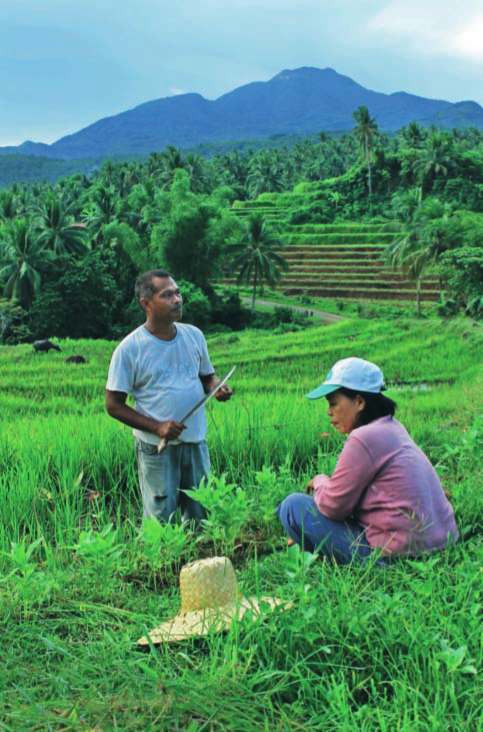
Ancient volcanic eruptions and abundant
waters made Biliran lush and fertile, and
ideal for growing fruits and vegetables