Basic HTML Version
























76
{ }
A trip back in time
A gust of wind swept a flurry of dried
leaves across the wide concrete
driveway of the Basilica de San Martin
de Tours — the largest church in Asia —
in the lakeside town of Taal, Batangas,
a two-hour drive from Manila. Just
minutes before, this same concourse
was bustling with activity as one
mass ended and another, which was
to double with a wedding ceremony,
was about to begin. Vendors, selling
everything from
panutsa
(peanuts
caked in raw sugar) and balloons in the
shape of Dora the Explorer or Spider-
Man to pairs of brown bunnies in cages,
milled about in a familiar fairground
scene that attends most cathedral
complexes in the Philippines. It’s a
running thread in local culture, where
kitsch always accompanies the sacred,
and nothing is spared a bit of colorful
irreverence.
As the veiled bride and her
entourage disappeared into the church,
a mid-morning quiet fell upon the
church and the plaza. If it weren’t for a
few tell-tale signs that set us firmly in
the modern age — vehicles, the faint
buzz of a radio announcing inclement
weather — we could have been in
Taal circa 1900. And there couldn’t
have been a more fitting backdrop for
our nod to Philippine style than this
heritage town, where streets are lined
with preserved and restored homes that
date back at least a century.
Apart from having displayed
an enduring resilience (the whole
town was obliterated by at least one
documented volcanic eruption in
1754), the town of Taal also boasts a
proud past. It is recognized as having
played a crucial role in the Philippine
Revolution, and is considered among
the best-preserved towns from Spanish
colonial times.
The municipality of Taal’s tourism
arm, led by architect and local tourism
officer Robert Arambulo, works hard
at restoring and protecting the town’s
defining structures, including the grand
old homes of illustrious families who
were instrumental in ending Spanish
colonial rule. This privileged class
wined and dined with members of the
Spanish government but secretly, and
at great risk, hid wounded soldiers of
the uprising in storerooms or under
their beds, and nursed them back to
health. These wealthy families also
helped finance a protracted rebellion
that eventually led to both revolution
and the birth of a nation.
Among its luminaries was Marcela
Agoncillo, who hand-sewed the
country’s first official flag according to
General Emilio Aguinaldo’s design. The
home she shared with her husband,
Felipe, is one of the must-visit places
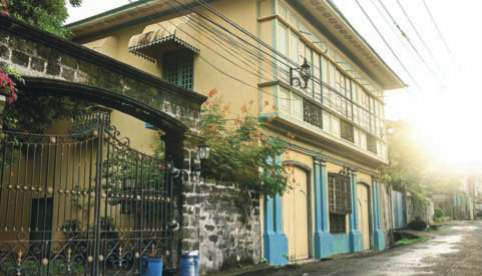
in Taal. Elsewhere in town, two homes,
both owned by the Villavicencio family,
make for some of the best examples
of restoration and preservation efforts
carried out by the locals. “We should
be mindful of how we have evolved as
a people,” says Arambulo. “That’s why
it’s important to preserve all these as
milestones in history.”
“The Gift House” was built in
1871 as shipowner Eulalio
Villavicencio’s wedding gift to his
bride, Gliceria Marella; (below, left
to right) the Taal Basilica’s grand
interiors; a friendly local smiles
gamely for the camera