Basic HTML Version







24
SEPTEMBER 2012
•
HEMISPHERESMAGAZINE.COM
DISPATCHES
||
GLOBETROTTING
TUNNEL VISION
A Hogwarts alum learns to
fly without the aid of magic
On a mild May evening last
year, Pi sburgh police closed
down a portion of Parkway
West to accommodate the
filming of an oddly lyrical
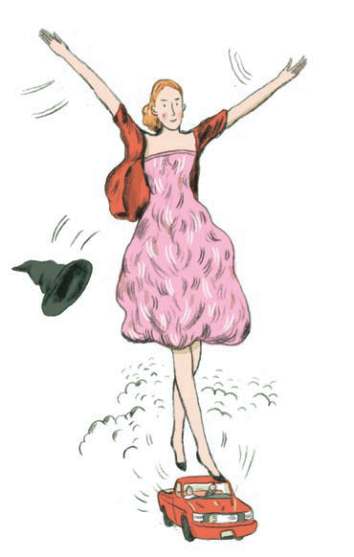
high-speed action scene. In the
shot, Emma Watson—a.k.a.
Hermione from the Harry
Po er franchise—stood in the
bed of a speeding pickup, arms
splayed, as it roared through
the city’s Fort Pi Tunnel.
The scene is one of the
more rousing moments in
The Perks of Being a Wall-
flower,
the film adaptation of
Stephen Chbosky’s bestselling
coming-of-age novel of the
same name. “Watching that
girl fly out of the tunnel,” he
says from his L.A. studio, “is
one of the greatest things I
have seen in my life.”
Local boy Chbosky, who
directed and wrote the screen-
play for the film (out this
month), says he had no trouble
persuading the actress to
tackle the scene. “Emma was
desperate to do the stunt,” he
says. The shot took three takes
to get right, and although
Watson was securely anchored
to the truck, it was a lot more
challenging than anything
Hogwarts had thrown at her.
“Whenever she was
having a tough moment
[a erward],” Chbosky recalls,
“I’d say, ‘You’re the girl who
flew through the tunnel!’ and
she’d pick right up.”
First published in 1999,
Chbosky’s story is set
in Pi sburgh in 1991
(when his leading
lady was 1). So to give
Watson a sense of the city,
he took her to his old-time
haunts. Between gazing at
the skyline from the West
End–Ellio Overlook and
scarfing cheese fries at the
Original Hot Dog Shop, it was,
he says, “the best homecom-
ing.” —
CRISTINA ROUVALIS
DISPOSABLE
INCOME
HOWTO GO FOOD-SHOPPING
WITH TRASH
Sunlight streams through
the trees of Mexico City’s
Chapultepec Park, dappling a heap
of bottles and cans being collected
by a 4-year-old named Dante.
Strangely, the boy seems to be
enjoying the work, as do most of the
people milling around him, stockpil-
ing rubbish in the hazy morning sun.
The mood in this lush green space
is not one of desperation, but of
opportunity. In March, the city intro-
duced a monthly program in which
residents are invited to exchange
recyclables for fresh food—spinach,
honey,
mole
sauce—supplied by
area producers and paid for by the
government. Judging by the throng
at Chapultepec Park, the initiative
has been a hit.
People begin lining up at dawn,
hours before the barter market
opens. By 10:30 a.m., there are
more than 1,500 souls jostling for
space. A little after noon, however,
the stalls are empty, leaving many
would-be shoppers disappointed.
“Why this effort and sacrifice?”
cries Mari, 50, who lugged
her recyclables here on
public transport. “I prefer
to throw it in the trash!”
Mari’s frustration is
understandable, but her
plight also points to a
kind of success. The idea
here isn’t about food distribution
so much as getting people into the
habit of recycling. The more who
take part, the further the message
spreads. Accordingly, there are
plans to open more markets and
attend to more city residents.
As the crowd thins, volunteers
distribute bags of organic fertilizer
to those leaving empty-handed. A
young man named Moises holds up
his bag, grinning broadly. “A conso-
lation prize,” he says.
—DAVID BILLER
PITTSBURGH
MEXICO CITY
SHORT SHELF LIFE
INTRODUCING A BOOK THATWON’T GO DOWN IN HISTORY
BUENOS AIRES •
As book publishers
grapple with the fading importance of
the printed word, Argentina’s Eterna
Cadenciahas, alongwithcreative agency
Dra fcb, released a book whose selling
point is that its words are
meant
to fade.
El Libro que No Puede Esperar
(“The
Book That Can’t Wait”), an anthology
of new Latin American fiction, uses
a modified-pH ink that vanishes two
months a er the book’s plastic packag-
ing is removed. It’s in its third printing,
though no one knows howmany of the
sales are repeat buyers (i.e., slowreaders).
But isn’t a disappearing book, you
know, kind of a waste of money?
Not at
all,
arguesDra fcb’s Javier Campopiano.
“In the end, all that’s le on
the page is
a ghost,” he says. “Then the book can
become a journal, a sketchbook. Anyone
can use it for anything.”
—JULIA COOKE