Basic HTML Version




53
“It was very much catch-as-catch-can
in the early days,” notes David Wallechin-
sky, president of the International Society
of Olympic Historians and author of
The Complete Book of the Summer
Olympics
. “It wasn’t until the Olympics
got bigger that they started to be taken
more seriously.”
After World War I, the International
Olympic Committee, presumably fed
up with regional shenanigans, began to
decide for itself what events would be
held. Today, a sport has to bewidely played
or performed in at least 35 countries to
merit inclusion.
Nevertheless, occasional controversies
have flared up. Baseball and so ball were
both admitted in 1992—and eliminated
following the 2008 Olympic Games. The
IOC voted to oust baseball because the
Summer Games were held during the
pro season, meaning major-league play-
ers couldn’t compete. So ball got the ax
because few countries could field teams,
and those that didwere dominated by the
U.S. and Japanese squads.
When synchroni zed swimming
debuted in 1984, some objected on the
grounds that it was more performance
than sport. Yet the event, which initially
featured just individuals and pairs but
grew to include eight-person teams, has
endured due to widespread popularity.
Similarly, curling shuffles on in theWinter
Games, where it has been an official sport
since 1998, inspiring global fascination if
not rabid fandom.
The next potential flash point? Golf,
an Olympic event in 1900 and 1904,
becomes a medal sport again in 2016.
The argument against including it is the
same as that against soccer and tennis:
While the Olympic Games are effectively
the world championship for events like
track and field, sports like golf, tennis
and soccer have their own definitive
championships. As the late boxing writer
and sports historian Bert Randolph
Sugar once put it, “Tennis already has
an Olympics; it’s called Wimbledon.” The
same goes, critics argue, for the Masters
and the World Cup.
Yet such commentary is moot. The
Olympic Games, as we’ve seen, are irre-
vocably bullish on change. As for those
critics of Olympic golf—well, they can at
the very least take consolation in the fact
that when the event debuts in 2016, it will
involve hi ing only figurative birdies.
JACK CAVANAUGH
covered sports for the
New York Times
for almost 30 years. His
latest book,
Season of ’42
, is about the first
World War II baseball season, the war itself
and life on the American home front.
THE FAN
||
culture
Located at 1001 N.E. 125th Street, Miami, Florida,
The Center For
Regenerative Medicine
includes a team of professionals that are
dedicated to improve your quality of life, paving the way to enhance
the science of non-surgical orthopedic medicine. World champions,
sports legends, professional and amateur athletes, dancers, and
people with just plain pain and arthritis go to
The Center For
Regenerative Medicine
for non-surgical orthopedic care. Using the
facility to improve their condition, thousands of successful cases
have been treated over the past 12 years.
A
NON-SURGICAL
TECHNIQUE TO FIGHT
AGAINST ARTHRITIS AND SPORTS INJURIES
For more information please visit:
www.arthritisusa.net
or call (305) 866-8384
International: (305) 891-4686
THE CENTER FOR REGENERATIVE MEDICINE
The Knee Diaries:
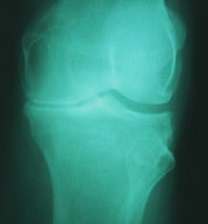
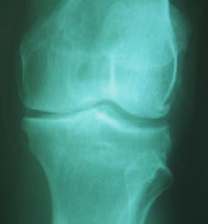
SJ is a 60-year-old male with bone on bone osteoarthritis of the left
knee. An X-ray showed arthritis of the knee (X-ray on the left). Patient started receiving
treatments at The Center For Regenerative Medicine. Today he is feeling better (X-ray
on the right).
This is how it works:
The physician introduces
Cell Therapy
into damaged, arthritic
cells by means of a precise injection. This process is followed by infrared laser as well
as several other modalities including Collateral Artery Flow Exercises (C.A.F.E.), in
order to accelerate the process. Depending on tissue damage, severity of the condition
and the size of the joint that needs to be injected, people usually need a series of 1 to
6 treatments to improve. There is usually no down time, and people can go back to
their usual activities or work immediately. The treatments can help most musculoskel-
etal problems such as low back pain, neck pain, knee pain, shoulder pain, whiplash,
sciatica, tendinitis, sprain, strains, torn ligaments and cartilage damage.