Basic HTML Version


98
—GW
H I K I N G
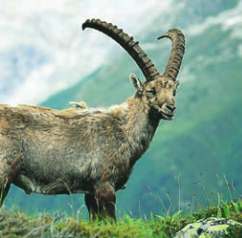
length. They have deep clefts
and rubber-like pads on their
hooves, which means they’re
excellent mountaineers. The
original population of local ibex
died out a long time ago, and
those now living here descend
from 100 of the species which
were placed under protection in
Gran Paradiso, in the Italian
Alps, in 1820.
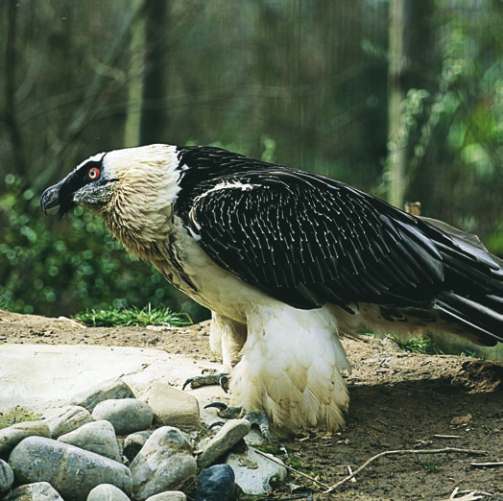
The bearded vultures circling
in the sky above theHohe Tauern
are evidence of another
successful reintroduction.
The vulture is easy to recognise,
because it has a wingspan of
2.9m, making it one of the largest
flying birds in the world. It nests
in rocky niches and can cover a
surrounding area of up to 750km
2
in its search for carrion. The bird
has also earned the nickname
‘bone-breaker’ because its diet
consists mostly of bones, which it
breaks into smaller pieces by
dropping themonto stones from
a great height.
The groundhog is yet another
resident of theHohe Tauern that
was wiped out in the 18th century
and reintroduced to the area in
the 20th. These natives of the
highmountain pastures were
formerly highly prized for their
fat, whichwas used inmedicine.
They’re now themost popular
animals in the National Park,
especially the colony living on
Franz-Josefs-Höhe, a location
which also offers the best views
of Austria’s biggest mountain.
Judging by its members’
expanding waistlines, this group
of groundhogs has lost much of
its fear of humans.
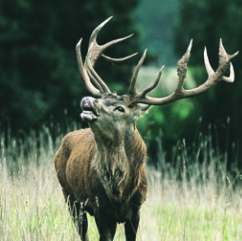
The red deer isn’t a natural
forest-dweller. The animal
actually prefers to live in open or
semi-open landscape, but the
large number of humans living
in the surrounding area has
made this difficult. The male
deer can be identified by its
large, protruding antlers. During
rutting season in autumn, the
otherwise shy male bellows out
an echoing roar to attract females
and announce his superiority
over competing males.
If you want to meet the Big
Five, book yourself a place on a
National Park Wildlife Trek.
Accommodation is in a hunting
lodge located in a picturesque
Alpine setting 1,700m up. All
you need for your alpine safari
are binoculars, a camera and
the guidance of an experienced
National Park gamekeeper.
And remember: if you hear a
whistle and can’t see the
culprit, something’s seen you
first.
National ParkWildlife Treks
will be held between June and
mid-October this year. The trek
includes two nights in
Naturerlebnis Kärnten-approved
partner accommodation and one
night in a hunting lodge or Alpine
guesthouse (half-board) aswell as
deer stalking (no guns, just
watching the animals in thewild),
and theNational ParkKärnten
card, which offers free admission
to over 100 destinations. Hotel
prices vary according to category
with prices from€489.
www.hohetauern.at
www.grossglockner.at
Alamy
I B E X
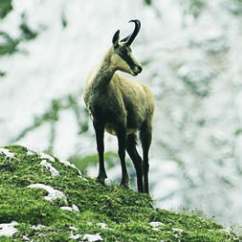
C H A M O I S
R E D D E E R
G R O U N D H O G
B E A R D E D V U L T U R E