Basic HTML Version



SOFIA
chickens onmy front lawn, but they are suspicious birds.
Because they are sohuge, it’s hard for themto take off quickly
if there’s danger, so they’ll circle a dead animal for a long time
before they actually come in to feed.”
Betty’s farmhouse is one of the first eco-lodges in the region
tooffer accommodation to visitors. Equippedwith a vast
knowledge of the local flora and fauna – not tomention amean
line inhome-cooked food – she plans to attract peoplewho
have never beenbirdwatchingbefore to the area. And, as the
vulture population continues togrow, the possibility of seeing
one of thesemagnificent predators increases. The vultures’
larger numbers are thanks tohuge conservation efforts by the
likes of theBulgarianBirds of PreyProtectionSociety, which
has been reintroducingvultures to theRhodope region, in
which theMadzharovoNatureReserve is located.
“Bulgarian landscapes and its rural areas are very suitable
for griffonvultures, so I hope the populationof
the specieswill recover,” says local conservationexpert
EmilianStoynov. “The best thingwouldbe to see vultures
flyingover large herds in themountains and at feeding
sites around the villages. I hope andbelievewewill count 150
pairs in 2020 and 250by 2025.”
TheBulgariangovernment is providing little in
terms of interest or funding towards the reintroductionof
vultures to the region. Fortunately, a growingbandof
“Vultures became prettymuch extinct during the
Communist days,” says Lubomir, whohas beenbringing
visitors to theArdaGorge for the past five years. “Therewas
a lot of poisonedbait, and all dead animalswere takenaway
andburned, so therewas almost nothing for the birds to eat.”
Bringing the birds backhas beena slowprocess
but, although spotting a black vulture is highlyunlikely
(there are thought tobe less than 10 in themountains), an
Egyptianor griffon sighting is possible, givenpatience and
a goodhidingplace.
“This is the best place inall of Europe to see themup close,”
Lubomir whispers tome, “though thiswhole region is just alive
– I’ve seenbears twice, andwolves andwildboars.”
Our crouching spot by the deadwolf is just beyond the
gardenof theWildFarmguesthouse, in the tiny village of
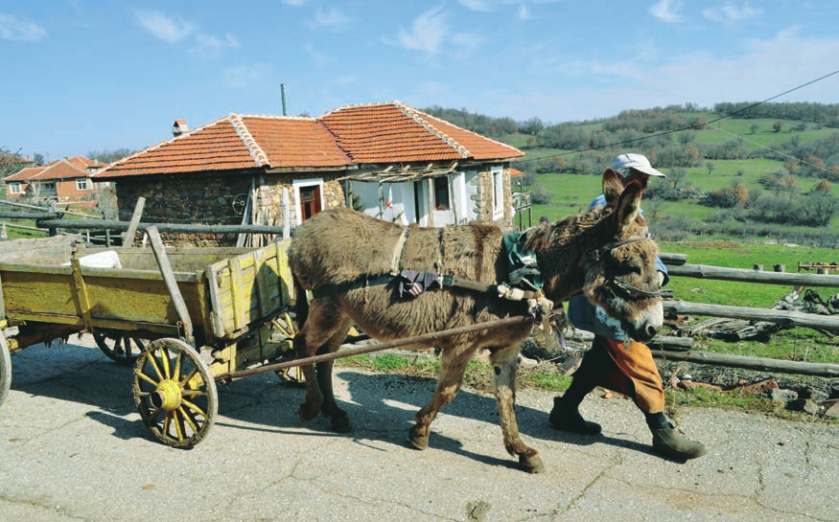
GornoPole. One ofmanyhamlets in theHaskoroProvince,
it’smainlypopulatedby septuagenarian farmers living in
stone-roofedhouses, where tarmaced roads, streetlamps and
even, sometimes, electricityhave yet to arrive.
In the immaculate farmhouse kitchen, I drink sweet tea and
eat a
banitsa
, a hugelymoreish cheese and eggpastry served
withhomemade yoghurt, while chatting toBetty, the genial
owner ofWildFarm, on the afternoonbeforemy encounter
with the griffon. According toher, vultures aremore than just
brutishbullies. “I’ve hadvultureswandering around like
Thiswhole region is just alive – I’ve seen bears twice,
wolves andwild boars”
TRAVELLER
79